Pnea Medical Term: Meaning, Prefixes, and Breathing Issues
When reading medical records, lab reports, or health articles, you often encounter specialized terminology derived from Greek and Latin roots. If you have ever wondered about the pnea medical term, you are looking at a foundational root word used heavily in pulmonology and general medicine. Understanding this root—and the prefixes attached to it—can help you better comprehend respiratory diagnoses, doctor's notes, and discussions about lung health.
Understanding the Pnea Medical Term
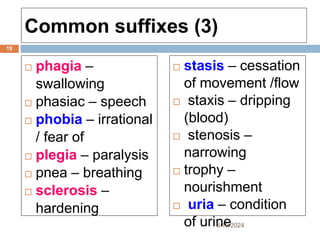
In medical terminology, the root word -pnea (derived from the Greek word *pnoia*) translates directly to "breath" or "breathing." On its own, "pnea" is rarely used as a standalone word in clinical practice. Instead, it serves as a suffix or a combining form attached to various prefixes. These prefixes modify the root to describe a specific type of breathing pattern, rate, or difficulty.
Medical professionals use these compound terms to quickly and accurately communicate a patient's respiratory status. Whether a person is breathing too fast, too slow, or temporarily stopping breathing altogether, the root "-pnea" provides the common linguistic thread.
Common Medical Terms Ending in -Pnea
Because the root describes respiration, the most common clinical terms are formed by adding a descriptive prefix. Here are the primary variations you are likely to encounter in healthcare settings:
1. Apnea
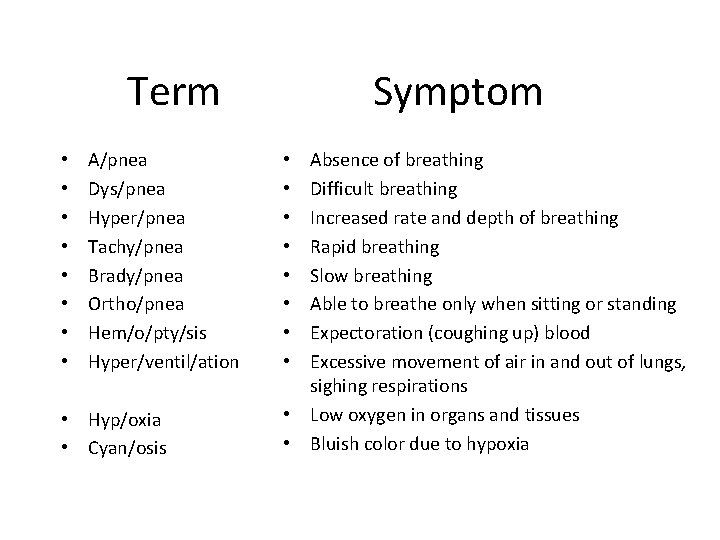
The prefix a- means "without" or "none." When combined with the pnea medical term, it creates apnea, which literally means "without breath." Apnea refers to a temporary cessation of breathing. The most widely recognized form is obstructive sleep apnea (OSA), a common sleep disorder where the airway repeatedly collapses during sleep, causing pauses in breathing that can last for several seconds or even minutes.
2. Dyspnea
The prefix dys- translates to "difficult," "painful," or "abnormal." Dyspnea is the clinical term for shortness of breath or perceived difficulty in breathing. While it is a normal physiological response to heavy exercise, chronic or sudden dyspnea can be a primary warning sign of underlying cardiovascular, pulmonary, or systemic diseases, such as asthma, chronic obstructive pulmonary disease (COPD), or heart failure.
3. Tachypnea
The prefix tachy- means "fast" or "rapid." Tachypnea describes abnormally rapid, shallow breathing. In adults, a normal resting respiratory rate typically ranges from 12 to 20 breaths per minute. Tachypnea is diagnosed when the respiratory rate exceeds this normal baseline, often indicating that the body is trying to compensate for a lack of oxygen or an excess of carbon dioxide.

4. Bradypnea
Conversely, the prefix brady- means "slow." Bradypnea is defined as an abnormally slow respiratory rate. What constitutes bradypnea depends on age, but for adults, it generally means breathing fewer than 12 breaths per minute while at rest. This condition can be caused by certain medications (like opioids or sedatives), metabolic disorders, or increased intracranial pressure.
5. Orthopnea
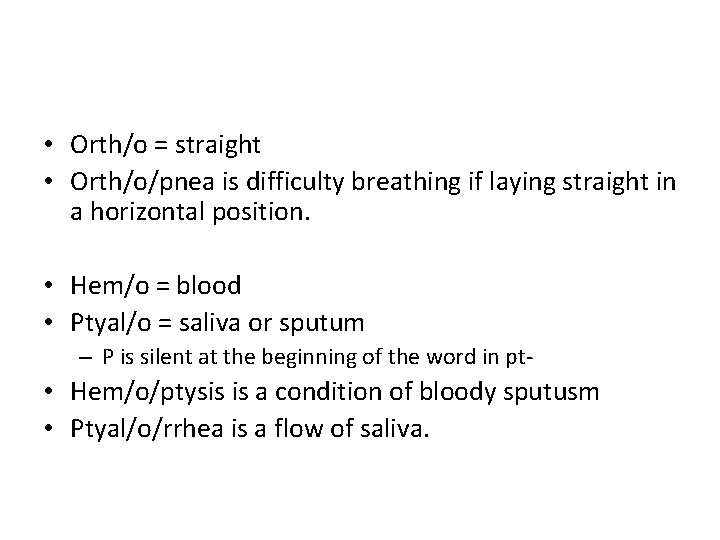
The prefix ortho- means "straight" or "correct." Orthopnea is a specific type of dyspnea where a person experiences difficulty breathing when lying flat. Individuals with orthopnea typically find relief by propping themselves up with pillows or sitting upright. This symptom is frequently associated with congestive heart failure and chronic lung diseases.
Why Accurate Respiratory Terminology Matters
Precision is vital in healthcare. Using exact medical terminology prevents miscommunication between nurses, physicians, and specialists. For example, telling a doctor that a patient has "trouble breathing" is helpful, but noting that they exhibit "sudden tachypnea accompanied by orthopnea" immediately paints a precise clinical picture.
This exactness helps medical teams:
- Accelerate Diagnosis: Specific breathing patterns point directly to specific organ systems. Rapid, shallow breathing might suggest a pulmonary embolism, while slow breathing might point to drug toxicity.
- Monitor Treatment Efficacy: Tracking changes in respiratory rates—such as seeing tachypnea improve back to a normal eupnea (normal, unlabored breathing)—lets clinicians know treatments like supplemental oxygen or bronchodilators are working.
- Improve Patient Safety: Documenting events like sleep apnea or exercise-induced dyspnea ensures that appropriate lifestyle modifications, CPAP therapies, or further diagnostic tests are ordered.
When to Seek Medical Attention
Changes in your breathing patterns should never be ignored. While mild dyspnea during a strenuous workout is expected, unexpected or persistent respiratory symptoms require professional evaluation. You should seek prompt medical care if you experience:
- Sudden, unexplained shortness of breath (dyspnea)
- A feeling that you cannot catch your breath, even while resting
- Breathing rates that are consistently too fast (tachypnea) or too slow (bradypnea)
- Loud snoring interrupted by choking or gasping sounds during sleep (potential sleep apnea)
- Bluish discoloration of the lips, face, or fingertips (cyanosis, indicating low oxygen)
A primary care physician or a pulmonologist can perform physical examinations, pulmonary function tests, and imaging studies to determine the root cause of any abnormal respiratory patterns.
Summary
The pnea medical term is a building block for understanding how healthcare professionals describe the mechanics of human breathing. By learning the prefixes attached to -pnea—such as dys-, tachy-, brady-, and a-—you can better decode medical information and communicate more effectively about respiratory health. Whether monitoring athletic endurance or managing a chronic condition, keeping an eye on your breathing patterns is a vital component of overall well-being.