Poki Fly or Die: Evolution Guide and Tips
Survival games come in many shapes, but few deliver the immediate, chaotic fun of jumping into a server on Poki Fly or Die. Originally launched under the name FlyOrDie.io and later rebranded as EvoWorld.io, this multiplayer browser hit turns the biological food chain into a fast-paced survival arena. You begin your journey as a fragile common fly and must eat, drink, and outsmart predators to climb through dozens of evolutionary stages until you become a legendary apex beast.
Whether you are dying within seconds of spawning or looking for the best route to reach the cosmic tiers, understanding the game's mechanics, biomes, and threat indicators is essential. This guide covers everything you need to know to survive and dominate the leaderboard.
What Is Poki Fly or Die?
Poki Fly or Die is a free-to-play, browser-based multiplayer survival game developed by Pixel Voices. Hosted seamlessly on Poki without requiring downloads or hefty hardware specs, the game drops dozens of real players into a shared ecosystem featuring distinct vertical biomes, from deep underground caves up into the reaches of outer space.
The premise is simple: eat items and creatures with a green outline to earn experience points (XP), avoid anything highlighted in red, and monitor your vital resources to stay alive. As your XP bar fills, your creature transforms into a larger, more powerful animal with unique abilities, increased health, and a wider diet.
Mastering Poki Fly or Die: Core Mechanics
Before worrying about advanced evolutionary tiers, you need to master the survival fundamentals that dictate every second of gameplay.
1. The Visual Threat System
The game uses an intuitive, color-coded border system around every entity on the screen. Keeping your eyes peeled for these outlines is the single most important habit for staying alive:
- Green Outline: Food or prey. You can consume these creatures or fruits for XP.
- Red Outline: Predators. These players or creatures can attack and kill you in seconds. Keep your distance.
- Yellow Outline: Neutral entities. You cannot damage them, and they cannot damage you. They are usually at a similar evolutionary tier.
2. Managing Your Vital Resources
Getting hunted by other players is not the only danger. Environmental starvation will kill you just as quickly if you ignore your meters:
- Water Meter: Represented by the blue droplet icon. Flying burns hydration. You must periodically land near water bodies, splash in rain clouds, or eat water-rich foods (like watermelon) to replenish it. If this meter runs dry, your health drops rapidly.
- Oxygen Meter: Essential when diving into lakes, burrowing underground, or soaring into the upper atmosphere. Each creature has a different lung capacity; running out of air results in immediate suffocation.
- Stamina: Used for sprint bursts and special abilities. Managing stamina prevents you from getting stranded in front of a charging predator with no speed to escape.
The Evolution Hierarchy

Evolution in Fly or Die is structured across dozens of animal tiers. Each tier introduces new gameplay mechanics, dietary requirements, and special skills.
The Early Stages (Tiers 1–8)
You begin as a Fly, moving quickly to a Butterfly, Mosquito, Wasp, and Dragonfly. Early on, your focus is entirely on scavenging flowers, fruit, and smaller insects while steering clear of larger birds. Use your small hitbox to dart into tight spaces, inside clouds, or between foliage where bulky predators cannot easily follow.
The Mid-Tier Predators (Tiers 9–25)
Reaching birds like the Pigeon, Raven, Owl, Falcon, and Hawk shifts your playstyle from passive gatherer to active predator. Here, you gain access to skills like diving, night vision, and swooping. Hunting other players becomes your fastest source of XP, but you also become a lucrative target for apex predators cruising the upper skies.
Apex and Mythical Creatures (Tiers 26+)
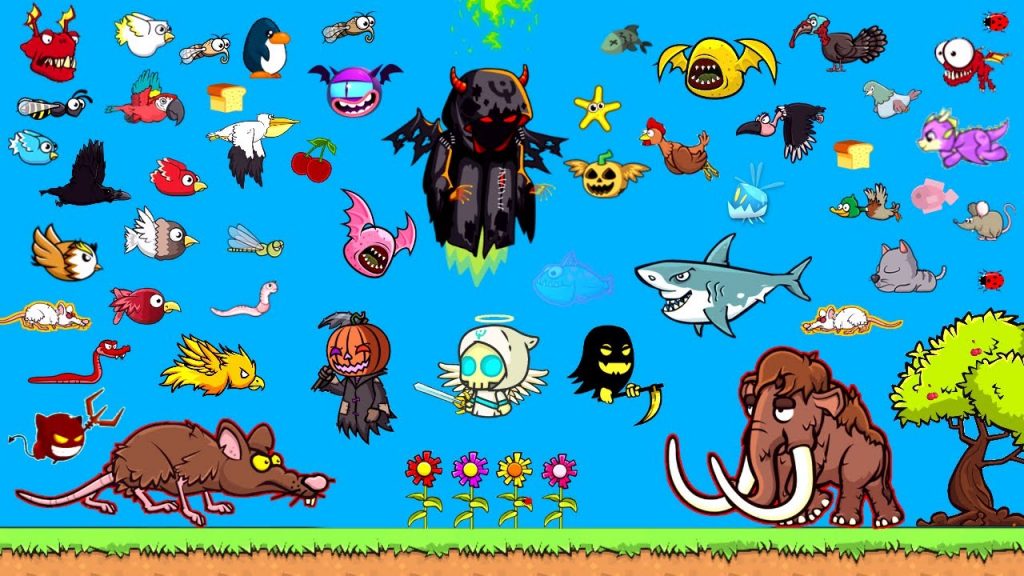
Higher tiers feature massive animals like the Pelican, Eagle, Pterodactyl, and swamp monsters, eventually leading to mythical beings such as the Phoenix, Dragon, Cosmic Bat, and the dreaded Grim Reaper. At these levels, you possess devastating abilities, including fire breath, life steal, and terrain destruction, allowing you to control entire server sectors.
Key Biomes and How to Navigate Them
The game world is vertical, spanning several interconnected zones that each present unique rewards and lethal hazards:
- The Surface and Forest: The starting area. Plentiful in water, berries, and insects, but heavily trafficked by mid-tier birds.
- Underground Caves: Filled with mushrooms, worms, and mineral nodes. It offers safety from giant flying predators, but poor oxygen levels can trap you if you cannot find your way out quickly.
- The Ocean and Swamps: Rich in aquatic prey, but dangerous due to high water-drag mechanics and predatory amphibians.
- The Clouds and Sky: Good for replenishing water via rain, but offers little visual cover against hawks and eagles.
- Space: The highest sector of the map. Only accessible to high-tier creatures equipped to handle the extreme oxygen depletion and cosmic hazards.
Actionable Tips to Level Up Fast
- Prioritize Food Density Over Chasing Kills: Chasing low-tier players across half the map often wastes more time and stamina than it is worth. Focus on areas with high-density food clusters (like pumpkin patches or beehives when applicable) for steady XP progression.
- Use Clouds as Dynamic Bunkers: Clouds conceal your creature, restore your water meter, and block line-of-sight attacks from larger predators. If a red-bordered threat approaches, dive into a cloud to break their pursuit.
- Never Let Your Water Bar Drop Below 25%: It takes only a few seconds of being blocked or pursued by an enemy to run out of water completely. Always top off your hydration before attempting risky flights.
- Bait Opponents Near Biome Transitions: If a larger predator is tailing you, fly toward areas with narrow cave entrances or low ceilings. Large creatures struggle to navigate cramped spaces, giving you an effortless escape route.
- Save Your Sprint for Defensive Moments: It is tempting to use your stamina boost to hunt down an easy meal, but an empty stamina bar leaves you helpless if a high-level predator suddenly drops in from above. Always keep a reserve for sudden retreats.
Final Thoughts
Poki Fly or Die succeeds because it rewards smart decision-making as much as fast reflexes. By respecting the threat borders, mastering resource conservation, and learning which biomes suit your current evolutionary form, you will consistently climb the food chain and claim your spot atop the server.