Population Definition Psychology: Guide & Examples
When everyday conversation turns to the word "population," most people think of demographics—the total number of citizens residing in a city, state, or country. However, the population definition psychology utilizes is both more flexible and strictly precise. In psychological science, a population does not have to encompass millions of people, nor does it have to describe a geographic boundary.
Instead, a population represents the entire group of individuals, events, or objects that share a specific set of characteristics about which a researcher wishes to draw conclusions. Understanding this distinction is foundational for anyone reading, designing, or critiquing psychological research.
Population Definition Psychology: Core Concepts
In psychology and behavioral statistics, a population refers to the total collection of all possible cases or elements that fit a clearly stated criterion. Psychologists define a population based on the theoretical goals of their research question.
For instance, depending on the hypothesis being tested, a population could be:
- All human beings currently living.
- All adolescents aged 13–17 diagnosed with Generalized Anxiety Disorder in North America.
- Full-time remote workers experiencing workplace burnout.
- Lab-bred Sprague-Dawley rats subjected to memory tasks.
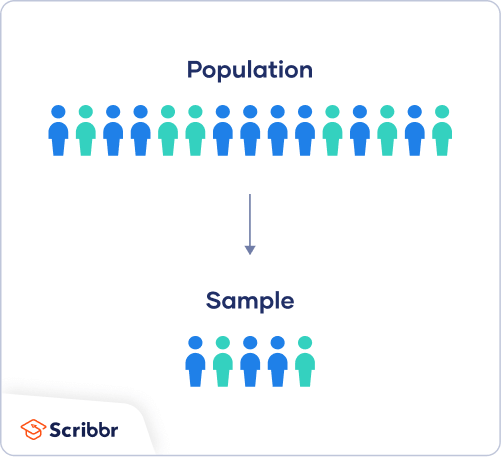
Because it is virtually impossible to test every single member of a given population, researchers study a small subset—a sample—and use statistical inference to generalize their findings back to the broader population.
Target Population vs. Accessible Population
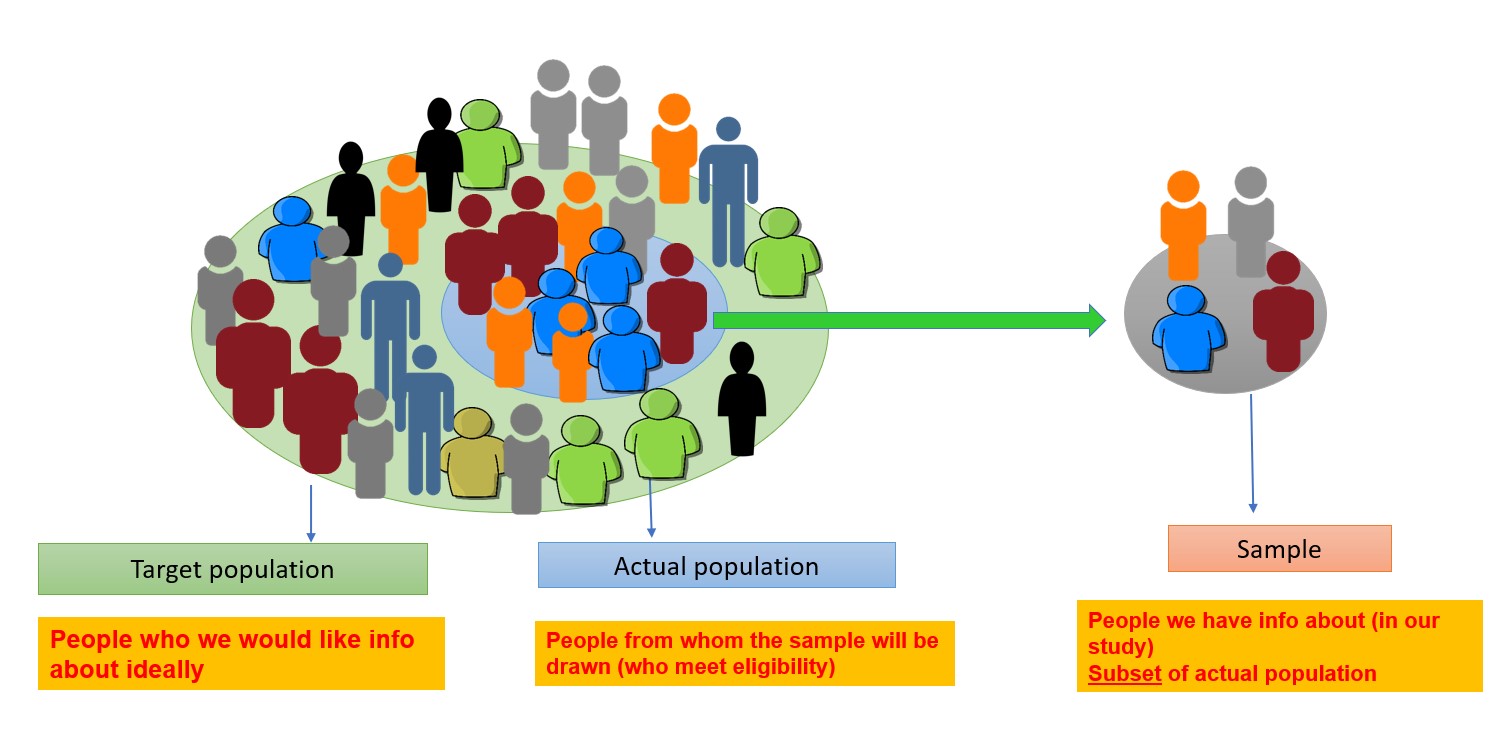
Methodologists often distinguish between two nested tiers of a research population: the target population and the accessible population.
1. The Target Population
The target population (also called the theoretical population) consists of the entire unit of interest to which the researcher wants to apply their findings. If a developmental psychologist wants to study language acquisition in twin infants, their target population is all twin infants worldwide.
2. The Accessible Population
The accessible population (also called the study population) is the realistic subset of the target population that the researcher has a viable chance of recruiting. In the twin study example, the accessible population might be twin infants registered in hospital databases across three local metropolitan areas. While conclusions are conceptually aimed at the target population, data is directly gathered from the accessible portion.
Population vs. Sample: Understanding the Boundary
The relationship between a population and a sample is the bedrock of quantitative psychological science. Confusing the two leads to flawed conclusions and inflated statistical confidence.
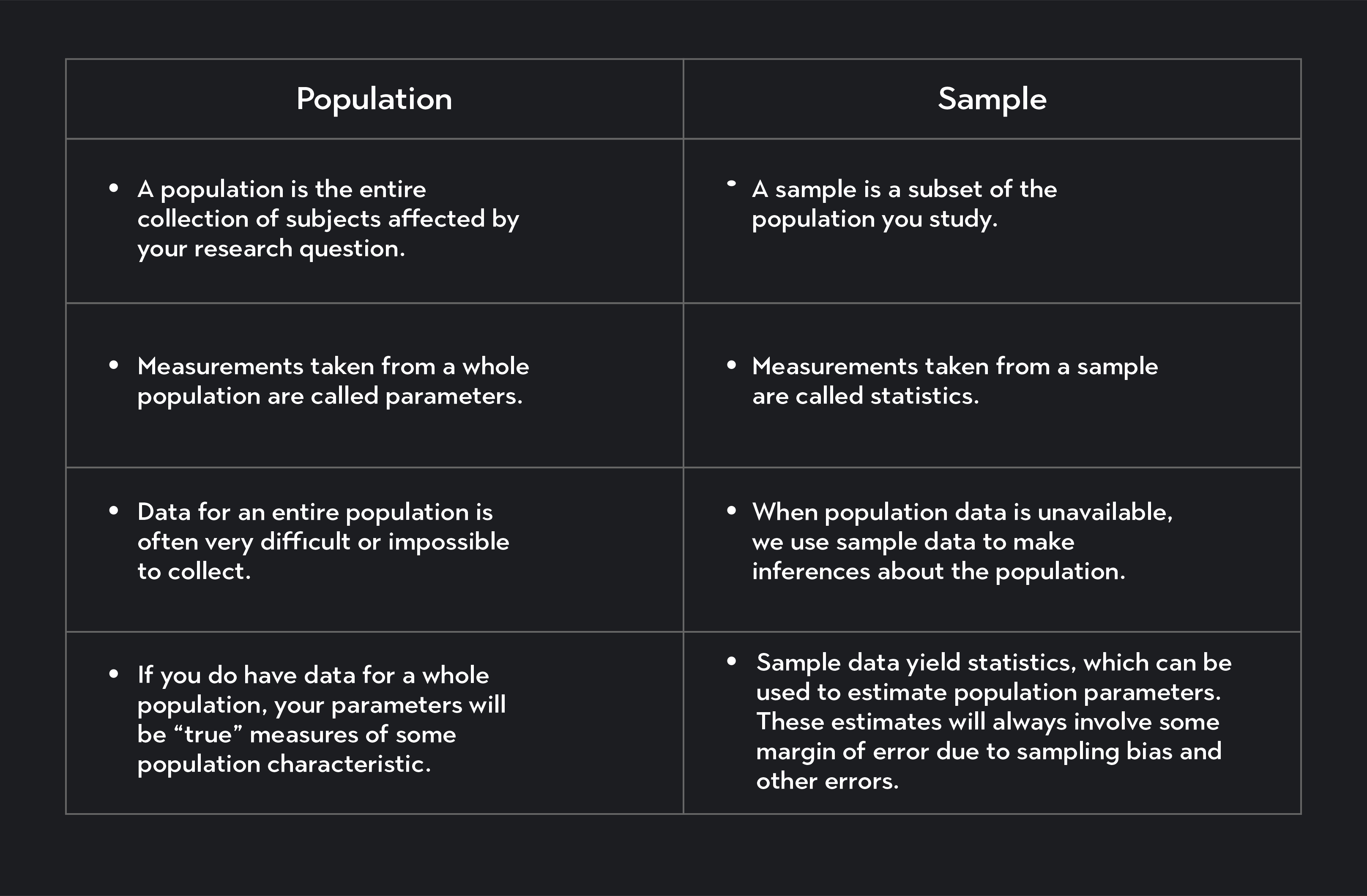
A sample is a selected group drawn directly from the accessible population to participate in a study. The characteristics measured in a sample are called statistics (such as the sample mean, denoted as x̄). By contrast, the corresponding values within the entire population are called parameters (such as the population mean, denoted by the Greek letter μ).
Because testing entire populations is usually impossible due to financial, geographic, and temporal constraints, psychologists use inferential statistics to estimate unknown population parameters based on known sample statistics.
The Critical Role of Population Definition in External Validity
How an investigator defines and samples their population directly dictates the study's external validity—the degree to which experimental results can be generalized beyond the immediate study conditions.
If a population is defined poorly, the findings risk being overgeneralized. One of the most famous critiques of modern psychology involves WEIRD populations. For decades, a vast majority of behavioral research drew samples from populations that were:
- Western
- Educated
- Industrialized
- Rich
- Democratic
When researchers tested undergraduate psychology students in Western universities, they frequently framed their conclusions as universal principles of human cognition or emotional processing. In reality, the findings accurately reflected only a narrow slice of humanity. Defining populations with cultural, socioeconomic, and developmental nuance prevents researchers from making unjustified universal claims.
Common Sampling Strategies to Bridge Population and Sample
To accurately capture the characteristics of a defined population, psychologists employ diverse sampling techniques, categorized into probability and non-probability strategies.
Probability Sampling Methods
In probability sampling, every individual in the population has a known, non-zero chance of being selected. This reduces selection bias and improves representativeness.
- Simple Random Sampling: Every member of the population has an equal chance of selection, often achieved via computer-generated random numbering.
- Stratified Sampling: The population is divided into subgroups (strata) based on meaningful characteristics (such as age, gender, or symptom severity), and samples are drawn proportionally from each stratum.
- Cluster Sampling: The population is divided into natural clusters (such as classrooms or clinics), and entire clusters are randomly chosen for investigation.
Non-Probability Sampling Methods
While less mathematically pure, non-probability techniques are widely used in psychology due to feasibility and ethics.
- Convenience Sampling: Participants are recruited based on availability and willingness (e.g., participants on online platforms like Prolific or undergraduate research pools).
- Purposive Sampling: Researchers actively select participants who meet highly specialized criteria, such as individuals with rare neurological lesions.
- Snowball Sampling: Existing participants recruit other individuals from hard-to-reach populations, such as members of stigmatized communities.
Concrete Examples in Psychological Subfields
To see how the population definition in psychology works in practice, consider how distinct disciplines tailor their scope:
- Cognitive Psychology: A researcher testing the capacity limits of working memory might define their population as "neurotypical adults aged 18 to 35 with normal or corrected-to-normal vision."
- Clinical Psychology: A trial evaluating cognitive behavioral therapy for post-traumatic stress might identify its population as "adults over 18 meeting DSM-5 diagnostic criteria for PTSD following a motor vehicle collision."
- Organizational Psychology: A study on leadership styles and emotional labor might define the population as "mid-level managers working within tech start-ups employing between 50 and 500 people."
Pitfalls When Defining a Population
Researchers and students frequently run into methodological errors when defining their population of interest:
- Overly Broad Definitions: Declaring a population as "all adults" when the assessment tools are culturally bound or language-specific makes genuine representation impossible.
- Undercoverage: Failing to account for population members without internet access, stable housing, or language fluency can unintentionally skew the accessible population.
- Attrition Bias: When participants drop out of longitudinal studies, the remaining sample may no longer represent the original population of interest.
Key Takeaways
In psychological science, a population is not a fixed geographic headcount; it is the theoretical universe of cases that share defined attributes relevant to an empirical question. A clear, realistic population definition ensures that sampling methods are transparent, statistical tests are applied appropriately, and resulting claims do not stretch beyond their scientific limits.