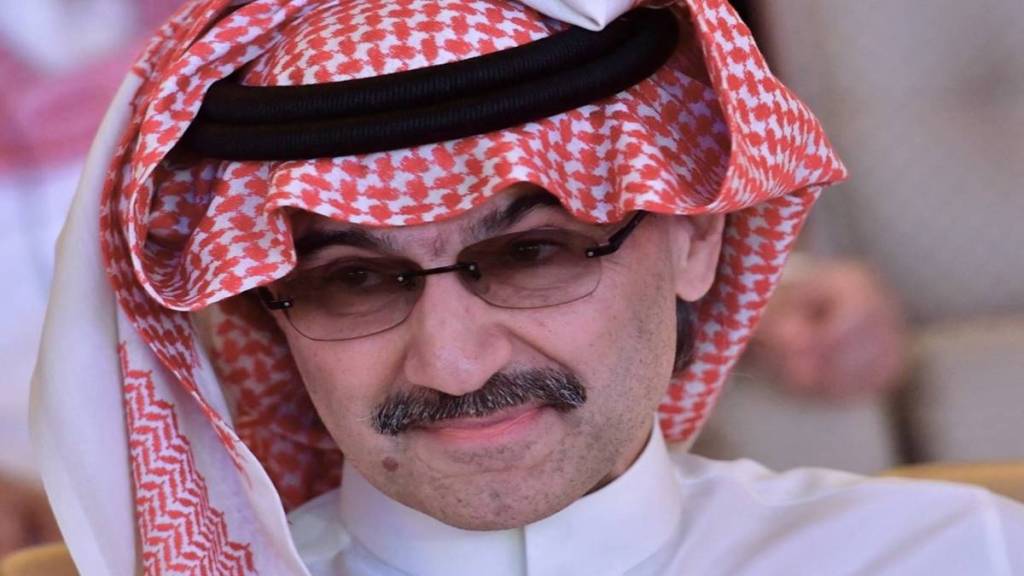
Prince Al Waleed’s $230B Empire: Myth or Fact?
Few international investors have captured the public imagination quite like Saudi Arabia’s Prince Al Waleed bin Talal Al Saud. Renowned for his high-profile stakes in Western blue-chip companies, opulent lifestyle, and expansive royal lineage, he has long been the international face of private Arab capital. Yet, in recent years, an eye-popping figure has circulated across social media forums, speculative finance blogs, and video essays: Inside Prince Al Waleed Bin Talal’s $230 Billion Empire: Myth or Fact?

To put that figure into perspective, a personal net worth of $230 billion would place Prince Al Waleed in direct contention with tech titans like Elon Musk and Jeff Bezos for the title of the wealthiest human on Earth. But does this mammoth valuation hold up under financial scrutiny, or is it an exaggerated internet legend? Let’s examine the audited records, market realities, and asset portfolios to separate truth from fiction.
The Genesis of the $230 Billion Claim
To understand whether the $230 billion figure is accurate, one must first identify where such an astronomical number originated. Prince Al Waleed has never appeared on the Bloomberg Billionaires Index or the Forbes World's Billionaires list with a fortune remotely approaching a quarter of a trillion dollars. Instead, the claim stems from three distinct misconceptions:
- Confusion with Sovereign Wealth: Commentators frequently conflate Prince Al Waleed’s personal balance sheet with Saudi Arabia’s sovereign wealth vehicle, the Public Investment Fund (PIF), which manages upwards of $900 billion in assets.
- Aggregation of House of Saud Assets: The collective wealth of the broader Saudi royal family—comprising thousands of princes and descendants—is often estimated at roughly $1.4 trillion. Viral posts often erroneously credit a significant portion of this collective family wealth to Al Waleed alone.
- Gross Transaction Value vs. Equity: Over four decades, Al Waleed’s investment arm, Kingdom Holding Company (KHC), has participated in megaprojects and syndicated transactions with aggregate values running into dozens of billions of dollars. Misinterpreting total project cost as personal equity regularly inflates wealth estimates.
Inside Prince Al Waleed Bin Talal’s $230 Billion Empire: Myth or Fact?
When evaluated against regulatory filings, public equity disclosures, and independent wealth tracking, the claim of a $230 billion personal fortune is an absolute myth.
Prince Al Waleed is undeniably wealthy, but his audited net worth typically fluctuates between $14 billion and $19 billion, depending on broader market movements on the Saudi Tadawul exchange and international equity performance. While this makes him one of the wealthiest individuals in the Middle East, it represents less than one-tenth of the rumored $230 billion figure.
The prince himself has historically pushed back against conservative estimates of his wealth, but never to the tune of hundreds of billions. In 2013, Al Waleed made headlines when he sued Forbes magazine in a London court for libel, alleging the publication had shortchanged him by estimating his fortune at $20 billion instead of his self-calculated valuation of $29.6 billion. The lawsuit was settled amicably in 2015, but it established an important historical baseline: even by his own aggressive calculations, his empire was around $30 billion, not $230 billion.
Deconstructing Kingdom Holding Company (KHC)
The vast majority of Prince Al Waleed’s wealth is concentrated in Kingdom Holding Company (KHC), an investment holding group founded in 1980 and headquartered in Riyadh. KHC is publicly listed on the Saudi Stock Exchange (Tadawul), meaning its financial reports and major holdings are a matter of public record.
1. Global Technology and Media
Al Waleed was an early institutional investor in Silicon Valley icons. He famously acquired an initial $300 million stake in Twitter in 2011 before its public debut. When Elon Musk took the social network private as X Corp in 2022, Al Waleed rolled over his stake—valued at nearly $1.9 billion at the time—making him the platform’s second-largest investor after Musk. KHC has also held notable positions in mobility firm Lyft, music-streaming platform Deezer, and regional tech giant Careem (acquired by Uber).
2. Banking and Finance
The cornerstone of the prince's international reputation was his bold 1991 investment in Citicorp (now Citigroup). Stepping in when the bank was battered by bad real estate loans, his initial $590 million capital infusion eventually grew into a multi-billion-dollar holding. While he trimmed his stake over subsequent decades, banking equity remains a core part of his portfolio.
3. Luxury Hospitality
Al Waleed’s portfolio contains iconic hospitality assets. Through KHC, he co-owned Four Seasons Hotels and Resorts alongside Bill Gates’s Cascade Investment for years. In late 2021, Cascade acquired half of KHC's holding for $2.21 billion, leaving KHC with a lucrative 23.75% stake. KHC also holds significant equity in French hotel operator Accor and owns landmark properties, including the George V in Paris and London’s Savoy Hotel.
4. Real Estate and Megaprojects
Within Saudi Arabia, KHC is the primary backer behind the Jeddah Tower, an ambitious project planned to surpass the Burj Khalifa as the tallest building in the world. While the development has faced prolonged construction delays, it represents a substantial capital investment within the Kingdom.
Personal Assets Beyond the Corporate Balance Sheet
Outside of Kingdom Holding, Prince Al Waleed controls an array of private, non-corporate assets. While luxurious, their cumulative value adds billions—not tens of billions—to his balance sheet:
- Aviation: His private fleet has included a customized Boeing 747-400 featuring luxury suites and a gold-plated throne, alongside smaller corporate jets for business travel.
- Maritime Luxury: His 281-foot superyacht, Kingdom 5KR, is among the most famous in the world, having previously been owned by Adnan Khashoggi and Donald Trump.
- Palatial Real Estate: His primary residence in Riyadh, the 420-room Kingdom Palace, spans over 400,000 square feet. He also owns the Kingdom Resort, an expansive private compound utilized for entertainment and diplomacy.
- Jewelry and Art: His liquid reserves include an internationally renowned collection of rare gemstones, jewelry, and contemporary and classical art pieces.
The 2017 Ritz-Carlton Detention and PIF Deal
Any modern assessment of Al Waleed’s wealth must factor in the events of November 2017. Under the direction of Crown Prince Mohammed bin Salman, the Saudi government launched an anti-corruption probe that detained dozens of the Kingdom’s most prominent royals, ministers, and tycoons at the Ritz-Carlton in Riyadh.
Prince Al Waleed was detained for nearly three months before being released in January 2018 after reaching an undisclosed financial settlement with authorities. While he insisted his operational control of KHC remained intact, the episode introduced new dynamics to his wealth profile.
In May 2022, a decisive transaction altered KHC’s ownership structure: the Saudi Public Investment Fund purchased a 16.87% stake in Kingdom Holding directly from Prince Al Waleed for approximately $1.51 billion (5.68 billion Saudi riyals). Following the divestment, Al Waleed retained a controlling 78.13% stake, bringing the state sovereign wealth fund into his flagship enterprise as a key partner.
Separating Myth from Reality
The table below summarizes the difference between the viral rumors and verified financial figures:
| Metric | Viral Claim | Verified Reality |
|---|---|---|
| Estimated Net Worth | $230 Billion | $14 Billion – $19 Billion |
| Primary Asset Base | Unregulated private treasury | Kingdom Holding Company (Saudi Tadawul: 4280) |
| State Ties | Commands sovereign reserves | PIF owns 16.87% of KHC; Al Waleed holds 78.13% |
| Global Standing | Top 3 worldwide | Top 150 worldwide |
The Final Verdict
The narrative of Prince Al Waleed Bin Talal sitting atop a $230 billion fortune is a classic example of financial exaggeration amplified by the internet. By blending sovereign state resources, collective royal family assets, and nominal transaction sizes, online rumors created a phantom balance sheet.
The true story is compelling enough on its own merits: building a diversified international portfolio valued between $14 billion and $19 billion, retaining a major stake in X alongside Silicon Valley leaders, and maintaining influential hospitality holdings worldwide. Prince Al Waleed remains one of history’s most influential global financiers—even if his empire is not worth $230 billion.