Print W 9 Form Requirements For Tax Compliance
When hiring independent contractors, freelancers, or vendors, managing tax documentation is a critical responsibility for business owners. To report miscellaneous income accurately to the IRS at the end of the year, you need the correct taxpayer identification number. This is where it pays to get familiar with print W-9 form requirements for tax compliance, ensuring your business avoids costly penalties and audits.

Understanding the Purpose of Form W-9
Form W-9, officially titled 'Request for Taxpayer Identification Number and Certification,' is an IRS document used in the United States. Its primary purpose is to officially collect a non-employee's correct name, address, and Taxpayer Identification Number (TIN). For individuals, this is typically their Social Security Number (SSN). For businesses, partnerships, and LLCs, it is usually an Employer Identification Number (EIN).
When you hire a freelancer or an independent vendor, they are not your employees. Therefore, you do not withhold federal income tax, Social Security, or Medicare from their paychecks. Instead, you must issue them a Form 1099-NEC at the beginning of the following year if you pay them $600 or more during the calendar year. You cannot complete a Form 1099 without the accurate information gathered from a completed Form W-9.
Key Information Required on a Print W-9 Form
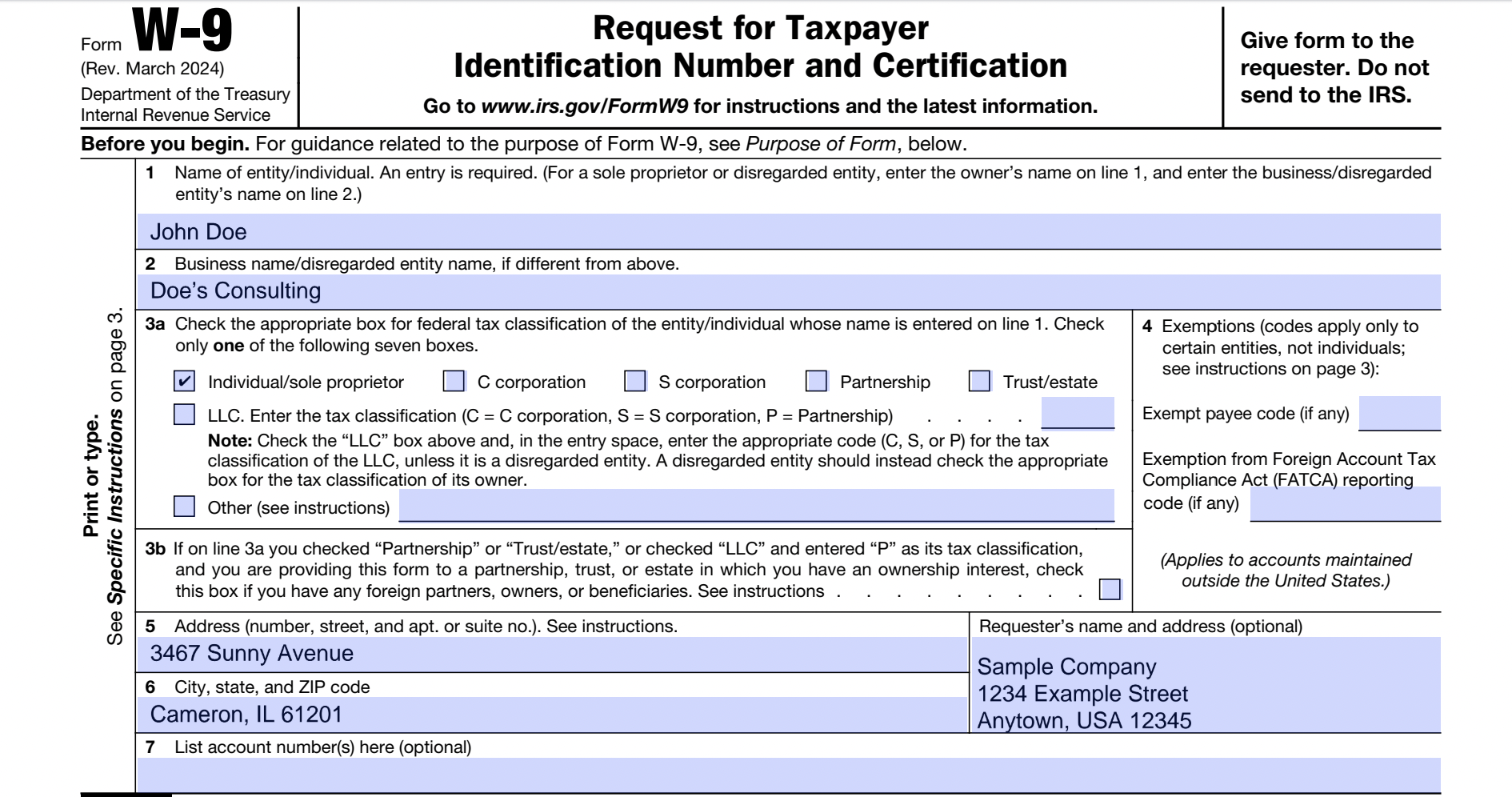
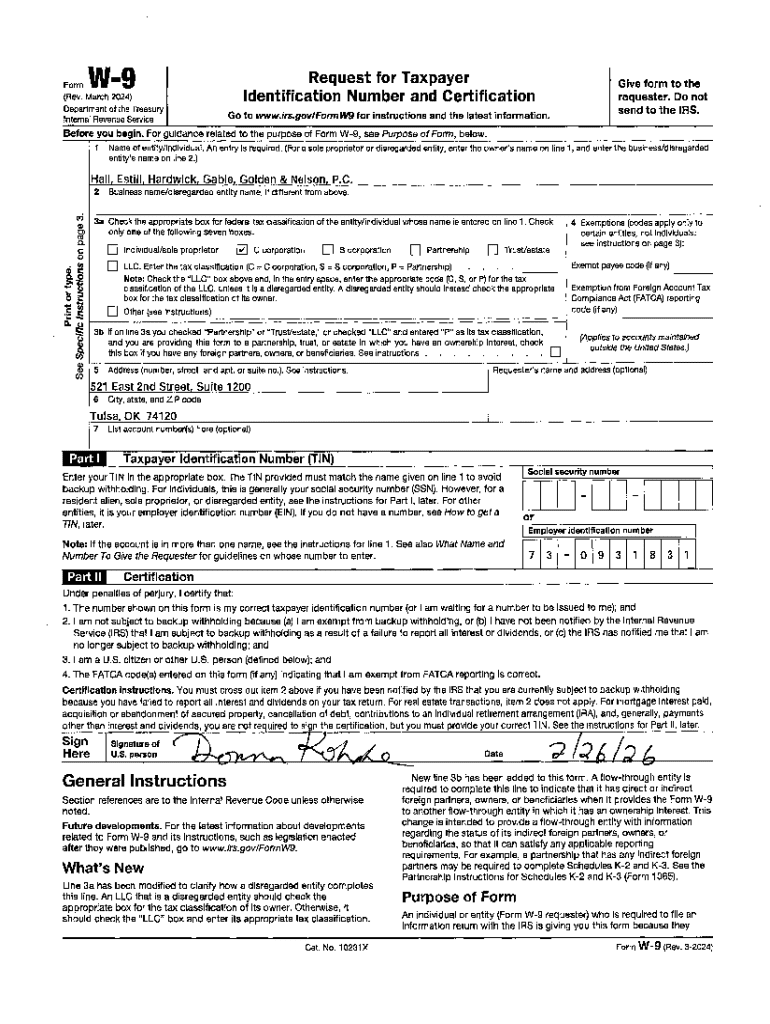
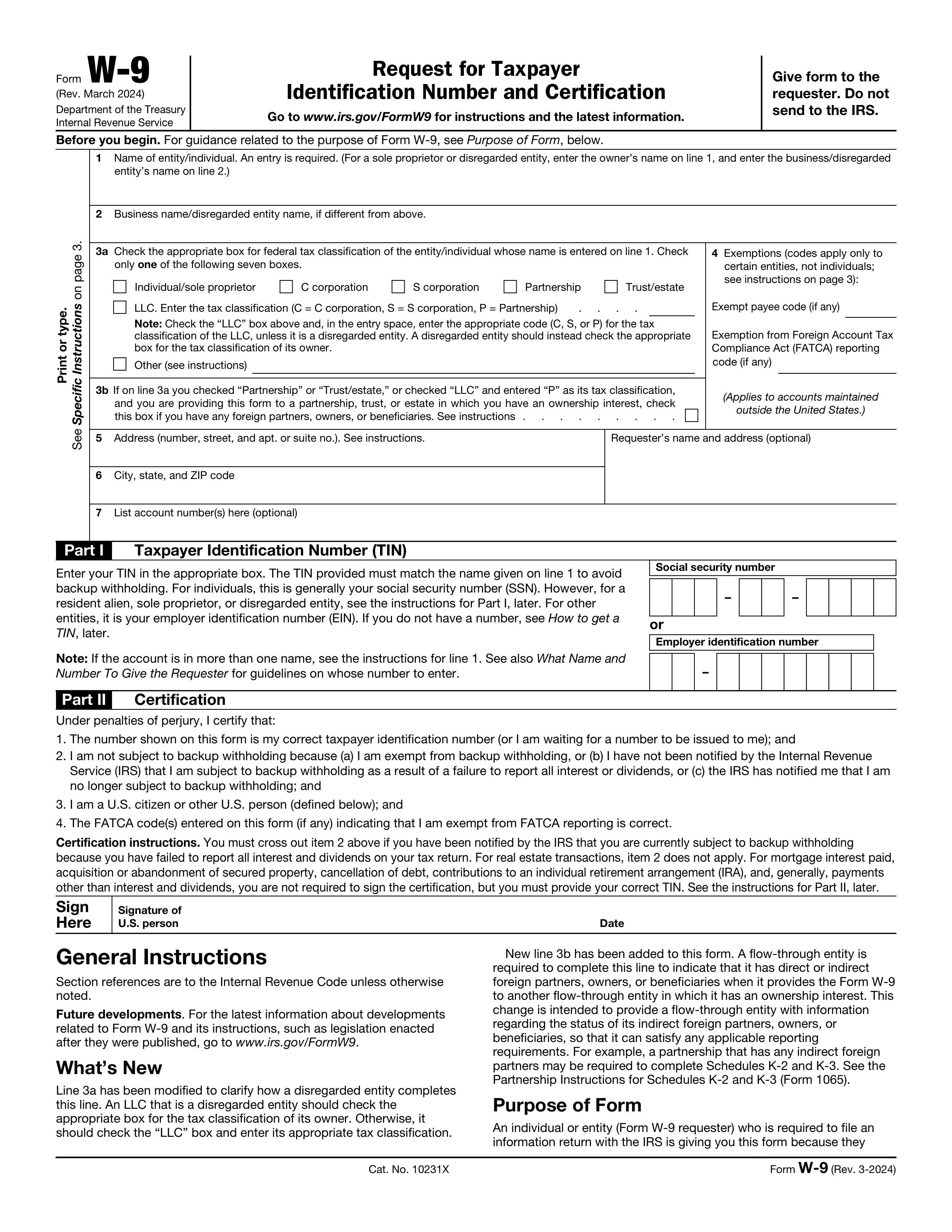
Whether you hand someone a physical sheet of paper or they print out a PDF downloaded from the IRS website, a properly completed form must contain specific, unalterable data fields. Before accepting a document, verify that the following sections are filled out completely:
- Name: The individual's name or the legal business name as shown on their tax return.
- Business Name: If different from the first line, the disregarded entity, DBA, or corporation name.
- Federal Tax Classification: Checkboxes indicating whether the entity is an individual, sole proprietor, C corporation, S corporation, partnership, trust, estate, or LLC.
- Exemptions: Codes for payees exempt from backup withholding or FATCA reporting (if applicable).
- Address: The physical mailing address where the IRS or the requester can reach the payee.
- Requester's Name and Address: Optional field filled out by the hiring business, noting who requested the form.
- Taxpayer Identification Number (TIN): The core of the document, showing either an SSN or an EIN in the designated boxes.
- Certification: A signed and dated legal declaration confirming that the provided TIN is correct and that the signer is not subject to backup withholding.
Best Practices to Maintain Tax Compliance
Collecting the form is only the first step. To maintain total compliance with federal tax regulations, your accounting and administrative procedures must handle these documents with care and diligence.
Timing is Everything
Video: W-9 Tax Form Explained | How to Fill Out W-9
Never wait until January to request a Form W-9 from your vendors. The best practice is to collect a signed W-9 before any work begins or before you disburse your first payment. If a contractor refuses to provide a W-9, you may be legally required to implement backup withholding, which means withholding 24% of their payments and remitting it directly to the IRS.
Validation and Verification
Do not simply take a contractor's word for their data. Cross-reference the name and TIN provided on the printed form against IRS databases if you suspect discrepancies. The IRS offers a TIN Matching Program for businesses that file numerous 1099 forms annually, allowing you to catch mismatches before filing season begins.
Secure Storage and Retention Rules
Because Form W-9 contains sensitive personally identifiable information (PII) such as Social Security Numbers, you have a legal and ethical obligation to protect it. Follow these storage guidelines:
- Store physical printouts in a locked, fireproof filing cabinet accessible only to authorized personnel.
- If you digitize paper forms by scanning them, ensure the digital files are encrypted and stored on secure, password-protected servers.
- Retain all completed W-9 forms for at least four years after the date the tax is due or paid, aligning with IRS record-keeping recommendations for employment and contractor taxes.
Common Mistakes to Avoid
Even well-organized businesses sometimes fall into traps when dealing with tax documentation. Watch out for these common errors:
- Accepting unsigned forms: An unsigned W-9 is legally invalid. The certification section must bear a handwritten or legally compliant electronic signature and date.
- Using outdated versions: The IRS periodically revises Form W-9. Ensure you are using the current version available on the official IRS website rather than an archived copy from years past.
- Failing to update information: If a contractor changes their legal business name, address, or tax status, you should request a fresh W-9 to keep your records accurate.
By mastering print W-9 form requirements and implementing robust internal controls, you protect your business from compliance risks, dodge costly IRS penalties, and build a streamlined administrative process for working with independent contractors.