Pulsefire Flamethrower Guide: Specs, Uses & Laws
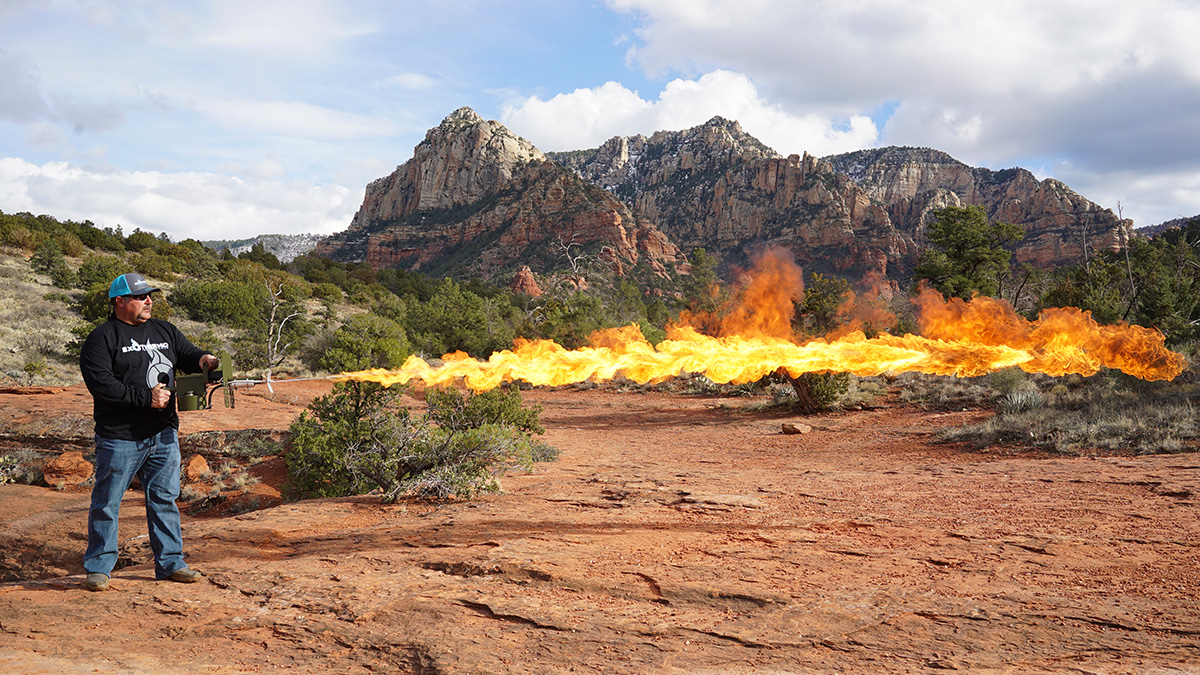
When people hear the word "flamethrower," they often picture heavy, military-surplus apparatuses featuring cumbersome pressurized gas tanks. The pulsefire flamethrower, developed by Exothermic Technologies, completely redesigned that concept for civilian utility. By replacing pressurized nitrogen systems with a compact, high-output electric pump, the Pulsefire series established a reliable, handheld category of long-range torches used by landowners, farmers, forestry workers, and outdoor enthusiasts.
How the Pulsefire Flamethrower Works
Traditional military flamethrowers relied on pressurized cylinders to propel flammable liquids through a nozzle, followed by an igniter. This design made them heavy, difficult to refill outside specialized depots, and inherently volatile if a tank suffered structural damage.
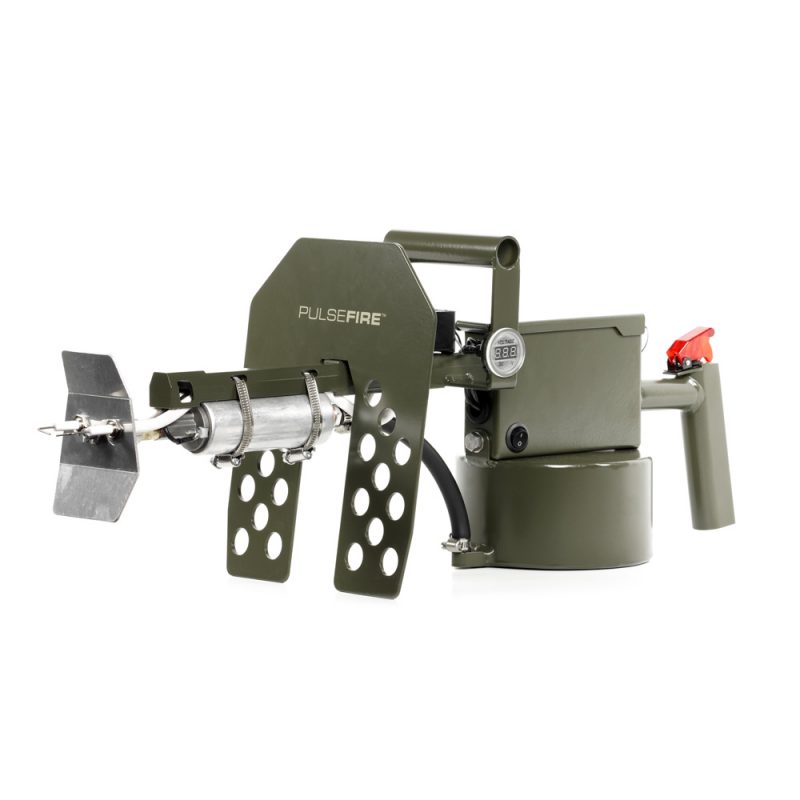
The Pulsefire platform operates differently. It utilizes a rechargeable lithium-ion battery to power an internal high-pressure electric fuel pump. When the operator depresses the trigger, the pump draws liquid fuel from an onboard reservoir and forces a steady, coherent stream through the nozzle. At the muzzle, an electric high-frequency arc igniter lights the stream instantly.
This design offers several practical advantages:
- No pressurized tanks: Because fuel is stored at atmospheric pressure, refilling is as simple as pouring gasoline from a standard fuel can.
- Consistent stream projection: The motorized pump maintains steady pressure until the reservoir is completely empty, preventing pressure drops midway through a burn.
- Immediate ignition: The electric arc functions reliably in breezy conditions where pilot flames or chemical matches might blow out.
Key Models: Pulsefire LRT vs. Pulsefire UBF
Exothermic Technologies manufactures two primary configurations of the system to serve different operational needs.
Pulsefire LRT (Long Range Torch)
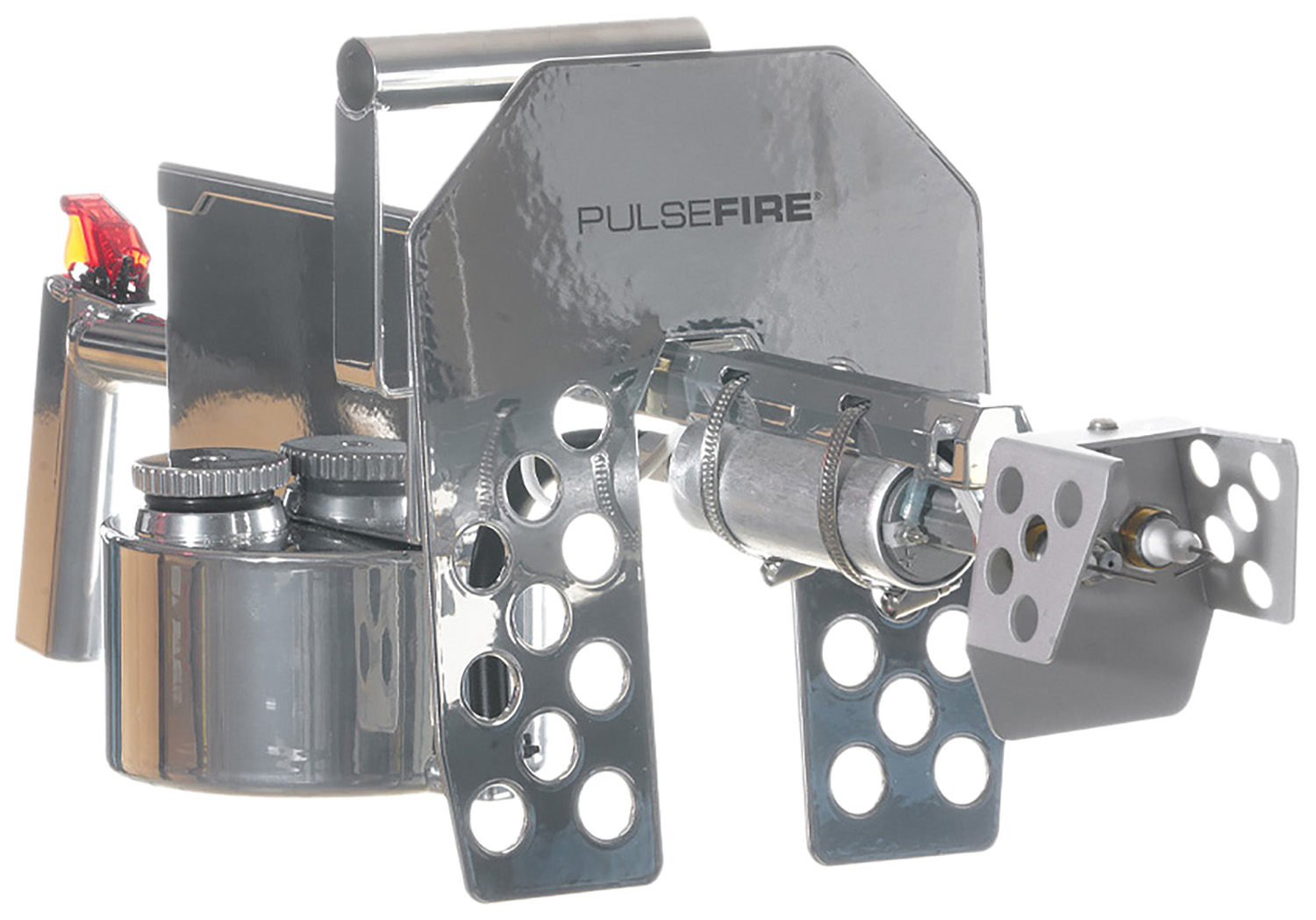
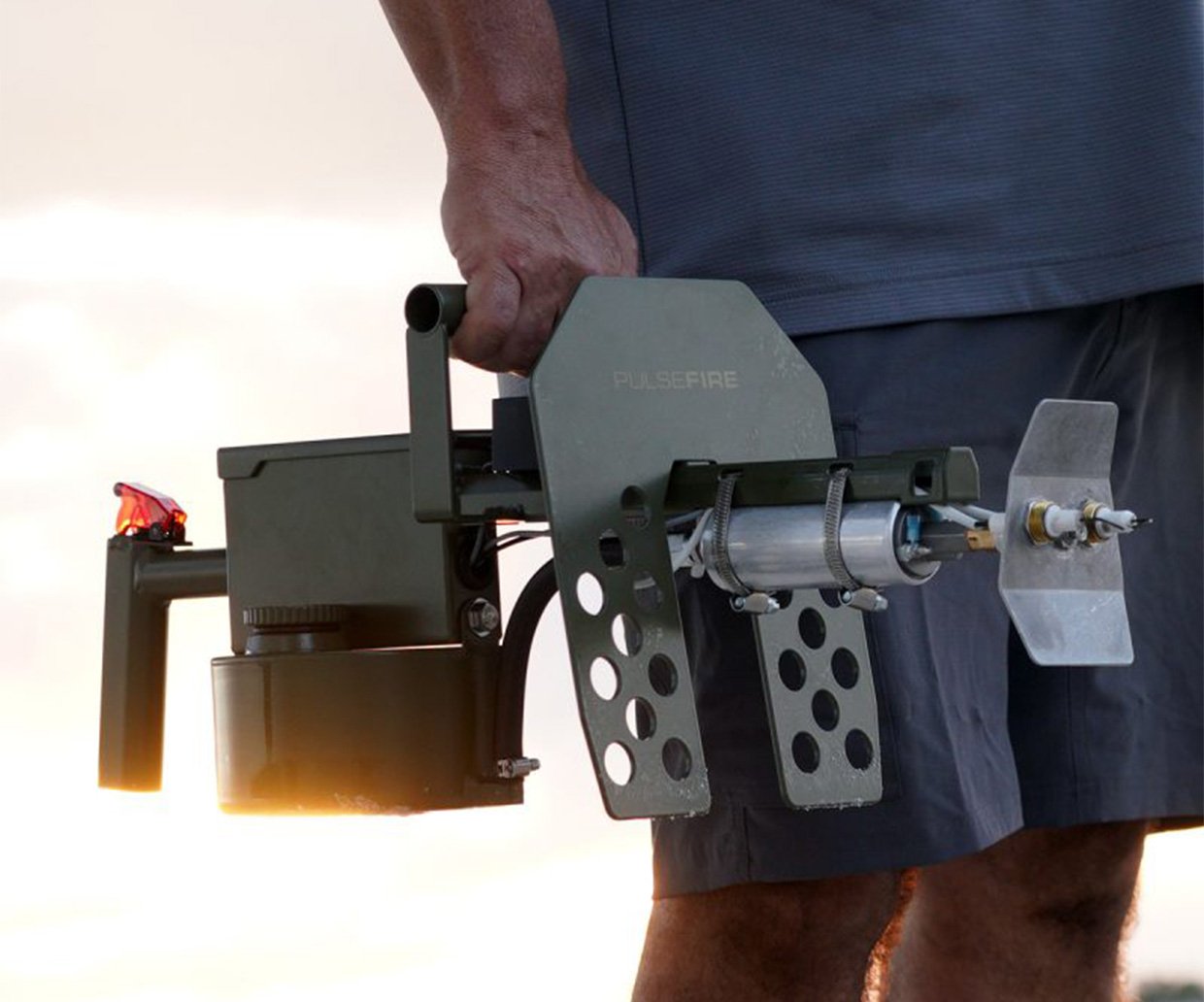
The LRT is the standalone handheld model. It features a built-in handle, ergonomic forward grip, and a balanced weight distribution that makes it manageable during extended use. Key specifications include:
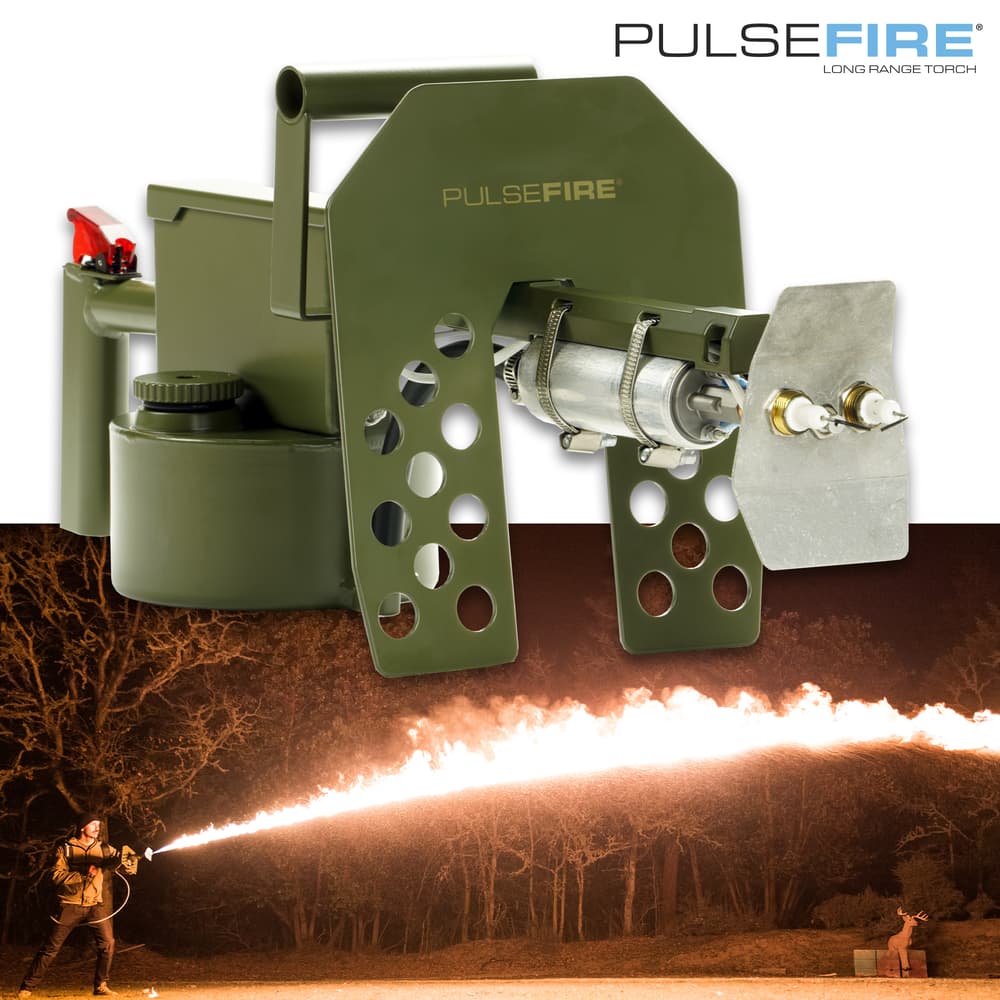
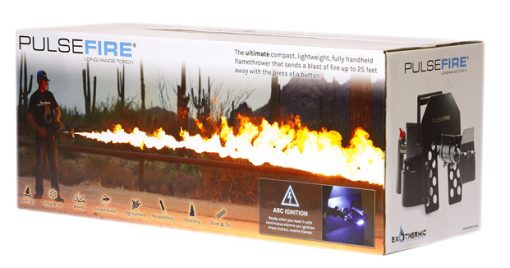
- Effective Reach: Up to 25 to 30 feet.
- Standard Capacity: Approximately 0.35 gallons in the integrated tank.
- Continuous Run Time: Roughly 4 minutes of uninterrupted fire, or dozens of short, controlled bursts.
- Empty Weight: Around 6 pounds, making it easy to carry across uneven acreage.
- Expansion: Compatible with an optional 3.3-gallon backpack reservoir connected via a quick-disconnect hose for large-scale clearing operations.
Pulsefire UBF (Underbarrel Flare)
The UBF is engineered with a standard Picatinny mount, allowing it to attach directly to tactical platforms, utility handguards, or a separate pistol-grip stock. While functionally identical in pump and ignition mechanics to the LRT, it has a lower profile to accommodate mounted applications and specialized agricultural machinery.
Recommended Fuel Mixtures and Performance
The performance, range, and flame duration of the unit depend directly on the fuel loaded into the reservoir.
Gasoline vs. Diesel Blends
Standard unleaded gasoline ignites instantly and burns cleanly with a bright flash, but it vaporizes quickly. As a result, pure gasoline produces a lighter flame with slightly reduced range and shorter residual burn times on the ground.
For outdoor land management, the manufacturer recommends a blend of 70% gasoline and 30% diesel (or up to an 80/20 ratio). Adding diesel increases the viscosity and weight of the fuel stream, allowing it to travel farther (closer to the maximum 30-foot threshold) and adhere better to vegetation, which is essential for initiating controlled burns through damp ground cover.
Video: Pulsefire® UBF
Fuels to Avoid

Never use unapproved chemicals or additives in a Pulsefire system. Prohibited materials include:
- Pure diesel, kerosene, or lamp oil: These lack the volatility required for the electric arc igniter to start reliably without an external heat source.
- Alcohol-based fuels (E85 or pure ethanol): High ethanol concentrations can degrade internal rubber seals and pump components.
- Homemade gelling agents or napalm substitutes: Thickened fuels will clog the high-pressure pump, overheat the electric motor, and void the equipment warranty.
Practical Applications of the Pulsefire Flamethrower
While the device delivers undeniable novelty, most owners deploy it as a functional utility tool. The ability to cast fire over 25 feet away provides a critical safety buffer compared to handheld drip torches or propane weed burners.
1. Prescribed and Controlled Burns
Wildfire management relies heavily on prescribed fires to eliminate dead underbrush, pine needle litter, and fuel ladders before dry seasons. Foresters and ranchers use the equipment to quickly set fire lines across wide firebreaks without having to walk directly alongside volatile brush lines.
2. Agricultural and Pasture Maintenance
Weeds, invasive woody shrubs, and persistent crop stubble can impede planting and deplete soil nutrients. Thermal weed control using focused bursts destroys weed cell structures, killing the root system without depositing synthetic herbicides into groundwater supplies.
3. Ice and Snow Melting
In sub-zero climates, heavy ice buildup on stone walkways, farm gates, culverts, and frozen drainage ditches creates structural and logistical hazards. A rapid application of heat from a safe distance clears dense pack-ice faster than manual scraping or chemical salt treatments.
4. Insect and Pest Control
Agricultural structures and outdoor properties often suffer from invasive ground-wasp nests or pest colonies tucked into rocky outcroppings. The reach of the system allows landowners to neutralize subterranean nests from a safe standoff distance, preventing stings.
Legality and Regulations in the United States
In the United States, flamethrowers are not regulated as firearms under the National Firearms Act (NFA), nor does the Bureau of Alcohol, Tobacco, Firearms and Explosives (ATF) classify them as destructive devices. Because they lack a barrel designed to expel a projectile through an explosive charge, they are federally unregulated tools.
However, state and municipal laws vary considerably:
- California: Flamethrowers capable of projecting a flame beyond 10 feet require an explicit permit issued by the State Fire Marshal under the California Health and Safety Code. Unpermitted possession is a misdemeanor.
- Maryland: Maryland state law strictly regulates flamethrowers, classifying them as restricted devices subject to criminal penalties for unauthorized possession.
- Local Burn Bans: Even in states where possession is completely legal, local county ordinances, drought declarations, and fire marshals can restrict the discharge of open flames during high-risk seasons. Always check local fire danger indexes and burning regulations before operation.
Essential Safety Protocols
Operating liquid-fuel projection equipment requires rigorous discipline and adherence to basic safety standards.
- Wear Proper Gear: Avoid synthetic clothing like polyester or nylon, which melts upon contact with heat. Wear natural fibers (heavy cotton, denim) or fire-retardant garments, alongside protective eyewear and heavy leather gloves.
- Establish a Safety Perimeter: Ensure pets, bystanders, and non-target combustibles are at least 50 feet away from the firing line and downwind trajectory.
- Keep Suppression Equipment on Hand: Never operate the tool without a dedicated Class B/ABC dry-chemical fire extinguisher, pressurized water pack, or charged garden hose nearby.
- Observe Wind Conditions: Strong or shifting winds can carry atomized fuel mist back toward the operator or push target flames past containment lines. Cease operations if wind speeds exceed 10 mph.
- Allow for Cool-Down: After extended continuous use, the nozzle assembly retains significant residual heat. Allow the front assembly to cool completely before refilling the fuel tank to prevent flash ignition.
The Pulsefire flamethrower provides a modern, mechanically sound alternative to traditional burning methods. When maintained properly, fueled with the correct gas-diesel blend, and operated with strict safety precautions, it serves as a powerful instrument for property management and land maintenance.