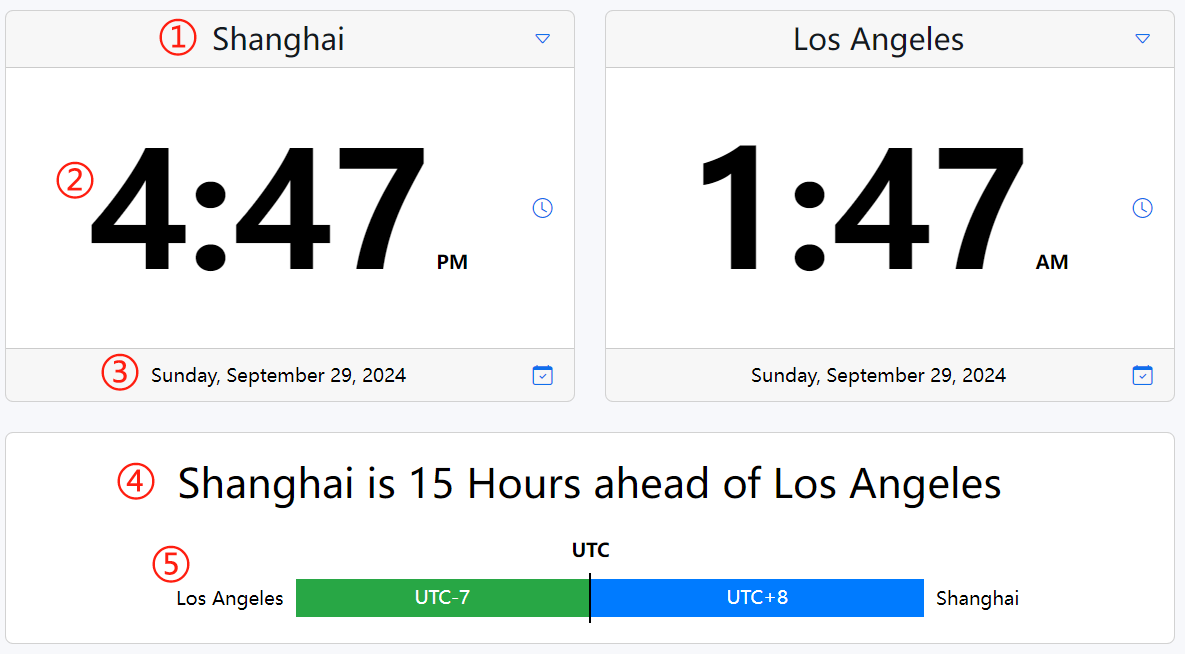
Qatar Time Converter: Global Zones & Guide
Whether you are negotiating a commercial contract with partners in Doha, booking a long-haul flight through Hamad International Airport, or coordinating a remote workforce across continents, tracking local time in Qatar is vital. Because modern business operates across borders, a reliable qatar time converter approach saves you from missed deadlines, early-morning wake-up calls, and scheduling mishaps.

Qatar operates on a single national time standard with zero seasonal adjustments. However, calculating the time difference between Doha and the rest of the world can become surprisingly complex when your home region switches in and out of Daylight Saving Time. This guide breaks down Qatar’s standard time, offers direct comparisons with major financial hubs, and highlights best practices for international scheduling.
Understanding Qatar’s Time Zone (AST / UTC+3)
Qatar observes Arabia Standard Time (AST) year-round. AST sits at an offset of UTC+03:00 (three hours ahead of Coordinated Universal Time / Greenwich Mean Time).
A critical operational detail to keep in mind:
- No Daylight Saving Time (DST): Qatar does not observe Daylight Saving Time. The clocks in Doha never shift forward or backward.
- Uniformity: The entire State of Qatar—from Doha and Al Rayyan to Al Wakrah and Ras Laffan—shares the exact same time. There are no regional subdivisions.
- Regional Alignment: Qatar shares the UTC+3 offset with several nearby neighbors, including Saudi Arabia, Bahrain, Kuwait, and Iraq. However, it does not share the same time zone with the United Arab Emirates or Oman, both of which operate on Gulf Standard Time (UTC+4), placing them one hour ahead of Qatar.
Using a Qatar Time Converter: Key Cities at a Glance
Because Qatar remains fixed at UTC+3 all year, time differences fluctuate depending on whether other countries are currently observing standard time or daylight saving time. The table below outlines how Qatar compares to major cities worldwide across different seasons.
| City / Region | Standard Time Difference | Daylight Saving Time Difference | Typical Window (When it is 12:00 PM in Doha) |
|---|---|---|---|
| London, UK | Qatar is 3 hours ahead (GMT) | Qatar is 2 hours ahead (BST) | 9:00 AM (Winter) / 10:00 AM (Summer) |
| New York, USA | Qatar is 8 hours ahead (EST) | Qatar is 7 hours ahead (EDT) | 4:00 AM (Winter) / 5:00 AM (Summer) |
| San Francisco, USA | Qatar is 11 hours ahead (PST) | Qatar is 10 hours ahead (PDT) | 1:00 AM (Winter) / 2:00 AM (Summer) |
| Frankfurt / Paris | Qatar is 2 hours ahead (CET) | Qatar is 1 hour ahead (CEST) | 10:00 AM (Winter) / 11:00 AM (Summer) |
| Dubai, UAE | Qatar is 1 hour behind (GST) | No change (No DST in UAE) | 1:00 PM (Year-round) |
| New Delhi, India | Qatar is 2.5 hours behind (IST) | No change (No DST in India) | 2:30 PM (Year-round) |
| Singapore / Manila | Qatar is 5 hours behind (SGT/PHT) | No change (No DST) | 5:00 PM (Year-round) |
| Sydney, Australia | Qatar is 7 hours behind (AEST) | Qatar is 8 hours behind (AEDT) | 7:00 PM (Winter) / 8:00 PM (Summer) |
How Daylight Saving Time Alters the Calculation
The primary reason people encounter friction when converting time for Doha is the asymmetric nature of Daylight Saving Time. While Qatar’s clock is stationary at UTC+3, its relationship with North America, Europe, and parts of Australasia changes twice a year.
The European Shift
In mid-to-late spring, European nations advance their clocks by one hour (moving to BST or CEST). When this occurs, Europe moves one hour closer to Qatar. For instance, London shifts from being three hours behind Doha to only two hours behind. When European clocks fall back in late autumn, the gap widens back to three hours.
The North American Shift
Similarly, the United States and Canada shift their clocks in March and November. During the North American summer, New York is 7 hours behind Doha (EDT). During the winter months, New York falls back to 8 hours behind Doha (EST). If your team holds a recurring meeting at 9:00 AM Eastern Time, the local time in Qatar will automatically shift from 4:00 PM to 5:00 PM when North American clocks change.
Video: Convert UTC to local time in Excel

Optimal Overlap Windows for Business Coordination
Scheduling meetings between Qatar and overseas partners requires balancing local office hours with the time difference. Qatar’s standard workweek also presents a structural nuance: the public sector and many corporate entities operate on a Sunday through Thursday schedule, with Friday and Saturday serving as the official weekend.
1. Qatar and Europe / United Kingdom
This is one of the easiest corridors to manage. Because the time difference is only 1 to 3 hours, the overlapping working window is broad.
- Best Meeting Window: 11:00 AM to 4:00 PM Doha time (equivalent to 8:00 AM to 1:00 PM in London during winter).
- Shared Days: Monday through Thursday provide standard, non-weekend alignment.
2. Qatar and the United States (East Coast)
Coordinating between Doha and the US East Coast (7–8 hours difference) requires late afternoon availability in Qatar and early morning availability in the Americas.
- Best Meeting Window: 4:00 PM to 6:00 PM Doha time corresponds to 8:00 AM to 10:00 AM in New York.
- Caution: Friday is a standard workday in the US but a weekend day in Qatar. Schedule critical joint sessions between Monday and Thursday.
3. Qatar and South / Southeast Asia
With India just 2.5 hours ahead and countries like Singapore, Malaysia, and the Philippines 5 hours ahead, communications run smoothly during the first half of Qatar’s working day.
- Best Meeting Window: 9:00 AM to 1:00 PM Doha time maps directly to 11:30 AM to 3:30 PM in India and 2:00 PM to 6:00 PM in Singapore/Manila.
- Advantage: Teams in Asia can complete morning work and hand off projects to Doha colleagues just as the Qatar business day begins.
Cultural and Calendar Considerations in Qatar
Accurate time conversion is not merely a matter of mathematics; it also involves understanding the rhythms of daily life in Qatar:
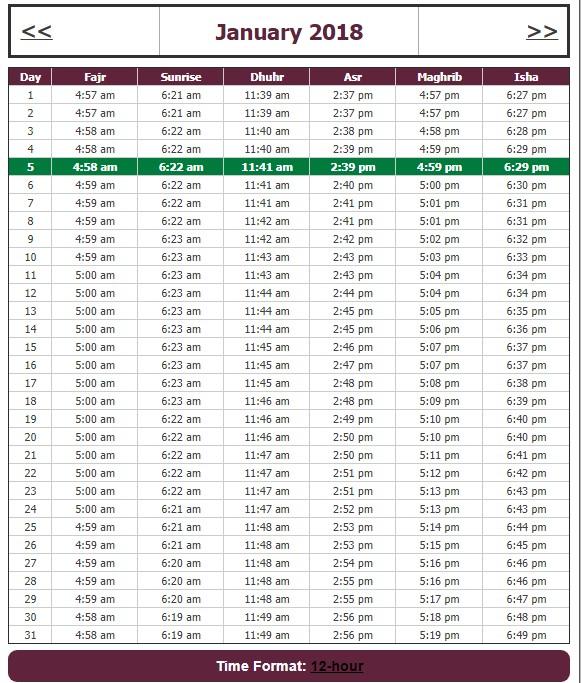
- Prayer Times: Throughout the day, Muslim business associates observe five daily prayers. While meetings often proceed around them, brief pauses or shifts of 15–20 minutes around prayer calls (particularly Dhuhr at midday and Asr in the afternoon) are standard professional courtesies.
- Holy Month of Ramadan: Working hours in Qatar change significantly during Ramadan. Under Qatari labor law, the workday for private and public sector employees is reduced (typically to 5 or 6 hours daily). Most businesses operate on a split schedule or a compressed morning shift (e.g., 9:00 AM to 2:00 PM). Always verify business operating hours directly during this month.
- Friday Mornings: Friday is a holy day and a primary day of rest. Commercial activities, retail, and corporate operations generally remain closed until after the Friday congregational prayer (Jumu'ah) in the early afternoon.
Simple Habits to Prevent Time Conversion Mistakes
To avoid scheduling errors when working with contacts in Doha, incorporate these basic operational safeguards:
- Use Absolute UTC Offsets in Invitations: When sending calendar invitations manually, label the zone clearly as AST (UTC+3) to remove ambiguity.
- Set Up Secondary Clocks: Add Doha to the World Clock widget on your smartphone and inside calendar platforms like Google Calendar or Microsoft Outlook. This provides an immediate visual check before you send an invite.
- Beware of Friday/Sunday Asymmetry: Always confirm whether you are scheduling on a Qatar business day. If you invite a Qatari firm to an urgent Friday meeting, you are asking them to attend on their weekend.
By understanding Qatar’s stationary UTC+3 baseline and monitoring seasonal clock shifts in your own territory, you can eliminate guesswork and ensure seamless international communication.