Radeon Vega 7 Equivalent NVIDIA GPU Guide
When buying or building a budget PC, understanding graphics performance is essential. AMD's Ryzen processors with integrated graphics have taken the entry-level market by storm, particularly chips featuring the Vega 7 architecture. However, because these are integrated graphics built directly onto the CPU rather than standalone components, many users naturally wonder: what is the radeon vega 7 equivalent nvidia graphics card?

Answering this question requires looking at synthetic benchmarks, real-world gaming performance, thermal limits, and system RAM configurations. Because integrated graphics borrow system memory (RAM) instead of using dedicated high-speed VRAM, direct comparisons can be tricky. This guide breaks down exactly where the Vega 7 stands in the NVIDIA hierarchy.
Understanding the AMD Radeon Vega 7
The Radeon Vega 7 is an integrated graphics processing unit (iGPU) found primarily in AMD Ryzen 5 processors, such as the Ryzen 5 5600G, Ryzen 5 4600G, and newer mobile variants. It features 7 compute units (448 stream processors) running on the Vega architecture. While it is not designed for heavy 4K rendering or maxed-out AAA gaming, it is a powerhouse for budget builders, esports enthusiasts, and casual gamers.
Its primary advantage is cost savings—you do not need to purchase a separate dedicated graphics card to get a display signal and light gaming capabilities. However, its performance heavily depends on your system's RAM speed and whether it operates in dual-channel mode.
The Direct Radeon Vega 7 Equivalent NVIDIA Options
When translating integrated AMD graphics into dedicated NVIDIA hardware, we have to look at older or entry-level discrete desktop GPUs. Performance-wise, the radeon vega 7 equivalent nvidia cards fall into the budget and low-mid tier categories from previous generations.
NVIDIA GeForce GT 1030
For a long time, the NVIDIA GT 1030 (GDDR5 version) was the go-to low-profile budget GPU. However, the Vega 7 comfortably outperforms the GT 1030 in almost every modern gaming scenario. The GT 1030 is limited by its 2GB of VRAM and lack of modern feature support, making it an inferior choice compared to a modern Ryzen 5 APU.
NVIDIA GeForce GTX 750 Ti and GTX 950
Video: Ryzen 5 5600G Vega 7 - 512MB vs 4GB vs 8GB VRAM

Historically, the Vega 7 trades blows with older entry-level gaming cards like the NVIDIA GeForce GTX 750 Ti (2GB) and often matches or slightly exceeds the GTX 950 depending on the game and RAM configuration. If you own a system with a Vega 7 iGPU, you are getting performance comparable to a dedicated graphics card from the mid-2010s without having to spend extra money or take up a PCIe slot.
NVIDIA GeForce GTX 1050 (2GB)
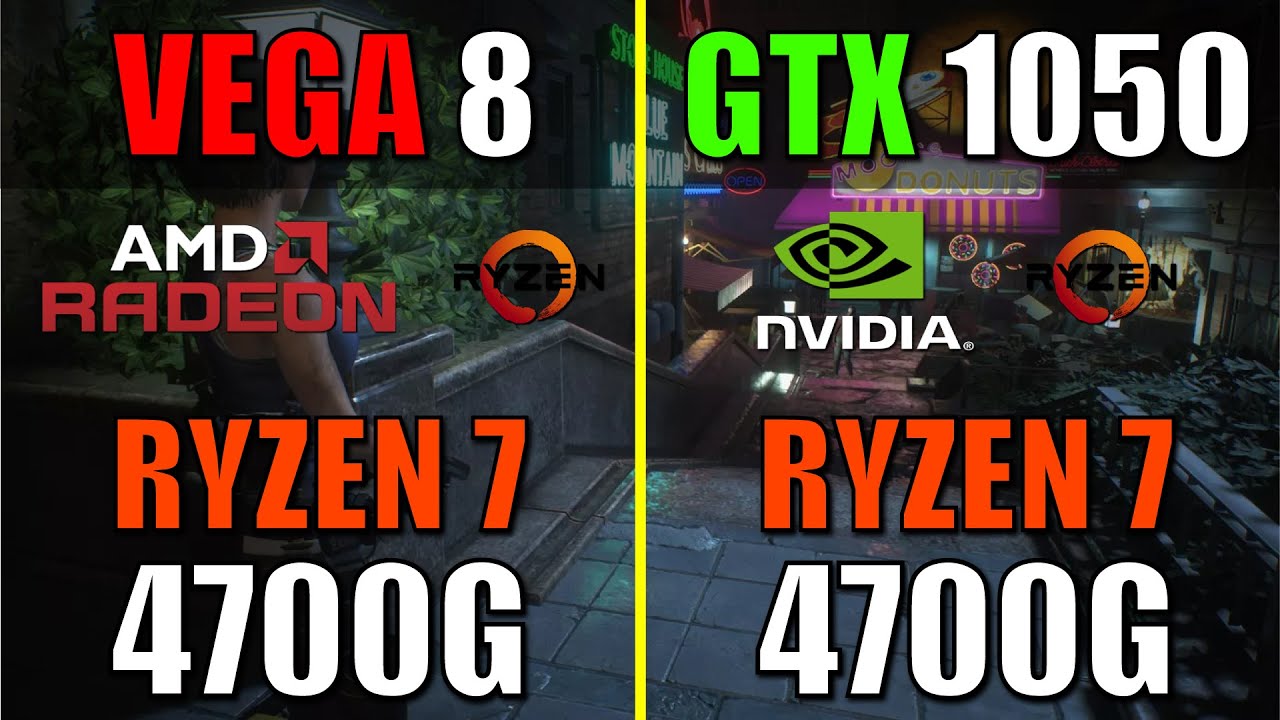
The closest true desktop competitor for the Vega 7 is the NVIDIA GeForce GTX 1050 with 2GB of VRAM. In titles optimized for modern APIs (like DirectX 12 or Vulkan), a well-configured Vega 7 paired with fast dual-channel DDR4 RAM can match the framerates of a standard GTX 1050. However, the GTX 1050 sometimes pulls ahead in titles that strictly require dedicated video memory rather than shared system RAM.
Factors That Impact Vega 7 Performance
Unlike NVIDIA dedicated GPUs, which come with their own dedicated GDDR5 or GDDR6 memory, the Vega 7's performance is volatile and depends heavily on your computer's supporting hardware.
- RAM Speed: Faster RAM directly translates to higher frame rates. Running 3200MHz or 3600MHz RAM in dual-channel mode is mandatory to get performance close to a dedicated NVIDIA GPU.
- Memory Allocation: You can often adjust the amount of dedicated frame buffer memory allocated to the iGPU in your motherboard's BIOS settings.
- Thermal Performance: Because the GPU shares the same silicon die as the CPU, high CPU temperatures can throttle graphics performance.
Should You Buy an NVIDIA Card Instead?
If you already own a Ryzen 5 processor with Vega 7 graphics, upgrading to a low-end NVIDIA card like a GT 1030 makes zero financial or performance sense. You would essentially be paying money for hardware that performs identically to what you already have.
However, if you want a significant upgrade over the Vega 7, you should look well past entry-level cards. To see a meaningful performance leap, you would want to step up to modern dedicated GPUs such as the NVIDIA GeForce GTX 1650, GTX 1660 Super, or an RTX 3050. These cards offer dedicated VRAM and architectural advantages that allow for comfortable 1080p gaming at medium-to-high settings.
Conclusion
The Radeon Vega 7 is an impressive piece of integrated engineering, roughly matching the capabilities of older dedicated NVIDIA cards like the GTX 750 Ti and GTX 1050. While it cannot compete with modern mid-range or high-end NVIDIA hardware, it provides exceptional value for entry-level gamers and office PC builders. If you need performance beyond what the Vega 7 offers, bypass older budget cards and invest in a modern, dedicated NVIDIA GPU for a true generational leap.