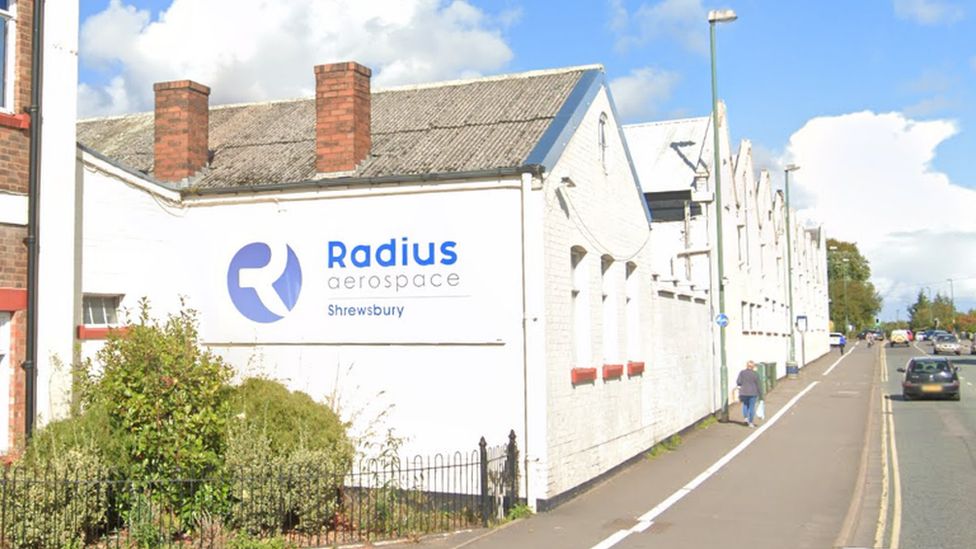
Radius Aerospace: Capabilities, Reach & Impact
In an aviation industry navigating rapid technological modernization and persistent supply chain bottlenecks, specialized aerostructures manufacturers serve as the backbone of global flight. Radius Aerospace has established itself as an indispensable Tier-1 and Tier-2 partner to the world’s leading aerospace original equipment manufacturers (OEMs). From precision sheet-metal forming and advanced composite bonding to complete structural assemblies, the company delivers mission-critical hardware designed to endure extreme operational environments.

Whether supporting long-range commercial transports, carrier-borne tactical jets, or heavy-lift rotorcraft, aerostructures demand uncompromising structural integrity and dimensional precision. This article examines the core engineering capabilities, manufacturing footprint, and market impact of Radius Aerospace across modern aviation and defense programs.
Core Manufacturing Capabilities of Radius Aerospace
Modern aerostructures require a rare convergence of heavy metallurgical forming and micron-level finishing tolerances. Radius Aerospace maintains a comprehensive suite of in-house manufacturing disciplines, allowing the company to control lead times, ensure strict traceability, and minimize production handover risks.
1. Metal and Composite Bonding
Adhesive bonding represents one of the most critical specialties within structural weight reduction. Radius operates industrial-scale autoclaves and cleanroom facilities engineered for both metallic-to-metallic and composite-to-metallic structural bonding. Key applications include:
- Acoustic engine nacelle panels and thrust reverser components designed to withstand intense acoustic vibration and thermal loads.
- Lightweight flight-control surfaces such as flaps, ailerons, and rudders built with metallic or nomex honeycomb cores.
- Bonded fairings and leading edges optimized for laminar airflow and aerodynamic efficiency.
2. Advanced Forming Technologies
Forming complex contours in high-strength aerospace alloys requires advanced machinery and metallurgical know-how. The company utilizes a diverse spectrum of specialized forming methods:
- Titanium Hot Forming and Superplastic Forming: Used to manipulate high-temperature titanium alloys into deep, complex geometries without inducing internal stress fractures.
- Stretch Forming: Essential for generating compound curvature profiles in fuselage skins, wing stringers, and structural frames.
- Hydroforming and Drop Hammer Operations: Efficient methods for deep-draw parts, complex ducting, and structural brackets made from aluminum, stainless steel, and nickel-based superalloys.
3. Precision Machining and Chemical Milling
To support high-tolerance structural interfaces, Radius maintains 3-, 4-, and 5-axis CNC machining centers capable of milling structural extrusions, forgings, and plate stock. Furthermore, chemical milling is applied selectively to reduce weight on complex formed skins, etching away non-critical material while preserving baseline structural ribs and load-bearing zones.
4. Special Processing and Surface Finishing
Aerospace structures are exposed to corrosive atmospheric conditions, de-icing chemicals, and extreme thermal cycling. The company’s integrated processing suites feature automated chemical processing lines certified for:
- Chromic, sulfuric, and boric-sulfuric acid anodizing.
- Chemical conversion coatings (Alodine) and passivating processes.
- Primer and topcoat spray application within environmentally controlled paint booths.
- Non-Destructive Testing (NDT), including ultrasonic, fluorescent penetrant inspection (FPI), and magnetic particle inspection.
Strategic Footprint and Specialized Facilities
Radius Aerospace operates several strategically located facilities throughout North America and Europe. This geographic diversification allows the organization to provide localized customer support, tap into regional aerospace engineering talent, and build supply chain redundancies.
- Fort Worth, Texas: A hub for high-rate sheet metal fabrication, machining, and complex mechanical assembly, serving major military and commercial programs across the southern aerospace corridor.
- Hot Springs, Arkansas: A flagship center of excellence for advanced bonding, titanium hot forming, and large-scale aerostructure subassemblies.
- Phoenix, Arizona: Highly focused on precision forming, ductile metal fabrication, and complex aircraft fluid systems/ducting.
- San Diego, California: Specializing in lightweight aerostructures, tight-tolerance sheet metal details, and specialized surface treatments.
- Shelbyville, Indiana: Supporting structural metal forming, assembly, and customer inventory staging.
- Broughton (United Kingdom): Providing dedicated European manufacturing support, close to major European wing assembly and commercial airframe operations.
Key Markets and Major Flight Platforms

Radius Aerospace supports a broad spectrum of commercial, defense, and business aviation programs. Because modern aircraft production cycles span decades, the company supplies components for both next-generation production lines and mature aircraft platforms requiring legacy sustainment.
Commercial Aviation
The post-pandemic surge in single-aisle and widebody commercial transport orders has created intense demand for aerostructures. Radius provides critical subassemblies, fuselage skins, engine inlet acoustic panels, and wing components to airframers such as Boeing and Airbus, along with engine OEMs such as GE Aerospace, Safran, and Pratt & Whitney.
Defense and Military Airframes
Military hardware operates under aggressive flight envelopes and requires strict adherence to international defense regulatory frameworks (including ITAR). Radius supplies mission-critical parts for frontline military aircraft, including:
- Tactical fighter aircraft (such as the F-35 Lightning II and legacy F/A-18 and F-15 fleets).
- Military transport aircraft (including the C-17 Globemaster sustainment and C-130 Hercules).
- Heavy-lift and tactical rotorcraft (including the UH-60 Black Hawk, AH-64 Apache, and CH-47 Chinook).
Business Aviation and Space Systems
Business jets require top-tier aesthetic finishes and strict acoustic insulation. Radius supplies fuselage shells, nacelles, and door structures for top business aircraft manufacturers like Gulfstream, Bombardier, and Textron Aviation. Additionally, the company’s high-temperature alloy forming capabilities position it to supply structural brackets, thermal shielding, and pressurization hardware for commercial space launch vehicles.
Commitment to Quality: AS9100 and NADCAP
In aerospace manufacturing, there is zero tolerance for defect escapes. Radius Aerospace operates under an enterprise-wide quality management architecture governed by ISO 9001 and AS9100 Rev D certifications. Furthermore, the company maintains extensive accreditations through the National Aerospace and Defense Contractors Accreditation Program (NADCAP).
These NADCAP accreditations cover vital special processes that cannot be fully verified through post-production inspection alone:
- Chemical Processing and Surface Preparation
- Non-Destructive Testing (NDT)
- Composite and Metal Bonding
- Welding (TIG, resistance, and orbital welding)
- Heat Treating
By keeping these special processes accredited in-house, Radius eliminates the transit delays and quality vulnerabilities associated with outsourcing to external third-party processors.
Navigating Future Aerospace Trends
As aviation pursues carbon reduction targets and moves toward next-generation aircraft concepts, aerostructures suppliers must evolve. Radius Aerospace is addressing several defining industry shifts:
- Advanced Lightweighting: Increasing adoption of thin-gauge titanium structures and hybrid composite-metal bonds to reduce dead weight and lower fuel burn.
- Digital Thread Integration: Implementing Model-Based Definition (MBD) and digital twin technologies that allow 3D CAD data to drive tooling, machining, and coordinate measuring machine (CMM) inspections seamlessly.
- Supply Chain Consolidation: OEMs increasingly prefer full-service tier partners who can deliver ready-to-install structural kits and complete assemblies rather than individual parts. Radius's integrated fabrication-to-assembly capabilities directly meet this demand.
Final Thoughts
Radius Aerospace represents a critical pillar in modern aerostructures manufacturing. Through its robust infrastructure in metal bonding, hot titanium forming, precision machining, and NADCAP-certified special processing, the company continues to bridge the gap between engineering blueprints and flight-ready reality across the world's most demanding aviation platforms.