Raft Engine Guide: Blueprint, Ratios, and Fuel
In the open-ocean survival game Raft, relying solely on standard sails leaves you at the mercy of the prevailing wind. Crafting your first raft engine fundamentally changes the game, allowing you to travel in any direction—including directly against the ocean current—to reach critical story coordinates and resource-rich large islands. However, running an engine requires careful attention to foundation limits, fuel consumption, and placement mechanics.

Where to Find the Engine Blueprint
Before you can craft an engine, you must acquire its blueprint from the first major story location: the Vasagatan, an abandoned luxury shipwreck.
To navigate the Vasagatan and retrieve the blueprint:
- Tune your Receiver to the frequency given at the Radio Tower.
- Explore the shipwreck to collect quest items, including mechanical parts, a crowbar, bolt cutters, and bomb components.
- Gain access to the Bridge (the top deck of the ship) by crafting an explosive to blow open the barred door.
- Inside the bridge, pick up the blueprints for both the Engine and the Steering Wheel resting on the consoles.
Once acquired, research the blueprint at your Research Table to permanently unlock the recipe.
Engine Crafting Costs and Placement
Building an engine requires mid-tier resources that you should begin stockpiling as soon as you unlock smelters:
- 5 Metal Ingots: Smelted from Metal Ore found on the reefs of tropical islands.
- 5 Scrap: Foraged from the seabed or scavenged from barrels.
- 1 Circuit Board: Crafted using 5 Plastic, 2 Copper Ingots, and 1 Vine Goo.
- 4 Ropes: Crafted from Palm Leaf bundles.
Placement Requirements
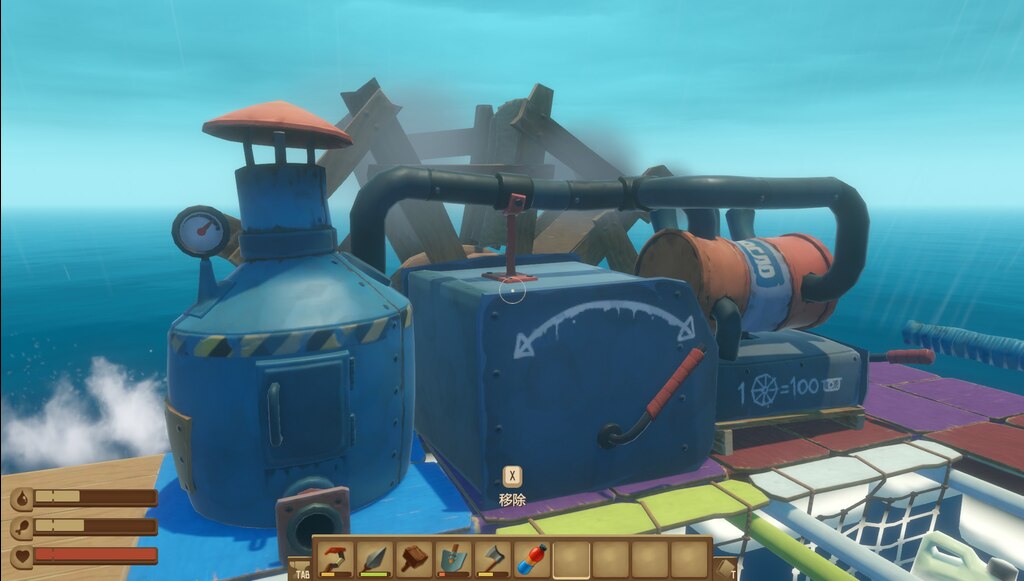
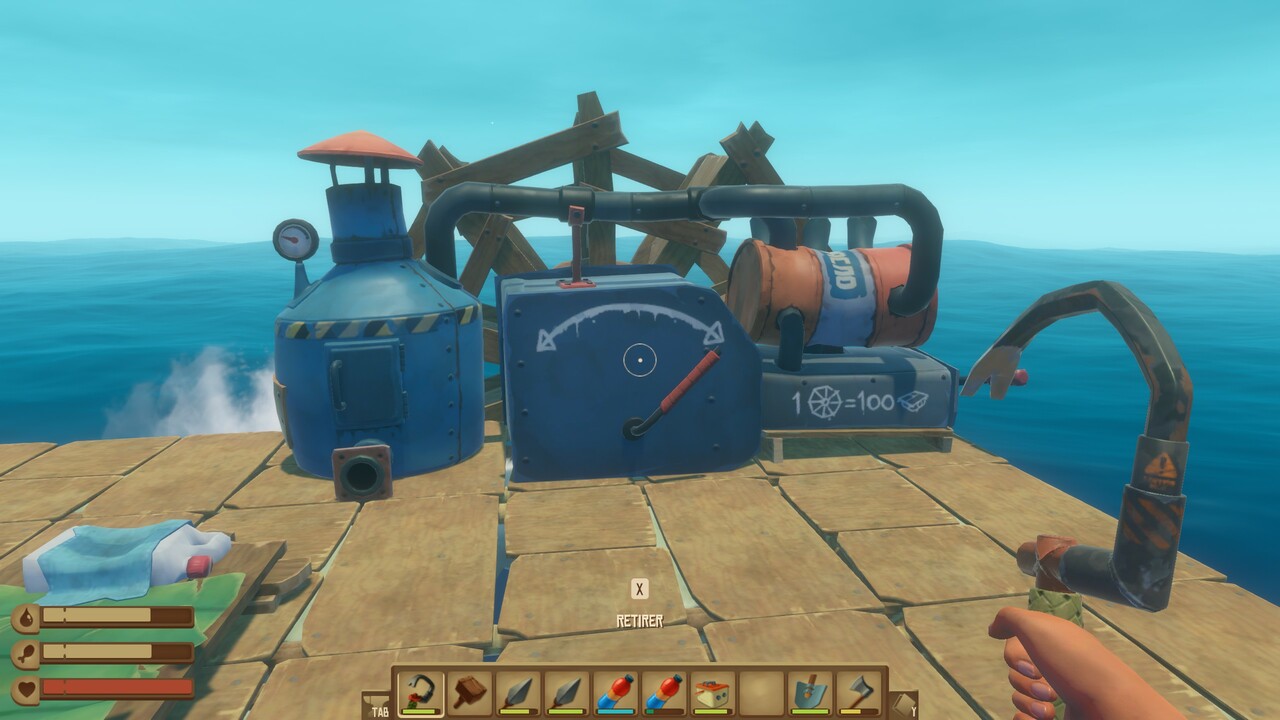
The engine requires a clear footprint on your raft. It occupies a space of roughly 3x2 foundations, with its large paddle wheel dropping through the center into the water. To place it:
- You must remove any floor tiles blocking the paddle wheel mechanism. The wheel must touch open water beneath the hull.
- Ensure your surrounding walls or storage crates do not clip into the engine frame, as collision boxes for the motor are relatively wide.
- Build a protective barrier around the engine base if you play on difficulties where the shark attacks exterior foundations.
How the Raft Engine Works: Foundation Ratios and Limits
Understanding the foundation-to-engine ratio is critical. A single engine can only propel up to 100 foundations at normal cruising speed. If your raft exceeds this limit, the engine will fail to propel the vessel efficiently.
The 100-Foundation Rule
Calculate your foundation count before setting sail. Only physical foundation blocks (floating tiles) count toward this total; upper-floor tiles, walls, roofs, and pillars do not add weight to the calculation.
- 1 to 100 foundations: 1 engine required.
- 101 to 200 foundations: 2 engines required.
- 201 to 300 foundations: 3 engines required.
- 301 to 400 foundations: 4 engines required.
- 401 to 500 foundations: 5 engines required.
- 501+ foundations: 6 engines.
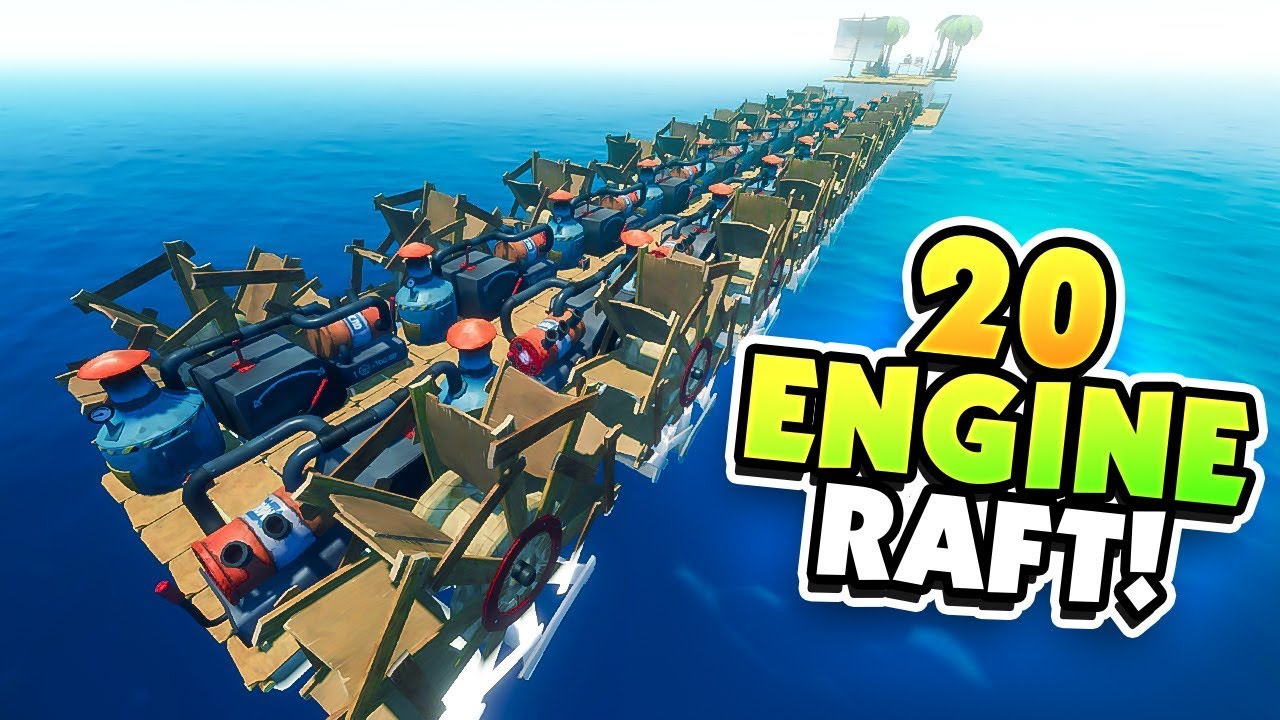
The 6-Engine Hard Cap: Developers implemented an upper limit for massive builds. Regardless of whether your mega-raft has 650 or 5,000 foundations, exactly six running engines will propel any vessel at maximum speed.
Signs Your Engine Is Overloaded
If you fail to provide enough engines for your raft's foundation size, the machine will struggle. You will notice distinct warning signs:
- The engine sputters, chugs unevenly, and releases thick black smoke.
- The paddle wheel rotates sluggishly instead of spinning rapidly.
- Your raft moves at a fraction of standard speed or drifts backward against the current.
Fueling Options: Planks vs. Biofuel

The engine offers two fuel options: raw planks or refined biofuel.
1. Planks (Early Game)
The engine's internal side-loader holds up to 17 planks. It consumes approximately 1 plank every 15 to 20 seconds. While convenient during early journeys, manually loading stacks of wood quickly drains your reserves, especially when running multiple engines simultaneously.
2. Biofuel (Late Game)
After unlocking the Biorefiner at Balboa Island, you can convert Honey and raw food (potatoes, fish, or meat) into liquid Biofuel. A single tank of biofuel provides significantly longer burn times than planks. Furthermore, you can connect engines to Fuel Pipes and central Biofuel Storage Tanks, fully automating the refueling process across all motors on your ship.
Engine Operation and Auxiliary Systems
Operating an engine requires more than simply flipping the power lever. You must manage direction and steering to avoid running in circles.
Direction and Anchors
Every engine features two primary interactive controls:
- Power Switch: Starts or stops the paddle wheel.
- Direction Lever: Reverses the wheel rotation. Ensure all engines face the same direction; conflicting engines cancel each other out, wasting fuel while keeping your raft stationary.
Always verify your anchor is raised before turning on the engine. Running the motor while anchored consumes fuel without advancing your position.
Steering Wheel Integration
The engine supplies forward momentum, but directional control requires the Steering Wheel. Placed anywhere on your vessel, the steering wheel allows you to rotate your raft's heading up to 360 degrees. Without it, the engine only drives your raft in the static direction the hull currently faces.
Engine Controls (Bridge Console)
Later in the storyline (at Tangaroa), you unlock the Engine Controls console blueprint. Installing this bridge console lets you start, stop, and reverse every connected engine across your raft from a single location, removing the tedious chore of running between individual machines down in the engine room.
Troubleshooting Common Engine Issues
If your engine setup is not functioning as intended, check these common points of failure:
- Raft isn't moving despite working engines: Check if a stationary anchor is deployed, or verify that your foundation count has not crossed into the next tier without an additional engine.
- Engines running in opposite directions: Inspect the direction levers on every engine. If one is set to forward and another to reverse, both paddle wheels spin without moving the raft.
- Engine stalls immediately: Ensure your fuel supply is active and that foundations directly underneath the paddle wheel have been removed to allow free clearance through the water.