Randy Owen’s Billion-Dollar Leap—What’s Beneath the Surface?
When modern entertainment headlines mention ten-figure sums, audiences instinctively picture tech moguls, private equity buyouts, or pop megastars selling master recordings. Yet when country music legend Randy Owen’s name suddenly surfaced alongside claims of staggering wealth, it prompted fans and industry analysts to investigate: looking at Randy Owen’s billion-dollar leap—what’s beneath the surface? Is the frontman of Alabama genuinely joining the ultra-exclusive billionaire club, or does the figure point to an entirely different kind of milestone?

To understand the reality behind these massive numbers, one must untangle viral internet speculation from commercial music economics and explore one of the most successful humanitarian campaigns in American entertainment history.
The Myth vs. Reality: Is Randy Owen a Billionaire?
To be straightforward: Randy Owen is not personally worth one billion dollars. Reliable financial disclosures and entertainment asset evaluations place Owen’s personal net worth in the neighborhood of $50 million to $60 million. While undeniably wealthy—a fortune earned through five decades of relentless touring, chart-topping hits, and smart agricultural investments—it falls far short of a ten-figure personal fortune.
Where, then, did the "billion-dollar" narrative originate? The confusion stems primarily from modern internet search algorithms and syndication networks conflating two distinct realities:
- The Collective Economic Footprint of Alabama: Over forty years, Alabama has generated hundreds of millions in retail sales, ticket grosses, and publishing royalties.
- The $1 Billion St. Jude Milestone: The historic, tangible billion-dollar achievement tied directly to Randy Owen’s name is the philanthropic fundraising total amassed through Country Cares for St. Jude Kids.
The Genuine Milestone: Country Cares for St. Jude
While Owen may not hold a billion dollars in his private bank account, he is directly responsible for channeling more than $1 billion into pediatric cancer research. This is the true "leap" that defines his modern legacy.
In 1989, legendary entertainer and St. Jude Children’s Research Hospital founder Danny Thomas approached Randy Owen with a direct appeal: mobilize the country music community to support the hospital. Owen took the challenge to heart. At a gathering of radio executives and artists in Nashville, Owen issued an emotional call to action, founding the Country Cares for St. Jude Kids radiothon program.
Over the subsequent three decades, that single initiative grew into an unprecedented fundraising juggernaut:
- More than 200 country radio stations participate annually across North America.
- Generations of country stars—from Garth Brooks and Reba McEntire to Luke Bryan and Kacey Musgraves—joined the cause under Owen's mentorship.
- In 2020, St. Jude announced that the Country Cares program officially crossed the historic milestone of $1 billion raised to ensure families never receive a bill for treatment, travel, housing, or food.
When financial analysts and cultural writers refer to Owen’s billion-dollar impact, this monumental philanthropic total is the verified foundation beneath the claim.
Randy Owen’s Billion-Dollar Leap—What’s Beneath the Surface?
Beyond his philanthropic work, examining Randy Owen’s commercial footprint reveals a masterclass in musical sustainability. As the primary lead vocalist and driving songwriter of Alabama, Owen helped orchestrate a commercial transition that fundamentally changed the business model of country music.
1. The Arena Era and Tour Grosses
Before Alabama broke into mainstream prominence in the late 1970s and early 1980s, country acts primarily toured honky-tonks, state fairs, and small civic centers. Alabama brought southern rock energy, stadium lighting rigs, and professional production to the genre.
Video: My Home's in Alabama, The Randy Owen Story
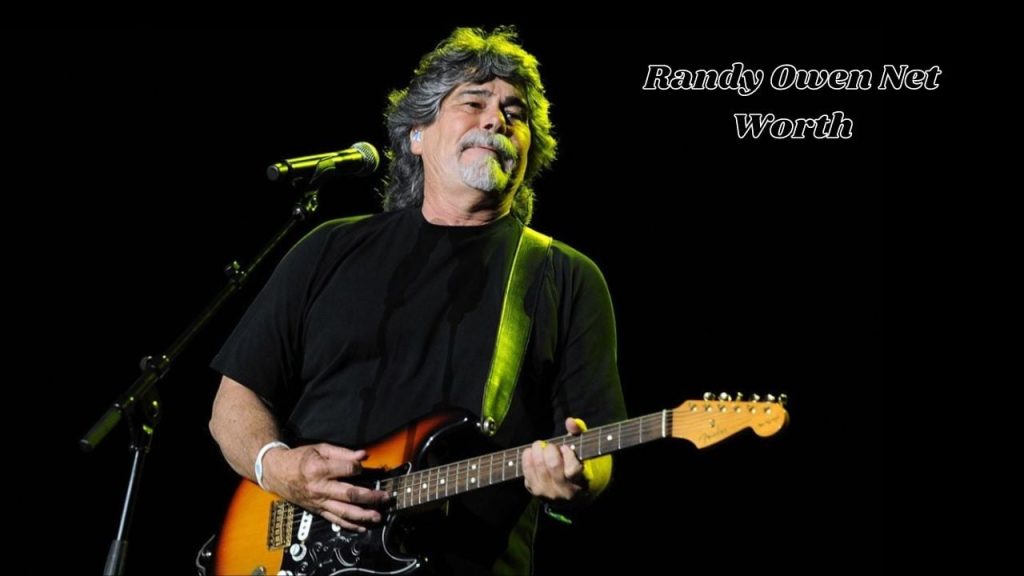
They became the first country group to routinely sell out major metropolitan arenas, setting attendance records that paved the way for modern stadium tours by artists like Kenny Chesney and Morgan Wallen. Across their multi-decade career, Alabama’s touring revenue easily approaches the multi-hundred-million-dollar mark in gross ticket sales adjusted for inflation.
2. Immense Catalog Power
The band’s recording credentials rival any act in American history:
- Over 73 million albums sold worldwide.
- 43 number-one singles, including an unprecedented streak of 21 consecutive chart-toppers between 1980 and 1987.
- Multi-platinum certifications across their core discography, including albums like Mountain Music, Feels So Right, and Roll On.
Because Owen co-wrote several of the band’s biggest hits—including "Mountain Music," "Pass It On Down," and "Song of the South" (collaborative adaptations)—his publishing assets yield steady, high-margin passive income. In an era where legacy music catalogs trade for hundreds of millions of dollars, the collective rights surrounding Alabama’s master and publishing repertoire represent significant enterprise value.
Prudent Stewardship: Owen Farms and Asset Diversification
What differentiates Randy Owen from stars who suffered financial ruin is his deep connection to his agrarian roots. Raised on a tenant farm in Adamsburg, Alabama, Owen picked cotton and chopped wood during his youth. That early hardship instilled a deep financial conservatism that shielded him from the pitfalls of sudden wealth.
Instead of funneling earnings into speculative ventures, Owen invested heavily in what he knew: land and cattle. His operation, Owen Farms, located near Lookout Mountain in Fort Payne, Alabama, spans hundreds of prime acres. The farm specializes in registered polled Hereford and Angus cattle and has operated successfully for decades.
By pairing music royalties with tangible real estate and agricultural production, Owen insulated his family from music industry volatility, establishing generational wealth through patience and discipline.
Health Challenges and the Value of Time
Any honest look beneath the surface of Owen’s later years must account for his physical trials. The singer has faced serious health battles, including a diagnosis of prostate cancer in 2010 (which was successfully treated) and chronic severe vertigo and migraines that forced Alabama to postpone multiple tour dates in 2019.
These experiences reshaped Owen’s priorities. In interviews, he frequently downplays personal financial markers, choosing instead to focus on faith, family, and continued advocacy for pediatric health. While internet rumors chase sensationalized billion-dollar net worth figures, Owen’s daily focus remains firmly rooted in Fort Payne and the ongoing work of St. Jude.
The Bottom Line
Investigating Randy Owen’s billion-dollar leap ultimately leads to an inspiring conclusion. As an individual, he is not a tech titan or a private equity billionaire; he is a working-class southern songwriter who achieved extraordinary commercial success, invested with rural common sense, and preserved his wealth.
Yet on a humanitarian level, the "billion-dollar" descriptor is completely accurate. By translating his fame into a self-sustaining charitable machine, Randy Owen built an engine that has raised over $1 billion for critically ill children. In the end, that impact is far more durable—and far more admirable—than any inflated celebrity balance sheet.