Red Ribbon Week Back to School Essentials
When the academic year kicks off, teachers and administrators are inundated with syllabi, classroom setups, and supply lists. Yet, experienced educators and school counselors know that August and September are also the best months to prepare for national campaigns happening in the fall. Gathering your Red Ribbon Week back to school essentials early ensures that when the nation's largest drug-abuse prevention campaign arrives from October 23 through 31, your school is fully prepared to deliver an inspiring, organized, and impactful message.

Since its inception following the death of DEA Special Agent Enrique "Kiki" Camarena in 1985, Red Ribbon Week has served as a unifying catalyst for communities to pledge toward drug-free, healthy lifestyles. However, orchestrating a week of engaging assemblies, spirit days, and educational programming takes time. Sourcing materials during the late-summer rush avoids shipping delays, budget crunches, and last-minute scrambles.
Why Early Autumn Is the Critical Window for Campaign Planning
Waiting until mid-October to organize Red Ribbon Week often results in picked-over supply catalogs, express freight charges, and rushed messaging. Addressing the campaign during back-to-school prep provides distinct operational advantages:
- Budget allocation: PTA/PTO groups and administrative boards distribute committee funds at the beginning of the school year. Pitching your campaign needs in August secures funding before auxiliary budgets dry up.
- Vendor lead times: Custom-printed banners, wristbands, and student pledge cards often take two to four weeks for manufacturing and freight.
- Curriculum integration: Teachers need advance notice to naturally weave substance-abuse awareness and healthy decision-making into their existing health, science, and social-emotional learning (SEL) units.
Core Red Ribbon Week Back to School Essentials
Every school approaches prevention education differently, but successful campaigns rely on a combination of visual reminders, tangible takeaways, and active student participation. Here are the core items to inventory and order as you begin your school year.
1. Wearables and Daily Keepsakes
Wearables serve as walking pledges across campus. Rather than disposable items that end up on hallway floors, prioritize keepsakes that students carry through the week and beyond.
- Satin ribbons and lapel pins: Traditional red ribbons with safety pins or adhesive backings remain a classic, cost-effective choice for staff and secondary students.
- Embossed silicone wristbands: Highly durable and popular across elementary and middle school campuses, silicone wristbands keep the campaign message top of mind for months.
- Custom lanyards and backpack tags: Great for older students who may find stickers juvenile; these functional accessories clip directly onto student IDs or bookbags.
2. Visual Campus Decor
Transforming the physical environment signals to students that the week is significant. Visual cues build anticipation and reinforce the core message across every common area.
- Main entrance banners: High-grade vinyl banners placed at the parent drop-off line and student entrance establish campus-wide solidarity.
- Door decorating supply kits: Door contests are an easy, high-engagement tradition. Supply homerooms with butcher paper, border rolls, adhesive dots, and red construction cardstock.
- Yard signs and fence ribbons: Weaving wide red ribbon or plastic cup displays into chain-link perimeter fences creates visible community engagement that catches the eyes of passing motorists.
3. Classroom Learning and Pledge Materials
The visual flair of Red Ribbon Week is meaningless without substance. Educational essentials anchor the celebration in real behavioral choices and life skills.
- Student pledge cards: Distribute individual commitment cards where students sign their name alongside a tangible personal goal (e.g., staying drug-free, making healthy choices, supporting peers).
- Age-tiered activity booklets: Primary students benefit from coloring sheets and simple word searches emphasizing kindness, nutrition, and personal safety. Upper elementary and middle schoolers need fact-based brochures addressing vaping, prescription drug misuse, and social media pressures.
- SEL prompt journals: Quick, 5-minute morning warm-up prompts that ask students to identify their positive support networks, healthy stress-relief outlets, and personal boundaries.
Structuring Spirit Themes with Minimal Friction

Theme days are a hallmark of Red Ribbon Week, but they should never place an undue financial or logistical burden on families. When establishing your calendar in early fall, prioritize themes that leverage items most students already have at home.
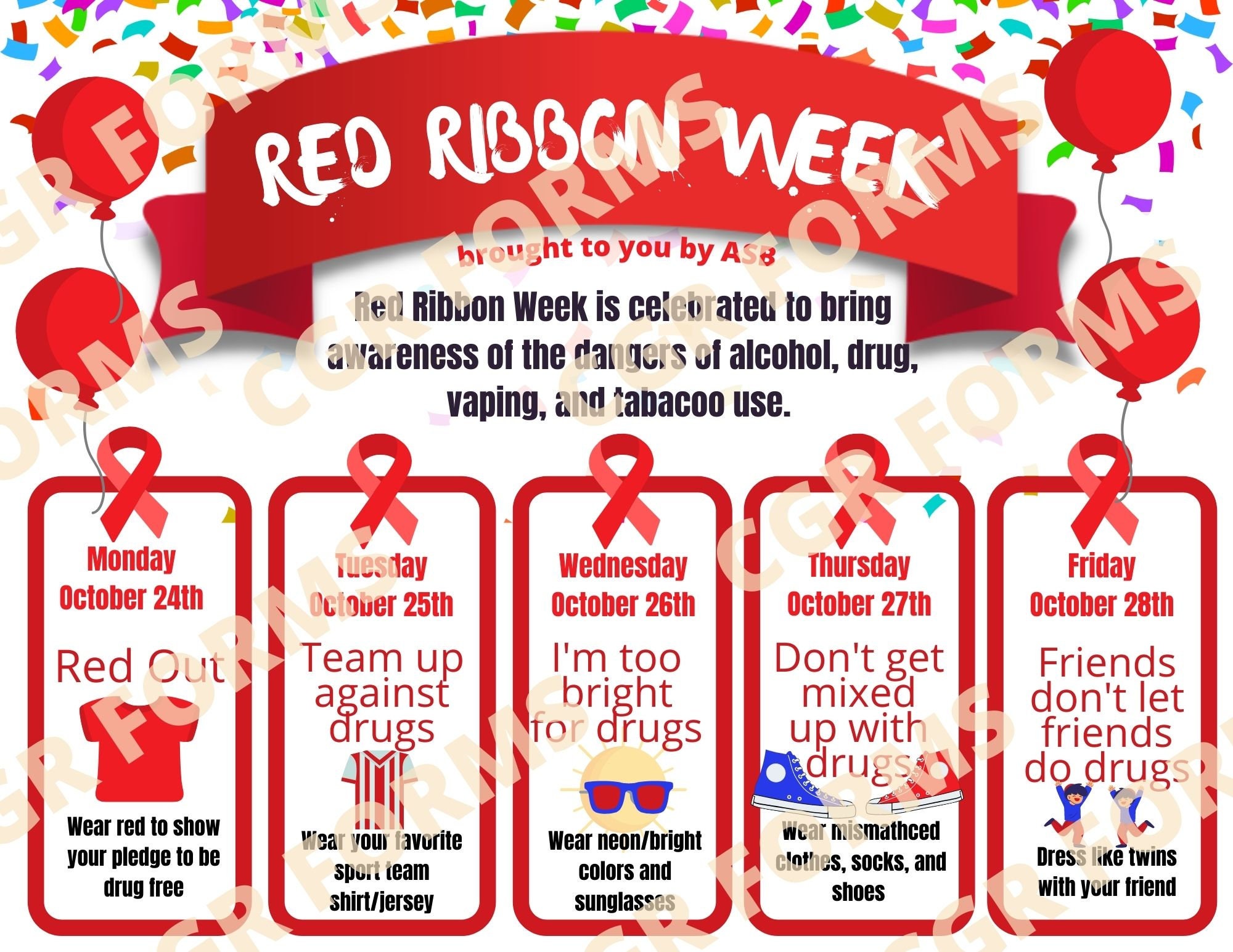
- "Lei Off Drugs" (Hawaiian/Tropical Day): Simple to execute with floral shirts, sunglasses, or paper flower leis supplied by the school.
- "Team Up Against Unhealthy Choices" (Jersey Day): Students wear their favorite athletic team shirts or youth league jerseys to emphasize community and healthy active lifestyles.
- "From Head to Toe, I'm Drug Free" (Crazy Hat and Sock Day): Accessible for every grade level and does not require buying new costumes.
- "Proud to Be Drug-Free" (Red Out Day): The anchor day of the week, where the entire student body, faculty, and support staff wear red for a campus-wide group photo.
Back-to-School Planning Timeline: August to October
To avoid burnout, break down your campaign execution into systematic phases over the first ten weeks of the school year.
August: Assembly and Audit
Form your Red Ribbon committee, pulling representatives from the counseling department, physical education staff, and parent-teacher organizations. Audit your supply closet for leftover ribbon rolls, banner stands, and hardware from the prior year. Review the National Family Partnership's annual theme and determine whether your school will adopt it or create an internal focus.
September: Procurement and Coordination
Place orders for all printed goods, incentives, and wearables. Submit facility requests for assemblies, guest speakers, or gymnasium events. Coordinate with school cafeteria staff to incorporate "red days" into the lunch menu (e.g., red apples, strawberries, marinara pasta) as a fun, zero-cost programmatic addition.
Early October: Distribution and Promotion
Package classroom kits containing pledge cards, daily challenge guides, and door contest rules for teachers. Draft a letter or digital newsletter insert for families explaining the purpose of the campaign, detailing the daily spirit themes, and offering conversation starters for discussing substance risks at home.
Sustaining the Prevention Message Year-Round
While Red Ribbon Week serves as a concentrated burst of awareness, substance prevention and positive youth development require consistent reinforcement. The materials, pledges, and conversations started in the fall should integrate naturally into your school's broader climate goals.
By securing your Red Ribbon Week back to school essentials during the calm of late summer, you give your staff the bandwidth to focus on what matters most when October arrives: mentoring students, fostering authentic discussions, and building an inclusive, drug-free school community that thrives all year long.