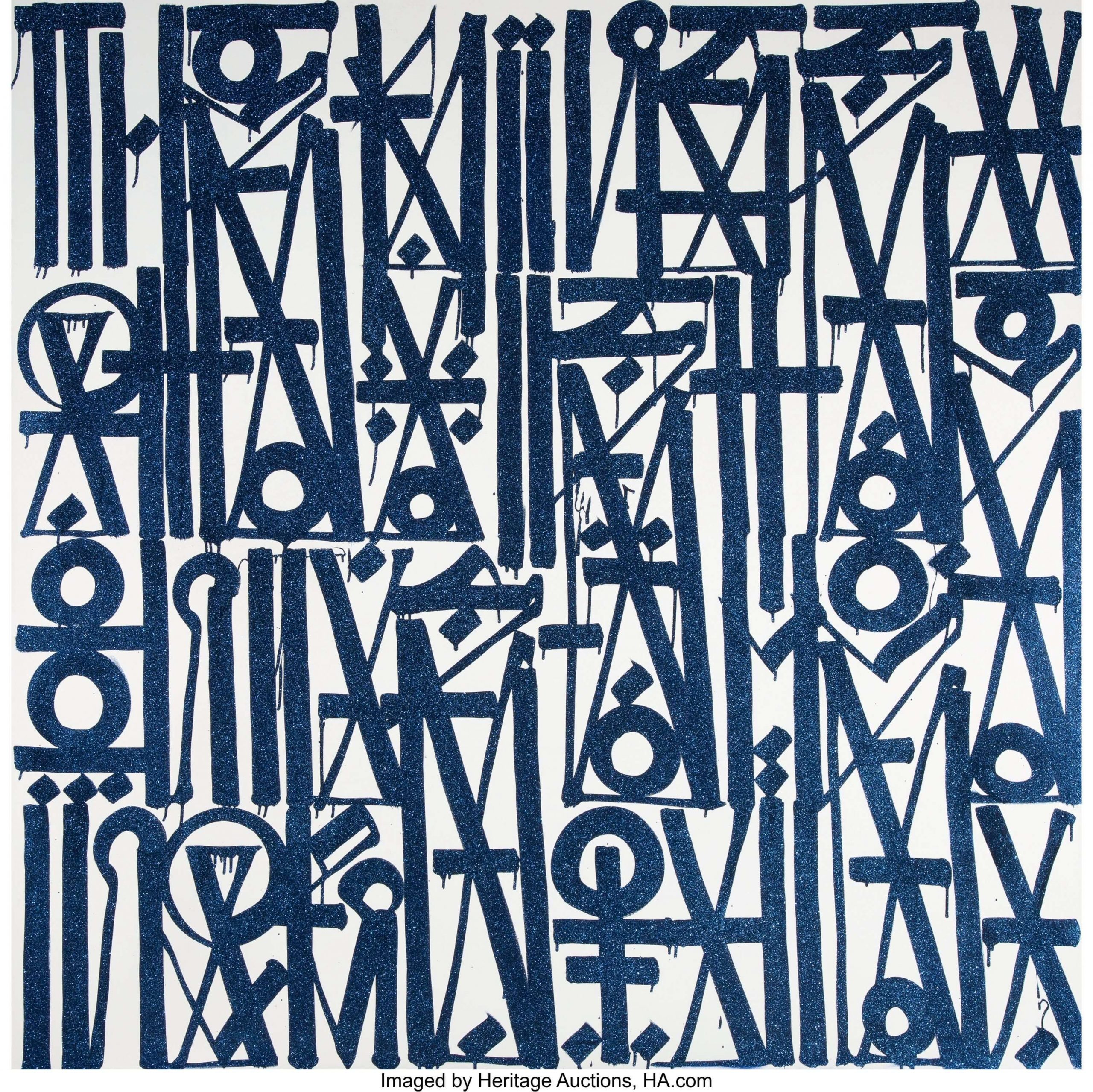
Retna: The Modern Master of Urban Hieroglyphics
Who is Retna?

In the expansive and ever-evolving world of contemporary urban art, few figures command as much mystique and visual distinctiveness as Retna. Born Marquis Lewis in Los Angeles, California, this visionary artist has fundamentally redefined how we perceive public lettering. While traditional graffiti artists often focus on wildstyle, bubble letters, or photorealism, Retna developed an entirely unique alphabet.
His signature script looks like an ancient text—a hybrid blend of Egyptian hieroglyphics, Hebrew, Arabic, and traditional blackletter typography. Yet, to those who look closely, it is deeply rooted in modern American street culture. By bridging ancient history with contemporary urban spaces, Retna has managed to captivate both high-end art galleries and everyday city dwellers alike.
The Evolution of Retna and His Unique Script
Before achieving international acclaim, Retna was heavily immersed in the Los Angeles graffiti scene of the 1990s. As a teenager, he joined legendary crew MAD Society (Metropolitan Art Department), cutting his teeth in the vast concrete expanses of Southern California. During these formative years, he absorbed diverse cultural influences from the multicultural neighborhoods of Los Angeles, ranging from Hispanic muralism to traditional graffiti writing.
Over time, he grew tired of legible tagging and wanted to create something more universal and poetic. This desire birthed his signature script. Rather than spelling out words in a way that everyone could instantly read, Retna’s paintings and murals convey poetry, lyrics, and philosophical thoughts encoded within his dense, rhythmic glyphs. This visual abstraction forces viewers to slow down and experience the artwork emotionally before attempting to decipher it intellectually.
Major Collaborations and Global Public Art
Video: Retna di Legion of Honor

Retna’s striking aesthetic quickly transcended the boundaries of underground street art, catching the attention of luxury brands, musicians, and major cultural institutions. His ability to seamlessly blend high-fashion sensibilities with raw street energy made him a sought-after collaborator across multiple industries.
- Fine Art and Gallery Shows: His canvas works have been exhibited in prominent galleries and museums worldwide, commanding significant attention from contemporary art collectors.
- Fashion Partnerships: Major luxury houses, including Louis Vuitton and Nike, have tapped Retna to incorporate his iconic typography into apparel, shoe designs, and retail spaces.
- Album Artwork: Musicians often commission him to design visually arresting album covers that utilize his cryptic script, bridging the worlds of sound and sight.
One of his most notable large-scale projects involved creating the massive visual backdrop for Justin Bieber’s album Purpose, bringing his urban script directly to mainstream pop culture arenas.
Understanding the Retna Aesthetic
What makes a Retna piece instantly recognizable? Several distinct visual elements define his body of work:
- Multilingual Influence: His letterforms borrow structural cues from multiple ancient and modern writing systems, giving them a timeless, universal weight.
- Bold Color Palettes: While many street artists rely on high-contrast black-and-white, Retna frequently utilizes vibrant reds, golds, teals, and earthy tones that evoke ancient artifacts and religious icons.
- Scale and Composition: Whether working on a multi-story building facade or a modest linen canvas, his compositions feel monumental, structured like sacred geometry or ancient manuscripts.
These elements combine to create an immersive experience. When you stand before a massive Retna mural, you aren't just looking at paint on a wall; you are confronting a modern monument that speaks a forgotten language of the future.
The Legacy and Future of Urban Hieroglyphics
Today, Retna stands as a bridge between the outlaw roots of 1990s graffiti and the polished realm of contemporary fine art. His work challenges the conventional boundaries of public space, proving that lettering can transcend communication to become pure visual rhythm. As cities continue to embrace public murals as cultural touchstones, Retna’s distinct hieroglyphics remain a powerful reminder of how human expression constantly reinvents itself, drawing from the past while sprinting toward the future.