RK3568 Bin Files Explained: Boot, rkbin & Flashing
When bringing up single-board computers (SBCs) or embedded hardware powered by the Rockchip RK3568 processor, you will quickly encounter the term rk3568 bin. Whether you are building mainline U-Boot, modifying a vendor Board Support Package (BSP), or flashing firmware partitions using Rockchip tools, binary files—often referred to collectively as rk3568 bin files or rkbin—stand at the center of the boot pipeline. Because the RK3568 platform relies on closed-source binary blobs to configure low-level silicon features such as DDR controllers and TrustZone execution, understanding how these files operate is critical for a successful build.

Understanding the Rockchip rkbin Ecosystem
Rockchip architectures utilize a hybrid open/closed-source boot flow. While the Linux kernel and U-Boot are largely open-source, the hardware initialization logic for high-speed dynamic RAM (LPDDR4, LPDDR4X, DDR4) and the early-stage power management controller is proprietary. Rockchip publishes these pre-compiled blobs in an official Git repository named rkbin.
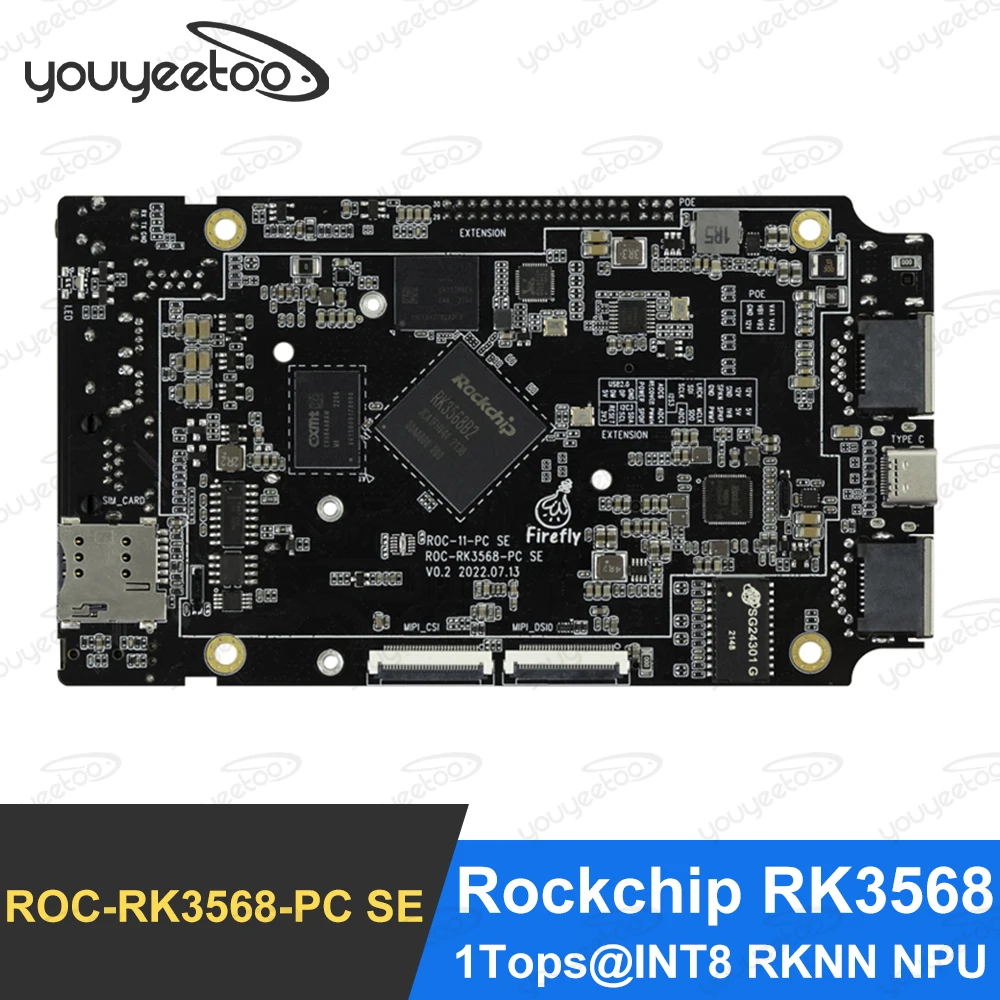
Without the correct binaries from the repository, modern high-bandwidth memory cannot train or stabilize at boot. As a result, compiling boot software for an RK3568 device like the Radxa ROCK 3A, Firefly ROC-RK3568-PC, or Odroid-M1 requires integrating these pre-compiled .bin files directly into the build pipeline.
Core RK3568 Bin Files in the Boot Chain
During the initial boot sequence, the RK3568 mask ROM (burned into the silicon) runs first, searches for bootable storage (eMMC, SD card, SPI flash, or USB Maskrom), and loads the initial stage binaries. Several distinct binary blobs are involved in completing this handoff:
1. rk3568_ddr_*.bin
This binary serves as the DDR initialization blob. Because DDR memory timing is complex and tightly coupled to proprietary physical layer (PHY) controller IP, Rockchip provides this component strictly as a pre-compiled binary. It configures the memory bus frequencies (often 1056MHz or 1560MHz) and auto-detects DRAM configurations.
2. rk3568_bl31_*.bin / .elf
This file is the ARM Trusted Firmware (TF-A) runtime environment running at Exception Level 3 (EL3). It manages secure monitor calls (SMC), low-level power states (PSCI), and hardware access control. Even when building completely open-source mainline U-Boot, the build system typically links against Rockchip's bl31.bin or generates an image using it as a reference.
3. rk3568_bl32_*.bin (OP-TEE)
If your deployment requires a Trusted Execution Environment (TEE) for cryptographic operations, secure storage, or DRM, the BL32 binary houses the OP-TEE OS. For generic headless Linux builds, this component is optional, but it remains a staple in security-hardened Android and Linux environments.
4. MiniLoaderAll.bin
In legacy or downstream Rockchip boot chains, MiniLoaderAll.bin serves as the second-stage bootloader (equivalent to U-Boot TPL/SPL). It packs the DDR controller driver and secondary program loader into a single unified container, which subsequently unpacks and jumps to u-boot.bin.
How to Use rkbin Blobs to Build Mainline U-Boot
Modern mainline U-Boot allows developers to use open-source code for almost the entire boot stack, but the RK3568 still requires the Rockchip DDR timing binary and the BL31 image to produce a bootable image.
- Clone the rkbin repository:
git clone https://github.com/rockchip-linux/rkbin.git - Locate the necessary binaries: Navigate to the
rkbin/bin/rk35/directory. You will find files matchingrk3568_ddr_*.binandrk3568_bl31_*.elf(or.bin). Check therkbin/RKBOOT/RK3568MINI_ALL.inifile to see which version Rockchip recommends for your target silicon stepping. - Export variables and compile U-Boot: Point your U-Boot build command directly to these binaries:
export BL31=/path/to/rkbin/bin/rk35/rk3568_bl31_v1.44.elf
export ROCKCHIP_TPL=/path/to/rkbin/bin/rk35/rk3568_ddr_1056MHz_v1.18.bin
make your_rk3568_board_defconfig
make -j$(nproc)
Upon completion, the build directory will output u-boot-rockchip.bin (or idbloader.img and u-boot.itb), which combine your compiled U-Boot code with the proprietary initialization binaries ready to write directly to flash storage.
Flashing RK3568 .bin Images to Hardware
Once you produce or download firmware images, you write them to the board via Maskrom or Loader mode. Rockchip platforms use specific partition schemes defined in a parameter.txt file. Common `.bin` outputs flashed to the storage include:
- idbloader.bin / idbloader.img: Flashed to sector
0x40(64). It bundles the DDR binary and U-Boot SPL together. - uboot.bin / u-boot.itb: Flashed to sector
0x4000(16384). It contains the main U-Boot payload and the BL31 secure firmware. - boot.bin / boot.img: Flashed to sector
0x8000. It houses the kernel (Image), initramfs, and Device Tree Blob (DTB).
On Linux and macOS, use the open-source CLI utility rkdeveloptool to flash these binaries. Put the board into Maskrom mode (by holding the hardware Maskrom button while connecting the USB-OTG cable to your host PC), and run:
# Verify connection
sudo rkdeveloptool ld

# Initialize RAM via DDR loader binary
sudo rkdeveloptool db rkbin/bin/rk35/rk3568_ddr_1056MHz_v1.18.bin

# Write bootloader components
sudo rkdeveloptool wl 0x40 idbloader.img
sudo rkdeveloptool wl 0x4000 u-boot.itb

# Reset and boot
sudo rkdeveloptool rd
For Windows workstations, Rockchip provides the RKDevTool (Release Tool) GUI, which reads the address offsets directly and allows you to browse and attach each respective .bin file across designated partitions.
Troubleshooting Common RK3568 Bin Errors
Hardware bring-up frequently runs into edge cases. Keep these diagnostic patterns in mind when your board fails to boot:
- Serial Console Garbage / Baud Rate Mismatches: Rockchip boot ROM and the DDR binary communicate by default at 1,500,000 baud (1.5 Mbps), rather than standard 115,200 baud. If your serial console shows unreadable symbols during power-on, switch your terminal client to 1500000 8N1.
- DDR Training Failures: If you see
DDR3/4/LPDDR4 check failin your early UART logs, you are using an incompatible DDR binary revision. Silicon revisions (such as RK3568 vs. RK3568B2) or unconventional RAM chips require newer releases from therkbinrepository. - PSCI / Kernel Crash on Secondary Cores: If the Linux kernel hangs right after displaying
SMP: Bringing up secondary CPUs..., the BL31 binary you linked during the U-Boot build is outdated or mismatched with the kernel's device tree bindings. Update yourrk3568_bl31_*.elfto the latest stable version inrkbin.
Summary
Handling rk3568 bin files is a standard requirement of the Rockchip development lifecycle. While the reliance on binary blobs prevents the bootloader stack from being completely free software, understanding the separation between DDR initialization, BL31 ARM Trusted Firmware, and U-Boot allows developers to build clean systems, diagnose early boot issues, and maintain solid control over the embedded platform.