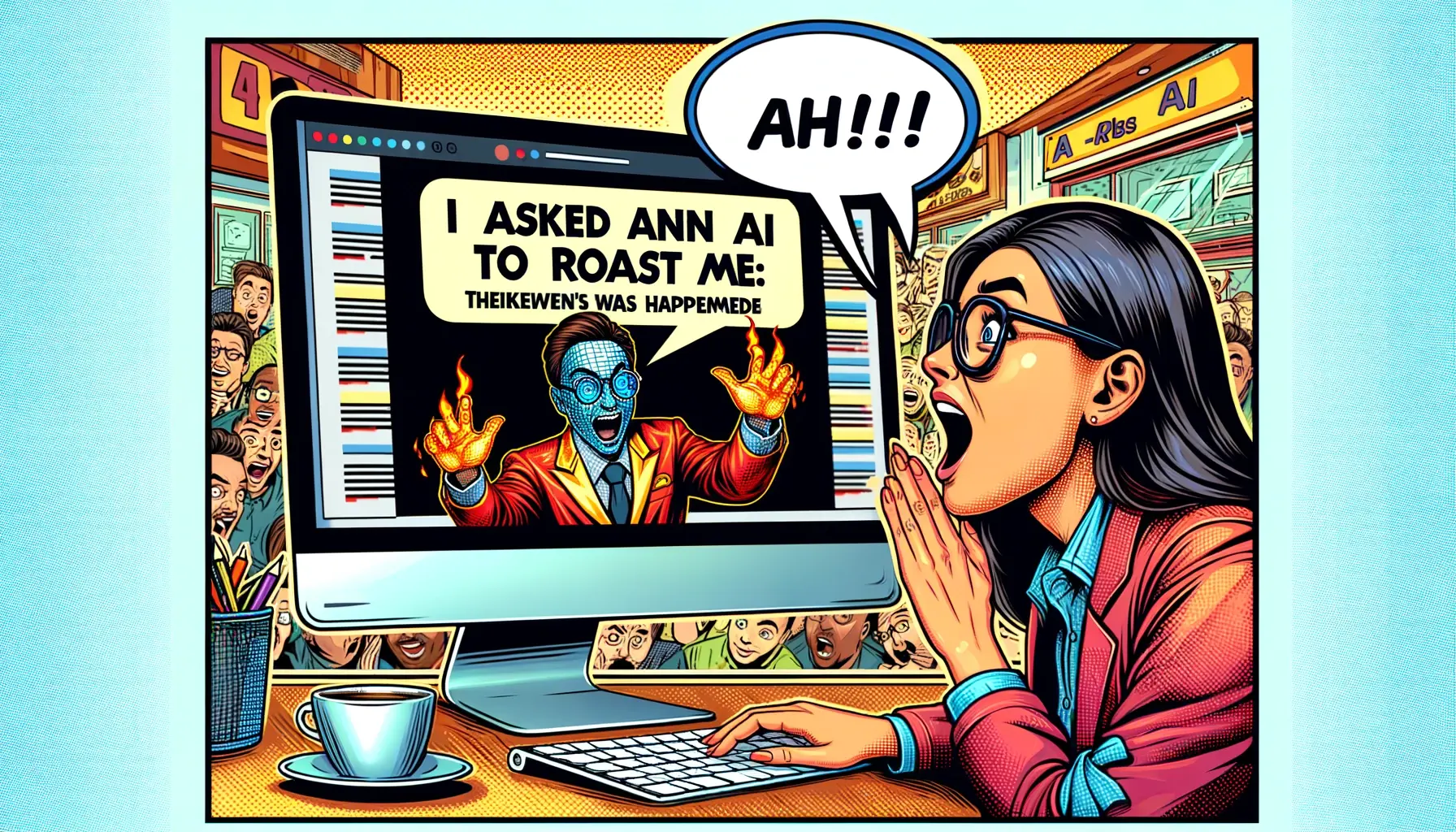
Roast About People: We Asked AI to Write Them
Humor is famously difficult for machines. While computers can calculate pi to a trillion digits, telling a joke that actually lands requires timing, cultural context, and a deep understanding of human absurdity. But as large language models become more advanced, people are testing their limits in increasingly creative ways. Curious to see how algorithms view our daily habits, we decided to explore what happens when you write a roast about people using cutting-edge artificial intelligence.

We didn't feed the AI malicious prompts; instead, we asked it to gently poke fun at modern human archetypes—from the corporate jargon enthusiast to the chronically online multitasker. The results were a fascinating mix of uncanny accuracy, predictable tropes, and occasional flashes of genuine comedic brilliance. Here is a breakdown of what the AI came up with when tasked with roasting contemporary society.
The Tech-Obsessed Productivity Guru
Our first prompt targeted the modern hustle-culture devotee. You know the type: they wake up at 4:30 AM, drink a smoothie made of ground-up tree bark, and treat every minor inconvenience as an optimization problem. When asked to write a roast about people in this category, the AI did not hold back.
The algorithm zeroed in on the obsession with tracking metrics:
- The Smartwatch Trap: The AI joked that these individuals won't believe they actually slept unless a piece of aluminum on their wrist confirms they achieved REM cycles worth bragging about on LinkedIn.
- Jargon Addiction: The model pointed out that people in this group don't simply eat breakfast; they 'fuel their biological asset allocation' before 'synergizing their morning workflow.'
- The Endless Grind: According to the AI, a productivity guru's idea of relaxation is reading a biography of a 19th-century steel tycoon while listening to brown noise at 1.5x speed.
What made this AI-generated roast so compelling was how it mirrored actual internet satire. It understood that the humor doesn't come from cruelty, but from recognizing the sheer exhaustion of trying to turn human existence into a software update.
The Chronically Online Internet Dwellers
Next, we turned the spotlight toward internet culture itself. We asked the AI to write a roast about people who spend too much time reading niche forums, arguing about pop culture discourse, and consuming short-form video content until their brains turn to digital static.
The AI’s critique of the digital native touched on several familiar truths:
- The Attention Span Deficit: The model suggested that if a YouTube video doesn't feature subway surfers gameplay at the bottom of the screen, these viewers will simply forget object permanence exists.
- Micro-Trend Whiplash: The roast highlighted how quickly internet users adopt and discard aesthetics, noting that someone can go from a 'cottagecore baker' to a 'cyberpunk minimalist' in the span of a single weekend based on an algorithm shift.
- The Comment Section Warrior: The AI joked that these individuals treat Twitter threads like a court of law where they are simultaneously the judge, jury, and executioner over topics they learned about five minutes ago.
While broad, these observations highlight a strange reality: the AI has read enough internet comments to recognize the collective anxiety disguised as sarcasm that defines modern online spaces.
Video: I Asked ChatGPT to ROAST Me 😭
Why Artificial Intelligence Makes a Surprisingly Good Comedian
You might wonder why an AI can write a functional roast at all. Stand-up comedy relies on surprise, juxtaposition, and tension. Algorithms operate on pattern recognition. At first glance, these two concepts seem opposed. However, a good roast is actually built on predictable structural patterns.
Think about the anatomy of a roast joke: you establish a recognizable baseline behavior, exaggerate it to an absurd degree, and deliver a punchline that highlights the contradiction. AI excels at analyzing patterns in language, meaning it can easily spot the contradictions in how we live our lives. When it writes a roast about people, it is essentially reflecting back a data-driven synthesis of our collective social anxieties.
The Limits of Algorithmic Humour
Of course, the AI isn't infallible. When left to its own devices, it tends to lean heavily on clichés. If you don't constrain the prompt, you will get a lot of jokes about people drinking too much artisanal coffee or staring at their phones during dinner. It lacks lived experience; it doesn't know the actual physical pain of stepping on a Lego brick or the awkwardness of waving back at someone who was actually waving at the person behind you.
Furthermore, AI-generated humor can occasionally feel sanitized. Guardrails prevent language models from crossing lines into genuine cruelty or offensive territory, which is mostly a good thing, but it does remove the sharp, dangerous edge that makes the best live comedy memorable.
What We Learned From Asking AI to Mock Us
Conducting this little experiment proved a few things about both technology and human nature. First, we are remarkably easy to summarize. Our modern habits—our obsession with screens, our quest for self-optimization, our endless quest for digital validation—leave a massive linguistic footprint that an algorithm can parse in seconds.
Second, laughing at ourselves is healthy, even if the person making the joke is a server farm in Oregon. Whether it's a human comedian or an AI writing a roast about people, humor acts as a mirror. It reminds us not to take our corporate buzzwords, our endless scrolling, and our frantic hustle culture quite so seriously. And if the robots eventually take over, at least we know they'll have a decent sense of humor about our downfall.