Robin Williams’ Net Worth Shock: Legacy & Truth
Unpacking the Robin Williams’ Net Worth Shock

When the legendary comedian and actor Robin Williams tragically passed away in August 2014, the world mourned the loss of a comedic genius. Soon after, headlines began swirling about financial distress, leading to what many fans remember as the Robin Williams’ Net Worth Shock. Tabloids and news outlets published sensationalized stories claiming the beloved star was on the brink of bankruptcy at the time of his death. However, the reality of his financial standing was vastly different, complex, and ultimately a masterclass in modern estate planning.
Understanding what really happened to his wealth requires looking past the rumors and examining probate documents, trust structures, and the actual assets Williams left behind. Far from being broke, Williams commanded huge paychecks throughout his decades-long career, starring in massive blockbusters like *Mrs. Doubtfire*, *Aladdin*, *Good Will Hunting*, and *Jumanji*. This article breaks down the truth about his fortune, his real estate holdings, and the legal battles that followed his passing.
The Origin of the Bankruptcy Rumors
Where did the narrative that Robin Williams was broke come from? The rumors largely stemmed from comments the actor made in interviews leading up to his death, combined with the expensive reality of his personal life.
High Alimony and Lifestyle Costs
Williams had experienced two costly divorces before his marriage to his third wife, Susan Schneider, in 2011. In a 2013 interview with *Parade* magazine, Williams joked about needing to take television roles (such as his short-lived CBS sitcom *The Crazy Ones*) to pay the bills, specifically mentioning the financial impact of his previous divorces. He famously quipped that divorce is expensive and humorously compared it to having your heart ripped out through your wallet.
Misinterpreting Cash Flow Versus Net Worth
While Williams felt the pressure of maintaining a high cash-flow lifestyle—paying alimony, maintaining multiple California properties, and funding various lifestyle expenses—experiencing a temporary cash crunch is vastly different from actual insolvency. Tabloids conflated his comments about working for steady income with total financial ruin, creating a narrative that shocked millions of devoted fans who assumed a Hollywood A-lister must have had endless liquid cash.
What Was Robin Williams’ True Net Worth?
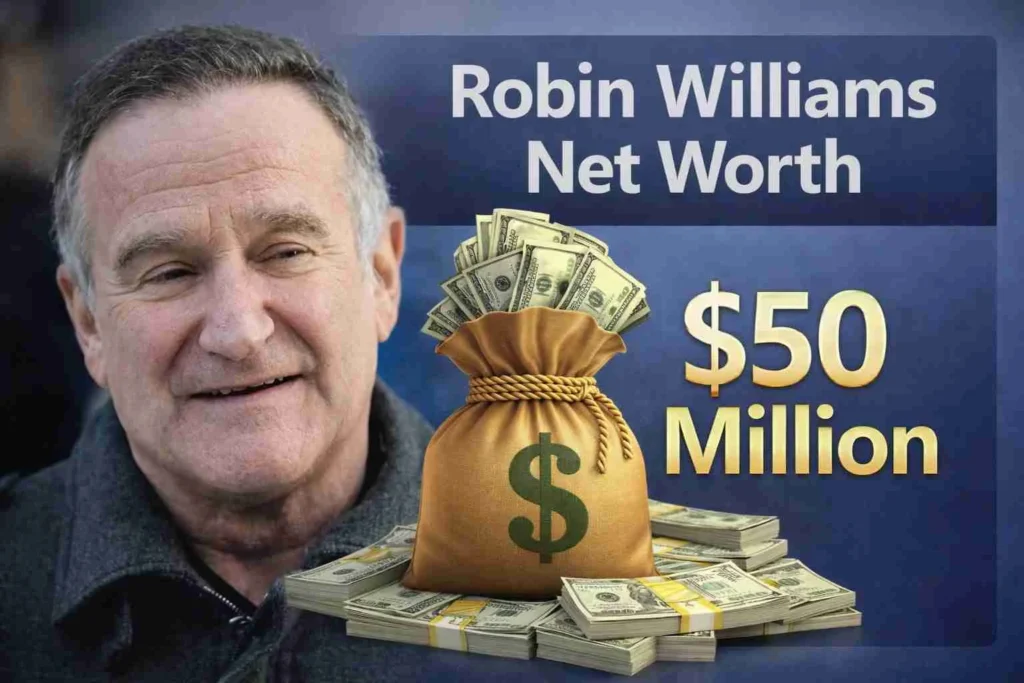
At the time of his death, Robin Williams’ net worth was estimated to be between $50 million and $100 million. While this is short of the exaggerated billionaire figures sometimes tossed around in internet lore, it represents a massive fortune built on a lifetime of dedicated artistry.
His wealth was distributed across several asset classes:
- Real Estate: Significant property holdings in Northern California, including his main estate in Paradise Cay, Tiburon.
- Intellectual Property & Royalties: Residual income from films, merchandise, and voice-acting agreements, particularly his iconic role as the Genie in Disney's *Aladdin*.
- Personal Collections: Extensive collections of art, watches, bicycles, and movie memorabilia, many of which were later auctioned off for charity and to settle estate logistics.
The Real Estate Portfolio and Its Valuation
Real estate formed a massive cornerstone of Williams' net worth. His primary residence, a sprawling Mediterranean-style villa in Tiburon, California, dubbed 'Villa Sorriso' (Villa of Smiles), was initially valued at nearly $30 million when he tried to sell it a few years prior to his death. However, luxury real estate in the San Francisco Bay Area can take time to move. Following his passing, the property eventually sold for a reduced price of around $5.35 million in 2016, which contributed to early media confusion regarding the total valuation of his liquid estate.
The Estate Battle Between Family and Children
The true "shock" for many legal observers was not a lack of money, but rather the intense legal dispute that unfolded between Williams' widow, Susan Schneider Williams, and his three adult children from previous marriages: Zak, Zelda, and Cody.
The Trust and the Divide
Williams had established a living trust designed to provide for Susan while ensuring that the bulk of his memorabilia, personal items, and a significant portion of his wealth would eventually pass to his children. However, ambiguities in the trust language led to fierce disagreements over specific items.
- Personal Items: The children argued that Susan was trying to strip the home of items specifically earmarked for them, including clothing, photographs, and awards.
- The Legal Resolution: After months of mediation, the parties reached a settlement out of court. Susan retained the home she shared with Williams and a living allowance funded by the trust, while the children received the vast majority of his personal effects, clothing, watches, and a collection of contemporary art.
How Williams Protected His Legacy
Despite the public family fallout, Robin Williams actually took sophisticated steps to protect his family and his public image long-term. One of the most notable provisions of his estate plan involved the use of his name, image, and likeness (NIL).
Williams legally restricted the use of his holographic image and digital likeness for commercial purposes for 25 years following his death. This prevented Hollywood studios or advertisers from digitally recreating him in posthumous films or commercials without strict oversight, preserving the integrity of his cinematic performances.
Conclusion: The Enduring Legacy Beyond the Wealth
The narrative surrounding the Robin Williams’ net worth shock serves as a cautionary tale about celebrity finance, tabloid journalism, and the complexities of estate planning. While the comedian faced normal human financial pressures—such as alimony and maintaining high-value real estate—he was far from destitute. Ultimately, his true legacy is not measured by the millions in his trust, but by the laughter, empathy, and unforgettable characters he gifted to the world.