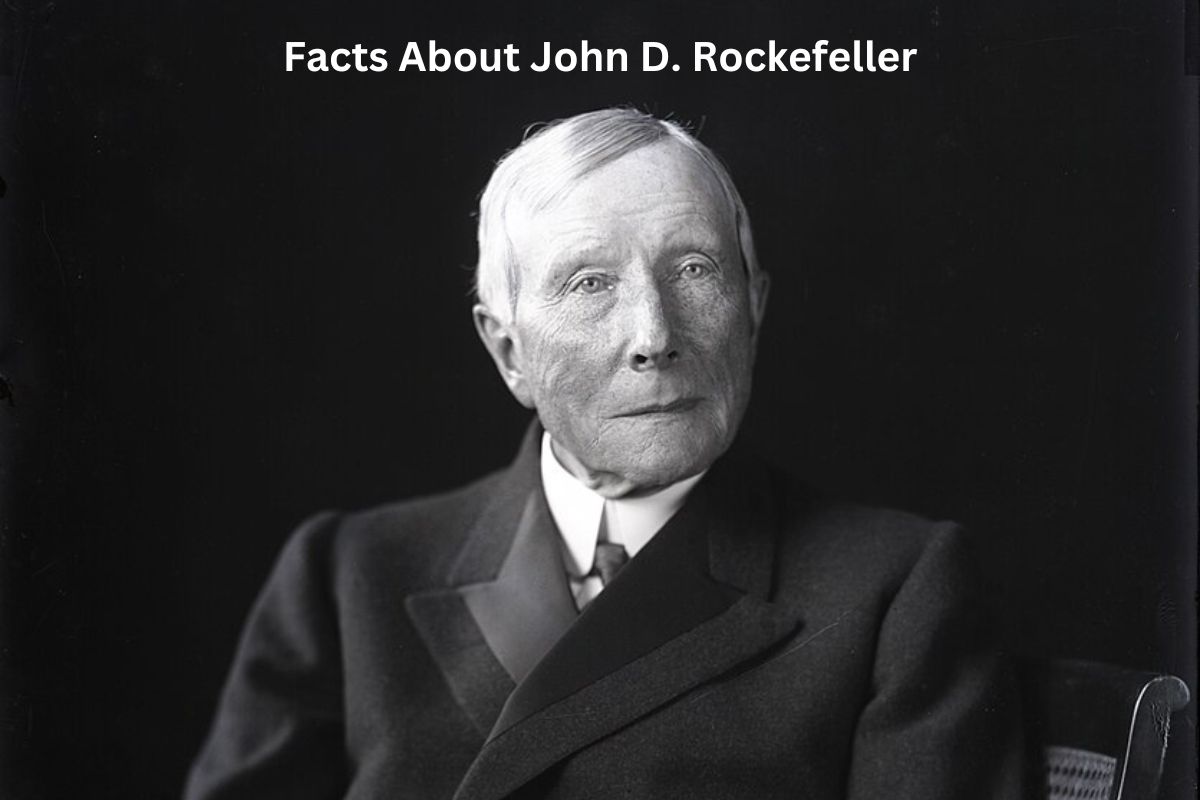
Rockefeller Net Worth Explained: Trillion Dollar Legacy
When discussing history's wealthiest individuals, one name consistently dominates the conversation: John D. Rockefeller. While today's tech moguls and modern billionaires routinely command fortunes in the hundreds of billions, the Rockefeller net worth explained reveals a scale of personal wealth that remains largely unmatched in modern history. Popular economic lore often places his peak fortune at over $1 trillion in today's purchasing power.

How did one man accumulate such staggering riches? More importantly, how does inflation adjustment, asset preservation, and industrial monopoly factor into a fortune that crosses the trillion-dollar threshold? This article breaks down the mechanics of the Rockefeller empire, analyzing the historical context and economic realities behind the myth and the math.
The Making of an Industrial Empire
To understand the true magnitude of the Rockefeller fortune, we have to look back at the Gilded Age of American industrialization. John D. Rockefeller did not merely participate in the burgeoning oil industry; he systematically monopolized it through ruthless efficiency, strategic acquisitions, and aggressive negotiations.
Standard Oil and Market Domination
Founded in 1870, Standard Oil quickly grew from a regional player in Ohio to a global juggernaut. By the late 1870s, Rockefeller controlled nearly 90 percent of the oil refining capacity in the United States. Key strategies driving this dominance included:
- Vertical Integration: Rockefeller owned not just the refineries, but the oil wells, barrel-making factories, pipelines, and even the tankers and railcars used for distribution.
- Rebate Secretes: He negotiated secret freight rate discounts with major railroad companies, undercutting competitors who had to pay standard shipping rates.
- Relentless Cost Cutting: Every byproduct of crude oil was monetized, from gasoline (initially a waste product) to paraffin wax and petroleum jelly.
By eliminating competition and streamlining logistics, Standard Oil generated immense, consistent cash flows during an era with virtually no federal income tax and minimal corporate regulation.
Rockefeller Net Worth Explained: The Trillion-Dollar Math
When people ask how John D. Rockefeller amassed a fortune surpassing $1 trillion, the answer lies in a combination of nominal peak net worth calculations and inflation-adjusted purchasing power.
Nominal Wealth vs. Modern Adjustments
At his peak around 1913, Rockefeller's personal wealth was estimated at roughly $900 million. At the time, America's total Gross Domestic Product (GDP) was approximately $40 billion, meaning Rockefeller’s personal fortune accounted for nearly 2 percent of the entire United States economy.
If you calculate that 2 percent share relative to modern U.S. GDP—which hovers around $27 trillion—his fortune would equate to more than $500 billion today. However, standard Consumer Price Index (CPI) inflation calculators often underestimate the true historical value of capital assets. When economists adjust his peak net worth relative to the overall growth of the economy (often called the "share of GDP" method), the figure easily breaches the $1 trillion mark, and some estimates stretch as high as $400 billion to $500 billion in strict historical purchasing power equivalents.
The Trust Busting Turning Point
Ironically, the legal pressure that sought to dismantle his empire actually helped solidify his wealth. In 1911, the U.S. Supreme Court ruled that Standard Oil violated federal antitrust laws, forcing the corporation to break into 34 separate companies.
These splintered entities included:
- Jersey Standard (which became Exxon)
- Socony (which became Mobil)
- Standard Oil of California (Chevron)
- Standard Oil of Indiana (Amoco)
Because Rockefeller owned stock in the parent company, he received proportional shares in all 34 successor companies. As the automobile boom and global demand for petroleum exploded over the subsequent decades, the combined value of these separate entities soared far higher than the unified trust would have been worth, exponentially multiplying the family's overall assets.
Philanthropy and Wealth Preservation
Amassing a trillion-dollar-equivalent fortune is only part of the equation; keeping and distributing it wisely defines the enduring legacy of the family name. Rockefeller was famously quoted as saying, "The man who dies rich dies disgraced." Consequently, he gave away more than half a billion dollars during his lifetime—an immense sum in the late 19th and early 20th centuries.
Strategic Giving
Rather than simply writing checks for charity, Rockefeller pioneered modern venture philanthropy. He established major institutions designed to solve systemic problems permanently:
- The Rockefeller Foundation: Focused on public health, medical education, and agricultural science globally.
- The University of Chicago: Financed from its inception to become a world-class research institution.
- The General Education Board: Dramatically improved schooling across the American South.
By utilizing philanthropic foundations and structured family trusts, the Rockefeller family managed to avoid heavy estate tax burdens while preserving capital across multiple generations. This careful legal and financial scaffolding ensured that the family's influence persisted long after John D. Rockefeller's passing in 1937.
Conclusion
The Rockefeller net worth explained is a masterclass in industrial consolidation, aggressive market strategy, and generational wealth preservation. While modern tech giants command massive personal valuations, John D. Rockefeller’s integration of the global oil market and his unprecedented share of the national economy secure his place in history. Whether calculated at a conservative $400 billion or the oft-cited trillion-dollar economic equivalent, the Rockefeller fortune remains the ultimate benchmark of extreme wealth.