Rockland County Deeds: Search & Recording Guide
Whether you are closing on a home in Clarkstown, transferring family property in Orangetown, or conducting a historical title search in Haverstraw, managing real estate transactions requires direct interaction with property records. Accessing and filing rockland county deeds is a routine task handled through the Rockland County Clerk’s Office, but understanding the specific forms, indexing systems, and recording criteria is essential to avoid costly delays.
This guide walks you through searching for existing deeds, acquiring certified copies, and complying with New York State and county-specific rules when recording a new deed.
Understanding the Role of the Rockland County Clerk
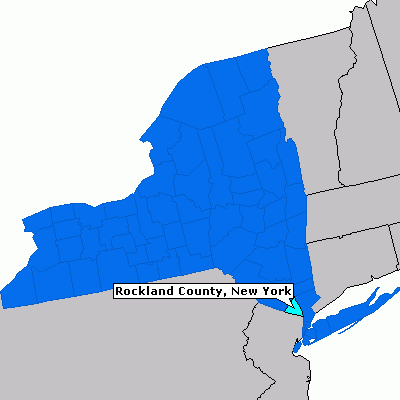
In New York State, real property conveyances are recorded at the county level. The Rockland County Clerk acts as the official registrar of deeds, mortgages, liens, and land maps for the entire county—encompassing the towns of Clarkstown, Haverstraw, Orangetown, Ramapo, and Stony Point, along with their incorporated villages.
When a deed is accepted and recorded, it becomes part of the permanent public record. This provides legal notice of ownership changes, protects property rights, and establishes an unbroken chain of title required for future financing or sales.
How to Search for Rockland County Deeds Online
Most title professionals, attorneys, and property owners prefer to search for land records remotely. Rockland County provides access to its public land records via a secure web portal hosted by Info Quick Solutions (IQS).
1. Accessing the Records Management System
You can reach the search portal directly through the official Rockland County Clerk website. The system contains digitized deed records, mortgages, assignments, and lis pendens dating back several decades, with historical indexes continually updated.
2. Navigating the Search Parameters
Unlike personal addresses, county deed repositories organize records primarily by party names and legal descriptions. When querying the system, prepare to search by:
- Grantor / Grantee: The most reliable way to find a deed. Enter the seller's (Grantor) or buyer's (Grantee) legal last name followed by their first name.
- Document Type: Filter specifically by "Deed" to narrow down your results and filter out mortgages, satisfactions, and easements.
- Date Range: If you know approximately when the sale occurred, narrowing the date range eliminates common surname matches.
- Tax Parcel Identification (SBL): Rockland properties are cataloged using Section, Block, and Lot (S-B-L) numbers. Searching by parcel ID ensures you find documents tied directly to the physical land regardless of owner name changes.
3. Viewing vs. Purchasing Copies
While indexing information and watermarked document previews can often be viewed online for free or via a nominal subscription fee, downloading clean, unmasked, or certified copies requires payment. If you need a legal deed for a mortgage application, estate settlement, or court proceeding, you must obtain a certified copy.
In-Person Searches and Document Requests
If you prefer to search in person or need assistance locating older archival deeds recorded prior to digitization, you can visit the Clerk's physical office:
- Location: Rockland County Clerk’s Office, 1 South Main Street, New City, NY 10956
- Facilities: The public records room features computer terminals for free searching, microfiche readers for older documents, and staff available to print certified records on official paper.
Common Types of Rockland County Deeds

New York property law recognizes several types of deeds, each offering distinct levels of protection to the grantee:
Bargain and Sale Deed
This is the standard instrument used for residential and commercial real estate transactions in Rockland County. Typically executed "with covenants against grantor's acts," it guarantees that the seller has not done anything to encumber the title during their period of ownership, though it does not warrant against prior defects.
Quitclaim Deed
A quitclaim deed transfers whatever interest the grantor holds in the property without any warranties of title. These are most commonly used for intra-family transfers, divorces, clearing title clouds, or moving real estate into a revocable trust or limited liability company (LLC).
Executor’s or Administrator’s Deed
Used when a property owner passes away, this deed conveys real estate from the decedent’s estate to a buyer or beneficiary. The individual executing the deed must have formal letters testamentary or letters of administration issued by the Rockland County Surrogate’s Court.
Requirements for Recording Rockland County Deeds
Submitting a deed for recording in Rockland County requires strict compliance with both local indexing requirements and New York State statutes. A single administrative error can cause the Clerk’s recording department to reject your package.
- Original Document: The deed must be an original with clean, legible signatures. The document must feature proper margins (typically a minimum of one inch) and clear type to ensure proper scanning.
- New York Uniform Acknowledgment: Deeds must be signed in the presence of a licensed Notary Public using the specific New York statutory certificate of acknowledgment language. Out-of-state notarial certificates must conform substantially to NY Real Property Law.
- Legal Property Description: The deed must include an accurate metes-and-bounds legal description or lot-and-block reference matching the subdivision map on file, usually attached as "Schedule A."
- Tax ID / SBL Number: The Section, Block, and Lot designation must appear clearly on the first page of the deed.
Mandatory Companion Forms
A deed cannot be recorded on its own in New York. You must submit two critical transfer forms alongside the instrument:
- Form TP-584 (or TP-584-REIT): The Combined Real Estate Transfer Tax Return. This form calculates state transfer taxes owed on the conveyance.
- Form RP-5217-PDF: The Real Property Transfer Report. This state equalization form captures sale price details and parcel data for municipal property tax assessors. It must be generated online via the New York Department of Taxation and Finance website to produce the required barcode.
Taxes and Recording Fees
Calculating recording costs involves several independent fees:
- Base Recording Fee: Rockland County charges standard per-page recording fees, a base document fee, and a state cover page fee.
- Filing Fees for Accompanying Forms: The RP-5217 entails a state-mandated filing fee (higher for commercial properties and vacant land than for residential parcels).
- NYS Real Estate Transfer Tax: New York State imposes an excise tax of $2.00 for every $500 of consideration (or fractional part thereof), which equals 0.4% of the sale price. Transfers exceeding $1,000,000 for residential real estate may trigger additional "mansion tax" obligations.
Protecting Your Property from Deed Fraud
Real estate identity theft and unauthorized title transfers have become growing concerns nationwide. Fraudsters may attempt to record bogus quitclaim deeds or fraudulent satisfactions of mortgage against unsuspecting owners.
To combat this, the Rockland County Clerk offers a free Property Fraud Alert Notification Service. Property owners can register their name or business entity through the Clerk’s website. If any document—such as a deed, lien, or mortgage—is submitted for recording under that name, the system automatically sends an email notification to the owner. This early alert allows homeowners to consult legal counsel and take corrective action before a fraudulent claim clouding the title can progress.