Secret Stories Better Alphabet Song: Why It Works
If you have ever watched a young child sing the traditional A-B-C song, you probably noticed them rush through 'L-M-N-O-P' as a single, unintelligible blur. While the classic tune is catchy, it teaches letter names rather than letter sounds—and it completely misses the complex ways letters interact in English. This is where the secret stories better alphabet song comes into play.

Created by reading specialist Katie Garner, Secret Stories shifts the focus from rote memorization to brain-based, sensory learning. Instead of treating letters as isolated symbols, this approach gives letters 'secrets'—backstories that explain why they make certain sounds and how they behave when paired with other letters. Below, we examine why this approach outperforms the traditional alphabet tune and how you can implement it at home or in the classroom.
The Flaws of the Traditional Alphabet Song
For generations, the standard alphabet song has been a preschool staple. However, cognitive scientists and reading teachers point out several major flaws that can actually hinder early literacy:
- Letter Names vs. Letter Sounds: Knowing that 'W' is called 'double-u' does not help a child decode the word 'wagon.' Children need to master letter sounds, not names, to read.
- The L-M-N-O-P Muddle: Because the song groups these letters together in a rapid rhythm, many children believe 'elemenop' is a single letter.
- Lack of Context: The traditional song provides zero context for *why* letters make specific sounds, forcing kids to rely purely on brute-force memorization.
What Makes the Secret Stories Better Alphabet Song Different?
The secret stories better alphabet song and its accompanying phonics system are rooted in neuroscience. Young children's brains are hardwired for stories, emotions, and physical movement. Secret Stories leverages this by turning phonics rules into social-emotional narratives that children already understand.
For instance, rather than simply telling students that the letters 's' and 'h' make a /sh/ sound, the Secret Stories method introduces them as 'Sammy the Snake' and 'Hush the Baby.' When Hush stands next to Sammy, he puts his finger to his lips and says, 'Shhh!' This narrative creates an instant, memorable anchor in the child's long-term memory.
Integrating Movement and Multisensory Learning
Another reason this approach works so well is its heavy reliance on kinesthetic learning. Every phonics 'secret' is paired with a specific bodily motion. When children sing or chant along while performing the hand motions, they engage multiple pathways in the brain:
- Visual Pathway: Seeing the letter shape and the associated character graphic.
- Auditory Pathway: Hearing the phoneme and the narrative song lyrics.
- Kinesthetic Pathway: Performing the physical gesture associated with the letter interaction.
This multisensory integration is especially beneficial for struggling readers, English language learners (ELL), and students with ADHD or dyslexia, who often thrive when learning involves physical movement.
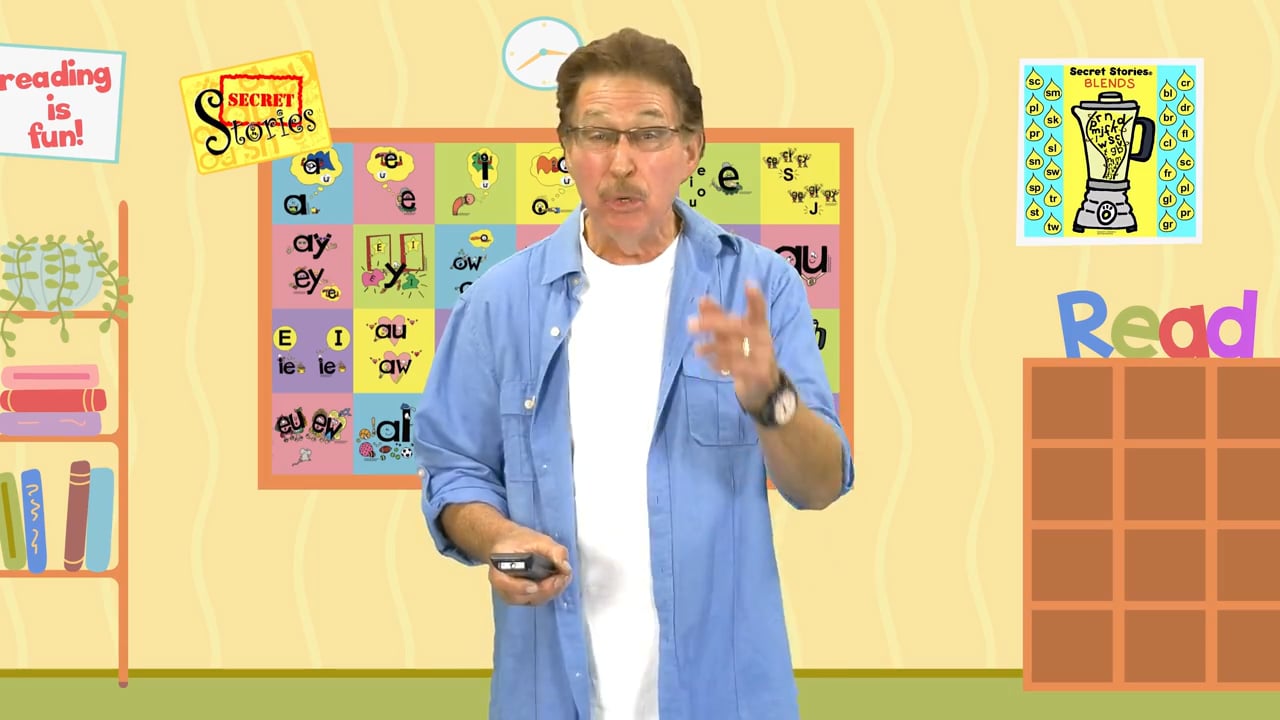
Video: The Secret Stories® Better Alphabet™ Lite Version | Jack Hartmann & Katie Garner Alphabet Song
How to Implement Secret Stories Phonics at Home

You do not need a formal background in education to use these principles to support your child's reading journey. Here are practical ways to bring the magic of Secret Stories into your daily routine:
1. Focus on Sounds Before Names
When looking at alphabet books or flashcards, resist the urge to ask, 'What letter is this?' Instead, ask, 'What sound does this letter make?' or 'Do you remember what secret this letter holds?' Shifting this focus accelerates decoding skills.
2. Make Up Your Own Character Stories
If your child struggles with tricky digraphs like 'th', 'ch', or 'oo', invent a quick story about them. For example, 'Th' can be two friends who stick their tongues out when they talk too much. Personalizing these mnemonics makes them even stickier for young minds.
3. Pair Audio with Visuals and Actions
When playing phonics songs or reviewing letter sounds, encourage your child to stand up and use their hands. If the sound is short 'a' (like the hands-up 'ant in the pants' motion), have them physically act it out. Movement solidifies memory far quicker than sitting still.
Accelerating Early Literacy Through Engagement
Learning to read is one of the most intellectually demanding tasks a young brain undertakes. Traditional methods like the standard A-B-C song rely on repetition, which can lead to boredom and frustration for children who learn differently.
By swapping out rote memorization for narrative, emotion, and movement, the secret stories better alphabet song approach transforms phonics into an adventure. Whether you are a kindergarten teacher revamping your literacy block or a parent helping your kindergartener prep for reading success, tapping into the power of brain-based storytelling will make all the difference.