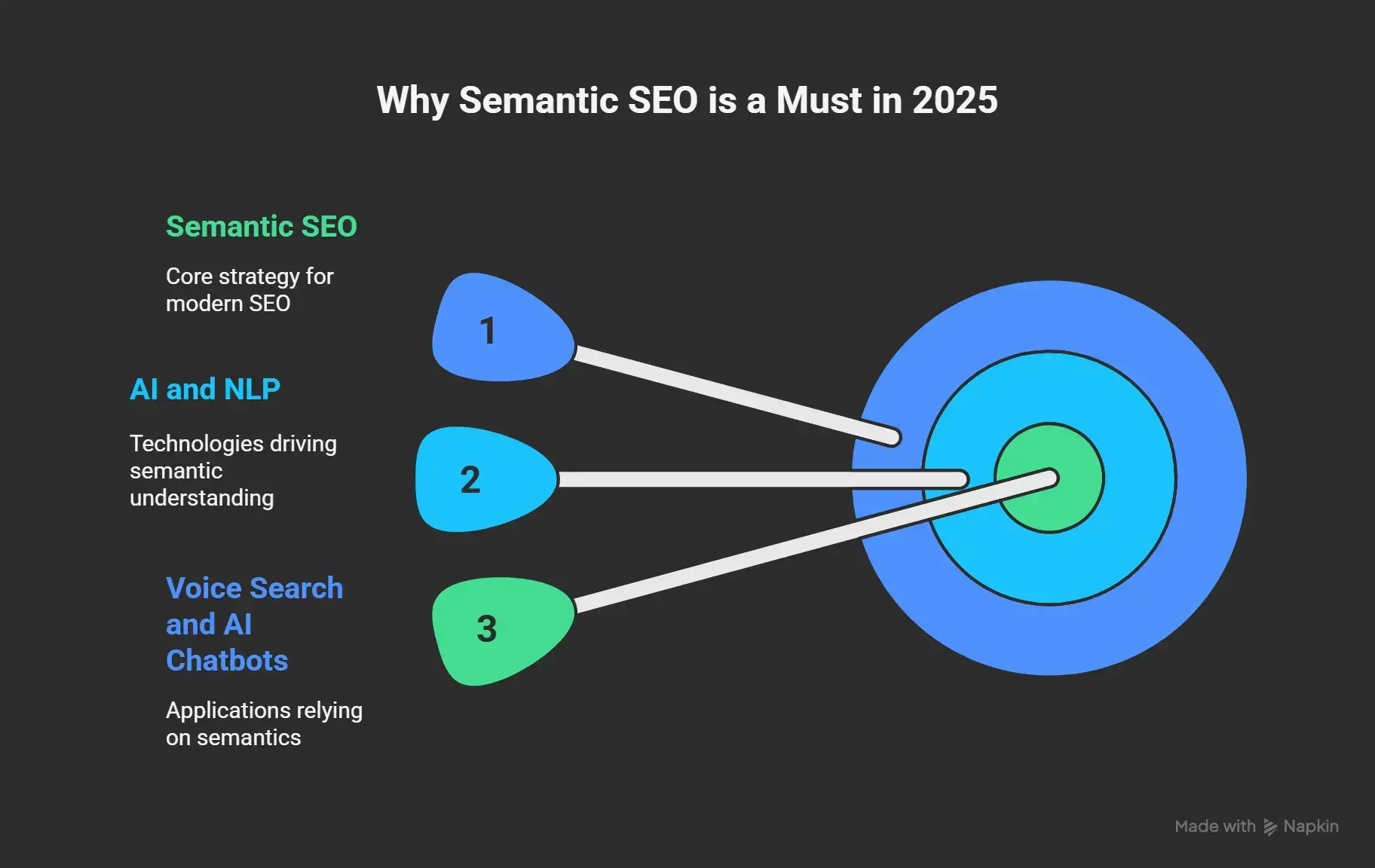
SEO Smart: Semantic Relevance in Modern Search
Search algorithms have outgrown simple keyword matching. In modern search, ranking requires understanding how ideas, entities, and intentions connect across the web. To build a sustainable digital presence and stay SEO smart: semantic relevance must become the cornerstone of your content and architecture strategy.
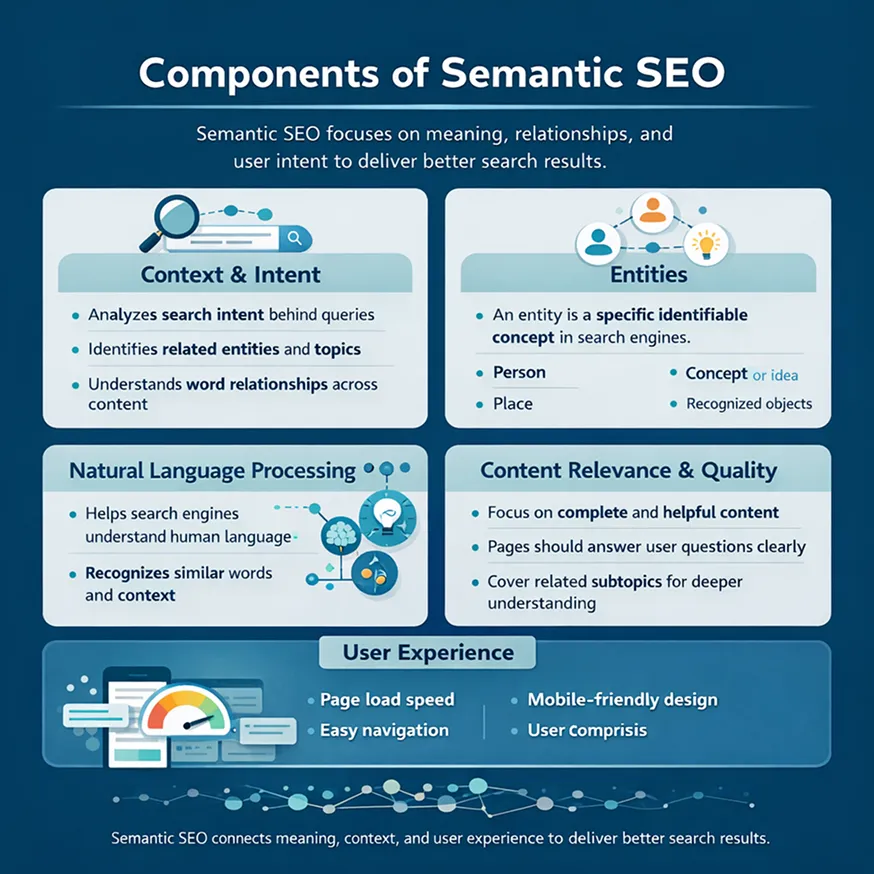
Semantic search is the process search engines use to understand the contextual meaning behind queries, rather than treating them as literal strings of characters. When you optimize for semantic depth, you align your content directly with how advanced natural language processing (NLP) models evaluate usefulness, accuracy, and expertise.
Understanding Semantic Relevance: From Strings to Things
Historically, search engines operated like index cards. If a user searched for "best cold brew maker," the algorithm scanned pages for that exact sequence of words. This rewarded keyword stuffing and surface-level content that prioritized repetitive phrases over real insight.
The turning point arrived with Google's shift toward entity-based indexing, popularized by the phrase "things, not strings." Algorithms such as Hummingbird, RankBrain, BERT, and MUM transformed how search engines understand human language:
- Entities: Singular, well-defined concepts, places, people, or things with specific attributes.
- Relationships: The logical connections that tie different entities together (e.g., how "espresso," "grind size," and "water pressure" relate to "coffee extraction").
- Intent: What the user actually aims to achieve, whether they want a definition, a product comparison, or troubleshooting advice.
When an algorithm evaluates semantic relevance, it determines whether your page comprehensively covers an entity and its necessary context, answering both the explicit query and the implicit follow-up questions the searcher is likely to have.
Why Being SEO Smart: Semantic Relevance Drives Measurable Growth
Prioritizing semantic connections over rigid keyword densities fundamentally changes organic performance. Content built with semantic depth creates tangible advantages that traditional keyword-centric approaches cannot match.
1. Massive Long-Tail Coverage
A single, semantically comprehensive article can rank for hundreds or even thousands of long-tail variations. When search engines recognize that your piece fully maps an idea, they trust it to satisfy subtle variations in phrasing that you never explicitly typed into your copy.
2. Algorithmic Resilience
Websites that depend on shallow content and keyword repetition are typically the first to lose rankings during core algorithm updates. In contrast, pages rich in semantic depth and genuine topical utility consistently survive updates because they fulfill the ultimate goal of search: providing the most satisfying answer to a user problem.
3. Stronger Topical Authority
Search engines do not evaluate pages in a vacuum; they evaluate your entire domain's depth on a given subject. When you connect related entities across your site, you signal to search engines that you are an authoritative source within your niche.
Core Elements of a Semantically Optimized Content Strategy

Transforming your content strategy to focus on meaning requires deliberate adjustments in research, writing, and site structure. Here are the core pillars to focus on.
Entity Mapping and Contextual Vocabulary
Before writing, map the primary entity of your topic along with its secondary and tertiary concepts. For example, if your topic is "cloud migration," related entities include data governance, hybrid architecture, latency, downtime mitigation, and hyperscalers (such as AWS, Azure, and GCP).
Incorporating these natural industry terms demonstrates deep topical understanding. This is not about hunting for arbitrary synonyms or outdated LSI keywords; it is about writing naturally and thoroughly with the vocabulary common to authoritative experts in the space.
Topic Clusters and Internal Linking
Isolated pages struggle to establish topical authority. To reinforce semantic relevance, organize your content into clusters:
- Pillar Page: A high-level overview covering a broad topic comprehensively.
- Cluster Pages: In-depth articles focusing on specific subtopics touched on in the pillar.
- Contextual Internal Links: Two-way links using descriptive anchor text that clarify how the pillar and cluster pages relate to one another.
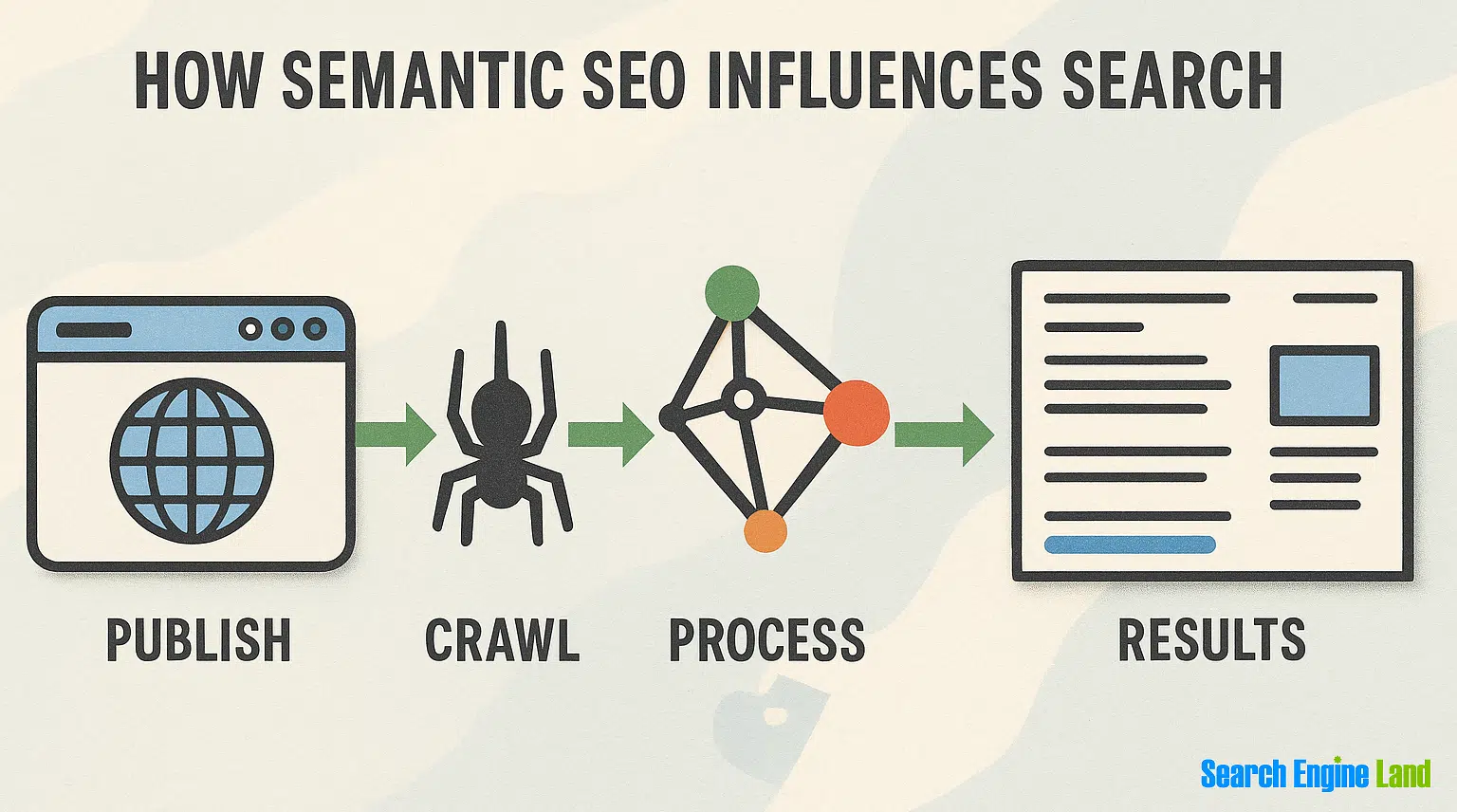
This structure helps search engine crawlers understand the hierarchy of your ideas and crawl your site more efficiently.
Structured Data (Schema Markup)
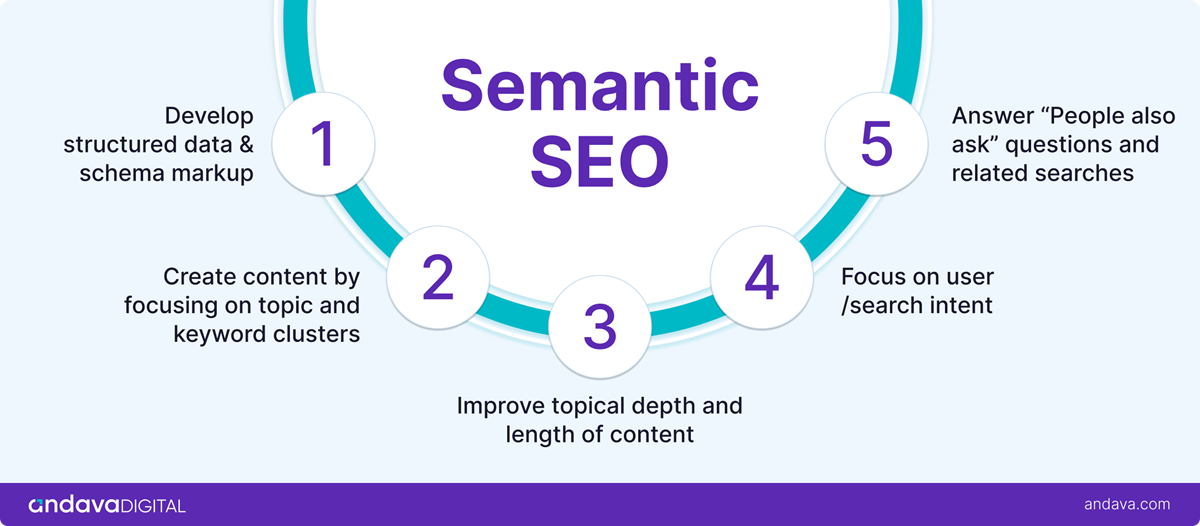
While NLP models are adept at parsing unstructured text, structured data provides an explicit, machine-readable blueprint of your page. Implementing Schema.org vocabulary (such as Article, FAQPage, Product, or AboutPage) clarifies the identity of entities mentioned on your page, removing ambiguity for search crawlers.
A 4-Step Framework for Semantically Rich Content
Follow these steps to produce content that satisfies both user expectations and semantic search algorithms.
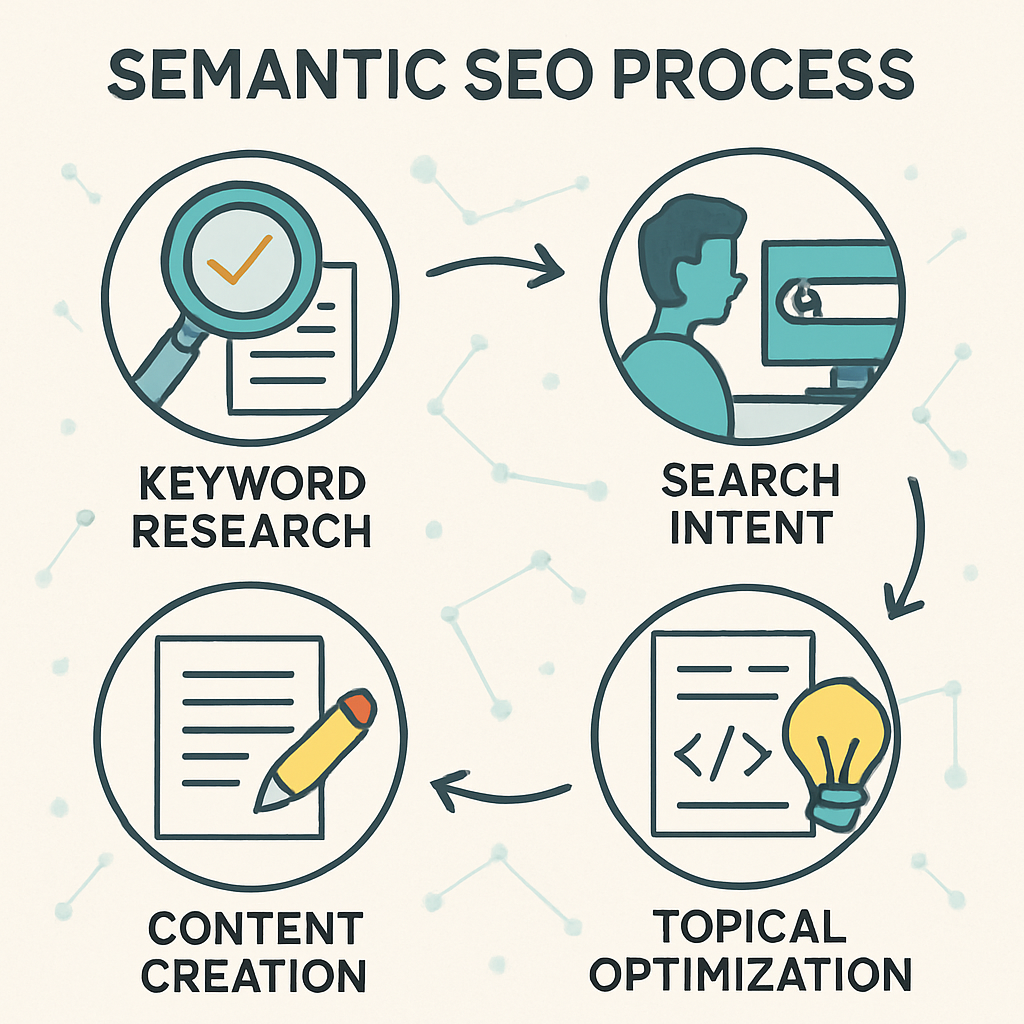
- Deconstruct Search Intent: Examine top-ranking results not just for their headings, but for the underlying questions they resolve. Are users looking for practical implementation steps, conceptual definitions, or software comparisons? Identify gaps where current results provide incomplete answers.
- Cover Adjacent Questions: Review the "People Also Ask" boxes, related searches, and customer feedback to find logical subsequent queries. If someone is researching "how to calculate customer acquisition cost (CAC)," they will almost certainly need to know what constitutes a "good CAC ratio" and how to lower it.
-
Write with Clear Syntactical Hierarchy: Use standard HTML formatting (
<h2>,<h3>, lists, and short paragraphs) to logically organize your ideas. Clear heading hierarchies help both human readers and search engines parse topic transitions effortlessly. - Prune Fluff and Redundancy: Semantic richness does not mean inflating word count. If an explanation takes two sentences, do not stretch it to five. Dense, information-rich writing is easier for search engines to score positively for topical value.
Common Pitfalls to Avoid
As you refine your approach, watch out for these frequent mistakes:
- Overusing Content Optimization Tools: Software that scores content based on arbitrary keyword usage can tempt writers to shoehorn unrelated terms into sentences, degrading readability. Use tools as ideation guides, not rigid checklists.
- Ignoring Real Reader Intent: Jamming every conceivable adjacent subtopic into a single article can dilute the page. If a subtopic requires an exhaustive guide of its own, spin it off into a cluster article and link to it.
- Vague Anchor Text: Internal links that say "click here" or "read more" provide zero semantic value. Always use descriptive anchors that summarize the destination page's core subject.
Final Thoughts
Moving toward semantic relevance means writing for comprehension rather than algorithms. By understanding how entities connect, structuring your site to show logical depth, and answering user questions thoroughly, you build a sustainable search strategy that stays effective through every algorithm update.