Series 1995 2 Dollar Bill: Is It Time To Cash In?
Tucked away inside an old greeting card, a dresser drawer, or inherited lockboxes, the two-dollar bill frequently surprises people who stumble across it. Because the denomination is seen so rarely in daily circulation, many assume any older bill must be a hidden treasure. If you have uncovered one from the mid-nineties, you are likely asking a practical question about your Series 1995 2 dollar bill: is it time to cash in?

Before you rush to an auction house or spend it at the grocery counter, you need to understand what determines the market value of modern United States currency. While the short answer depends heavily on condition, serial numbers, and printing peculiarities, the reality is far more nuanced than internet rumors suggest.
The History of the Series 1995 $2 Bill
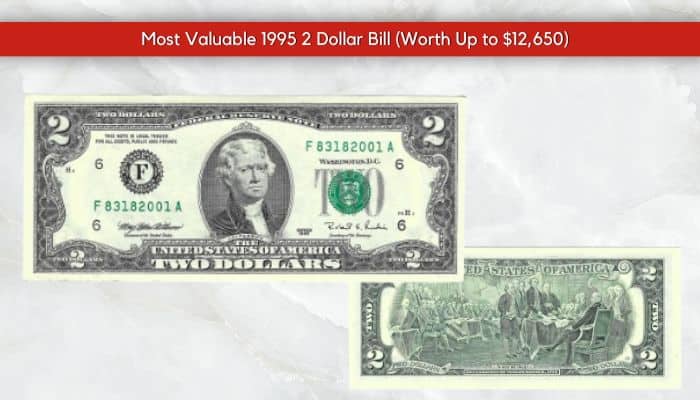
To evaluate the bill accurately, it helps to understand its production background. In 1996, the Bureau of Engraving and Printing (BEP) printed a fresh batch of $2 notes carrying the “Series 1995” designation. These notes featured the classic portraits established during the 1976 Bicentennial redesign: Thomas Jefferson on the obverse (front) and John Trumbull’s painting, The Declaration of Independence, on the reverse (back).
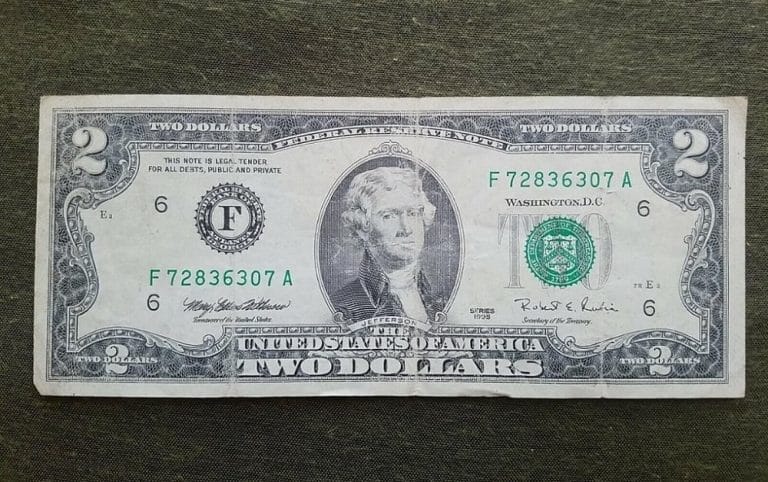
These bills carry the facsimile signatures of Mary Ellen Withrow (Treasurer of the United States) and Robert E. Rubin (Secretary of the Treasury). Unlike earlier print runs that were distributed across all 12 Federal Reserve districts, standard Series 1995 circulation notes were printed exclusively for the Federal Reserve Bank of Atlanta, Georgia, bearing the district letter “F.”
In total, the BEP printed over 153 million Series 1995 $2 bills for circulation, alongside specialized uncut collector sheets. Because more than a hundred million entered the system, scarcity alone does not automatically make every single note valuable.
Current Market Value: What Is It Actually Worth?
Currency values fall into three broad categories: standard circulated notes, crisp uncirculated examples, and specialized varieties. Here is how standard Series 1995 notes grade out in today’s market:
- Circulated Condition ($2.00): If your bill has folds, rounded corners, surface grime, or limp paper, it is worth exactly face value. Banks and merchants treat it as ordinary legal tender.
- About Uncirculated ($2.50 – $4.00): Notes with sharp corners but minor handling marks or a very light, almost invisible fold carry a negligible premium over face value.
- Crisp Uncirculated ($5.00 – $12.00): Bills in pristine condition—stiff paper, razor-sharp edges, bright white borders, and no pinholes or counting creases—consistently sell to collectors within this range.
- Consecutive Runs ($15.00 – $30.00+): A sequential pack of crisp uncirculated notes (such as five or ten notes in numerical order) commands higher interest and a proportional premium among paper money collectors.
Valuable Exceptions: Star Notes, Errors, and Fancy Serials
While ordinary bills carry modest premiums, certain variations can multiply the value of a 1995 $2 note significantly. Collectors look for specific attributes that differentiate an average note from a collector-grade rarity.
1. Series 1995 Star Notes
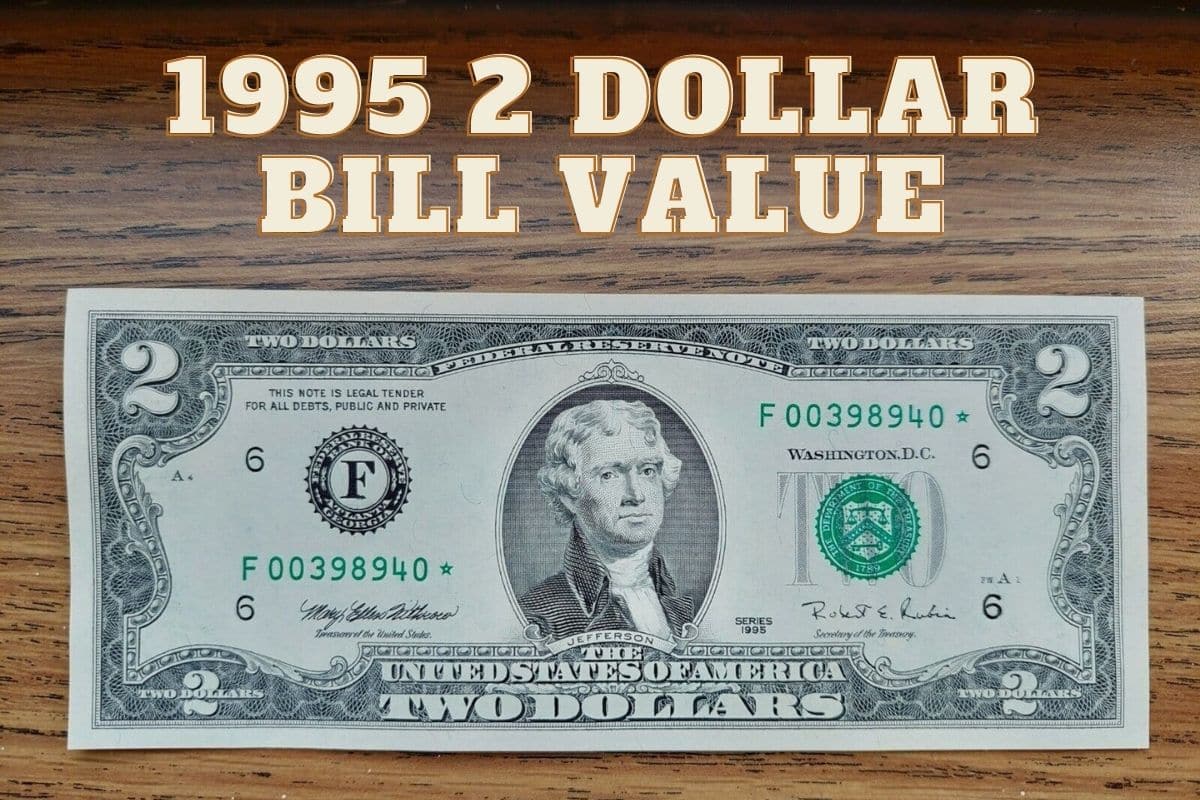
When a sheet of bills is damaged during printing, the BEP destroys it and prints a replacement run. To avoid disrupting the sequential bookkeeping, replacement notes are marked with a star (“*”) at the end of the serial number instead of a standard suffix letter.
For Series 1995, star notes are considerably scarcer than standard printings. An uncirculated 1995 $2 star note often commands between $20 and $60, depending on its sub-grade and centering. Heavily circulated star notes still hold collector value, frequently trading between $5 and $15.
2. Fancy Serial Numbers
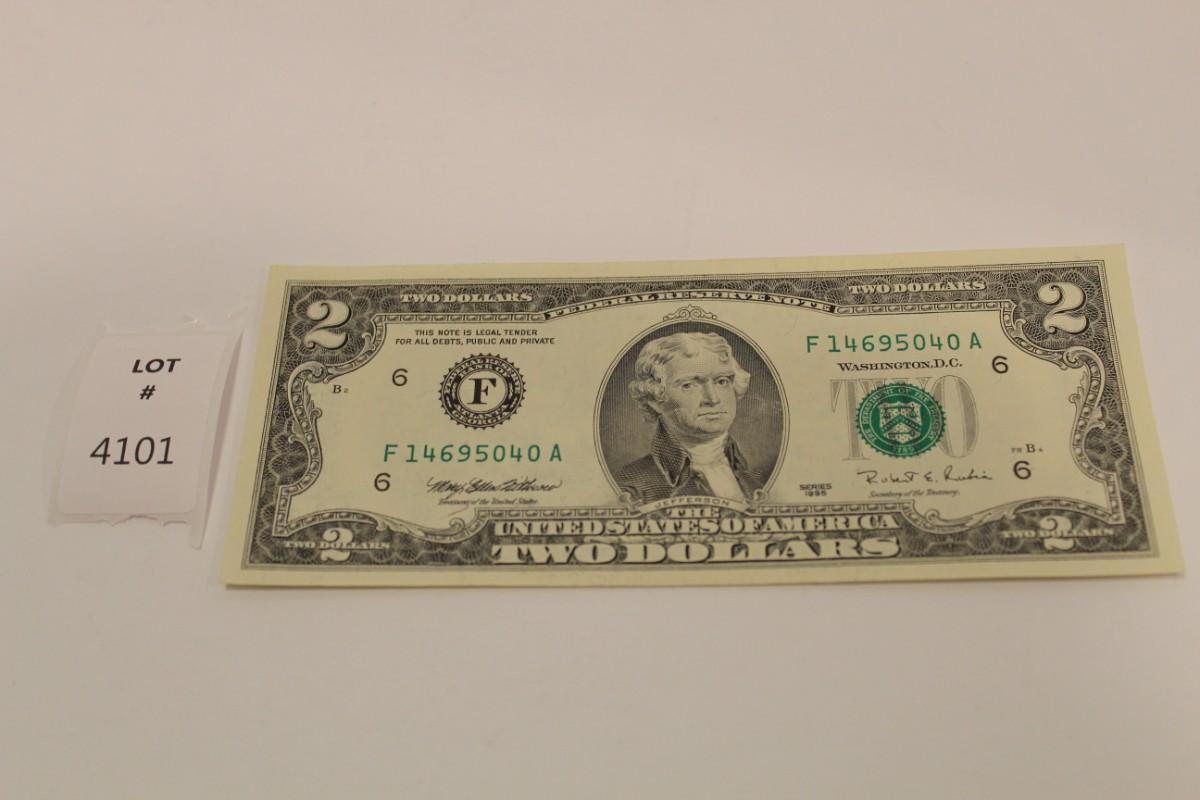
The eight-digit serial number stamped on the front of the bill can turn an otherwise ordinary $2 bill into a high-demand item. Look out for the following patterns:
- Low Serial Numbers: Numbers below 00001000, and especially two-digit or single-digit numbers (e.g., F00000005*), can sell for hundreds of dollars.
- Solid Serials: Notes where all eight digits match (e.g., F55555555A) are exceptionally rare and bring top-tier prices at auction.
- Radars and Palindromes: Numbers that read the same forward and backward (such as F34988943A) carry modest premiums of $15 to $40 in fine condition.
- Ladders: Complete ascending or descending sequences (e.g., 12345678) are sought after by specialized serial collectors.
3. Printing Errors
Quality control at the BEP catches most mistakes, meaning genuine errors are uncommon. True mechanical errors on Series 1995 bills include:
- Misaligned Overprints: The third printing pass (the Treasury seal and green serial numbers) is noticeably shifted, printed upside down, or stamped on the back.
- Gutter Folds: Blank white streaks running across the design caused by a paper crease that unfolded after the ink was applied.
- Doubled Impressions: Design elements visibly stamped twice out of alignment.
Genuine error notes should be evaluated by a reputable numismatist or certified by third-party grading agencies like PMG (Paper Money Guaranty) or PCGS Banknote.
Series 1995 2 Dollar Bill: Is It Time to Cash In?
Now to answer the primary dilemma: should you sell your note today, spend it, or hold onto it as an investment? The answer comes down to what specific variant you possess.
- If your note is circulated and standard: Cash it in immediately—by spending or depositing it. Ordinary circulated Series 1995 notes will not outpace inflation in your lifetime. Tying up capital or leaving wrinkled bills in a shoebox does not yield financial returns.
- If your note is a high-grade star note or fancy serial: Now is an excellent time to liquidate. The market for paper currency and modern collectibles has experienced strong liquidity thanks to online marketplaces. Unless you are actively building a numismatic collection, selling today allows you to lock in established market highs rather than waiting for an uncertain future demand shift.
- If your note is pristine uncirculated (standard run): You can choose either path. While a single note fetching $6 to $8 may not justify shipping fees and listing commissions, a clean sequential strap of 50 or 100 notes is easy to sell directly to local coin dealers or collectors.
How to Sell Your $2 Bill for Maximum Value
If you determine that your bill carries collectible value beyond its face value, follow these steps to maximize your payout:
Preserve the Condition
Never fold, iron, clean, or laminate a collectible bill. Doing so instantly destroys its numismatic value. Store the note flat inside an acid-free PVC-free currency sleeve (often called a currency top-loader or Mylar sleeve) to prevent oils from your skin from degrading the paper fibers.
Get an Honest Assessment
Take clear, high-resolution photographs of both the front and back of your note in neutral lighting. Compare your serial number and condition against completed, sold listings on auction sites like eBay rather than active asking prices. Asking prices reflect seller optimism; completed sales reflect actual buyer willingness to pay.
Choose the Right Selling Channel
For common uncirculated notes and low-tier star notes, selling on online collector forums or through direct marketplace listings is often best. For high-tier errors or ultra-rare low serial numbers, partnering with an established numismatic auction house or selling through a certified dealer ensures you reach serious collectors who will pay full market value.