Seven Swordsmen of the Mist: Blades & History
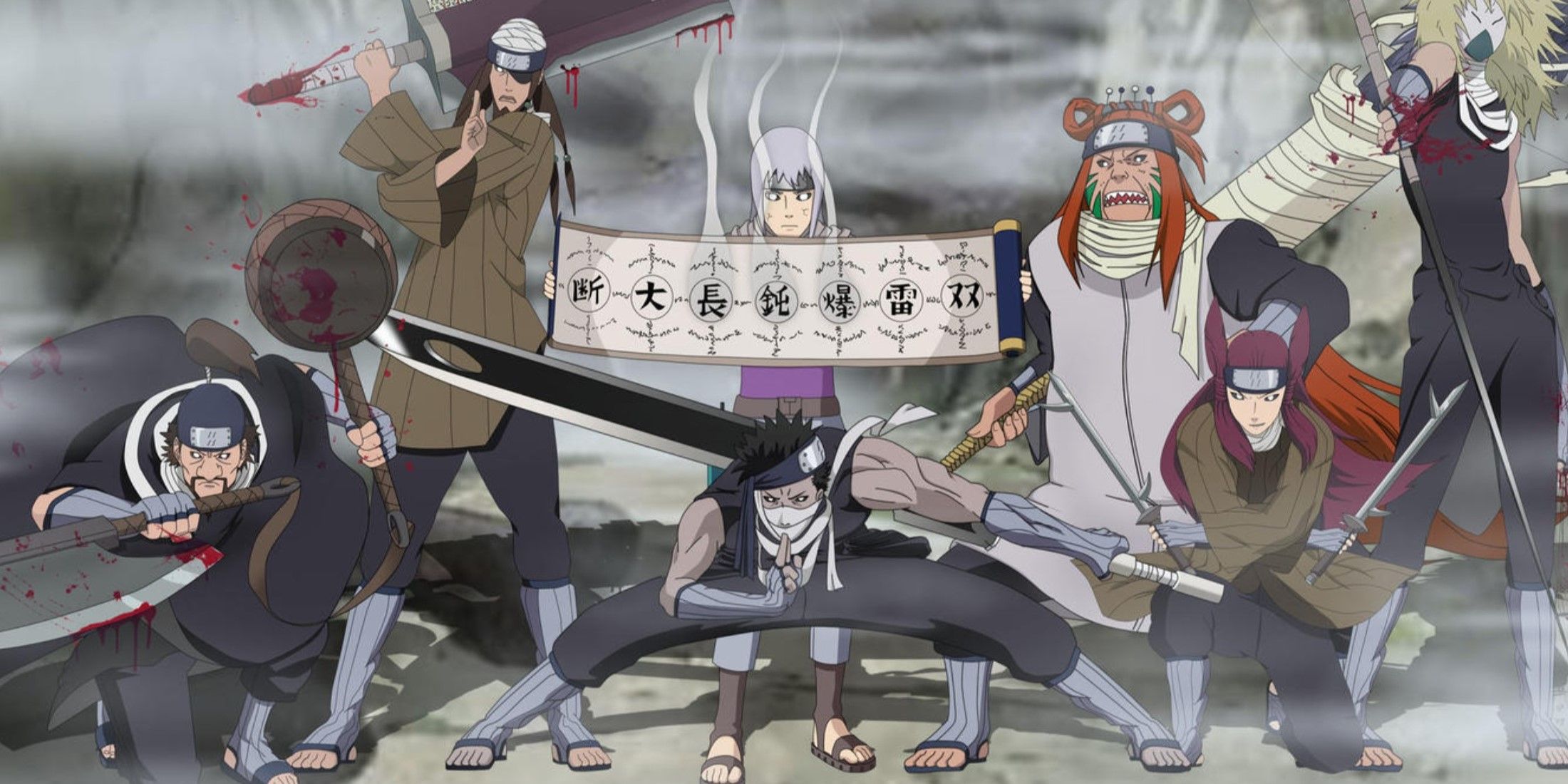
In the brutal history of Masashi Kishimoto's Naruto, few organizations command as much dread as the seven swordsmen of the mist. Originating from Kirigakure (the Village Hidden in the Mist), this elite cadre consisted of the village's seven most lethal weapon masters, each entrusted with a bespoke, supernatural blade passed down across generations. Together, they served as Kirigakure's primary military deterrent and the vanguard of its darkest covert operations.

The Origins of Kirigakure's Deadliest Tradition
The concept behind the order was simple: elevate combat lethality beyond standard ninjutsu and kenjutsu by bonding top-tier shinobi with blades possessing specialized, often horrific abilities. During Kirigakure's notorious "Bloody Mist" era, academy students were forced to kill their peers to graduate. The survivors who demonstrated unmatched killer instinct and weapon affinity were vetted for membership among the Seven Swordsmen.
Rather than functioning as a standard battlefield squad, the swordsmen operated as terror troops, specialized executioners, and strategic commanders. However, because the unit prioritized ruthlessness over loyalty, it was perpetually plagued by treason, internal murder, and rogue defections.
The Seven Blades and Their Deadly Mechanics
Each weapon wielded by the order features an unconventional trait engineered to counter traditional defensive shinobi techniques. These seven blades defined the fighting style of whoever carried them.
1. Kubikiribocho (The Executioner's Blade)
Known as the "Decapitating Carving Knife," Kubikiribocho resembles an oversized butcher knife with a circular hole near the tip and a semi-circle cut into the base, designed for beheading opponents. Its primary supernatural trait is regenerative resilience: if chipped, cracked, or completely snapped in half, the blade absorbs the iron from the blood of its victims to reconstitute its steel instantly.
- Notable Wielders: Juzo Biwa, Zabuza Momochi, Suigetsu Hozuki
2. Samehada (The Shark Skin)
Samehada is the most terrifying and unique weapon of the group because it is a sentient creature rather than an inanimate object. Covered in brutal scales that shred rather than cut, Samehada feigns loyalty only to those with immense, flavorful chakra. In battle, it acts as a chakra siphon, shaving away an opponent's energy on contact and transferring it to its wielder to heal wounds or replenish stamina. In extreme circumstances, a compatible master can physically merge with Samehada to transform into a monstrous aquatic predator.
- Notable Wielders: Fuguki Suikazan, Kisame Hoshigaki, Killer B
3. Nuibari (The Sewing Needle)
Nuibari takes the form of an extremely slender, double-edged rapier resembling a giant needle, with a long spool of steel wire threaded through its eye. The user thrusts the weapon through multiple enemies in rapid succession, pulling the wire taut to bind, immobilize, and lacerate victims simultaneously, effectively stitching bodies together like fabric.
- Notable Wielders: Kushimaru Kuriarare
4. Kabutowari (The Helmet Splitter)
Referred to as the sword that can pierce any defense, Kabutowari consists of a heavy, broad-bladed cleaver tied via chain to an iron hammer. The wielder first embeds the axe blade into an enemy's shield, weapon, or armor, then strikes the back of the axe head with the hammer, transferring blunt kinetic energy to shatter even the strongest earth-style defenses.
- Notable Wielders: Jinin Akebino
5. Shibuki (The Splash)
Shibuki incorporates explosive tags directly into close-quarters swordsmanship. The weapon features a wide, cleaver-like blade affixed to a massive scroll roll loaded with endless explosive tags. When swung against an adversary, the blade unrolls tags upon impact, triggering point-blank explosions while shielding the user behind its thick steel plate.

- Notable Wielders: Jinpachi Munashi
6. Kiba (The Fangs)
Kiba is a pair of slim, double-edged short swords featuring hooked protrusions near the tips. Infused permanently with lightning chakra, they are recognized as the sharpest blades ever forged. They allow the user to cast, manipulate, and amplify lightning-release jutsu at minimal chakra cost, transforming Kenjutsu into deadly long-range electric artillery.
- Notable Wielders: Ameyuri Ringo, Raiga Kurosuki
7. Hiramekarei (The Twin Broadsword)
Hiramekarei is a heavy, double-handled blade featuring two holes at its tip. It stores its master's chakra and emits it on command, allowing the wielder to coat the metal in light blue energy and reshape it into massive war hammers, extended broadswords, or rapid-fire chakra needles. It is the only blade that remained continuously loyal to Kirigakure into the modern era.
- Notable Wielders: Mangetsu Hozuki, Chojuro
Key Generations of the Seven Swordsmen of the Mist
The lineup of the swordsmen shifted constantly across the Third and Fourth Shinobi World Wars. Two eras stand out as the most defining in the organization's history.
The Might Duy Encounter
During the Third Shinobi World War, the strongest historical lineup—consisting of Fuguki, Juzo, Kushimaru, Jinpachi, Jinin, Raiga, and an unnamed seventh member—cornered a young Genin team containing Might Guy, Ebisu, and Genma Shiranui. Guy's father, Might Duy, arrived to intervene. By unlocking the Eighth Gate of Death, the "Eternal Genin" unleashed terrifying physical power, killing four of the legendary swordsmen in a single engagement and permanently shattering the unit's aura of invincibility.
The Era of Defection
Following their slaughter at the hands of Duy, Kirigakure struggled to maintain control over its surviving masters. Mangetsu Hozuki famously mastered all seven blades before his premature death, temporarily stabilizing the lineage. However, corruption under the Fourth Mizukage (manipulated covertly by Obito Uchiha) caused total dissolution.
Zabuza Momochi fled the village after a failed coup attempt, taking Kubikiribocho with him. Kisame Hoshigaki executed his own superior, Fuguki Suikazan, stole Samehada, and joined the Akatsuki. By the start of Naruto Part I, Kirigakure had lost possession of six of the seven sacred weapons, retaining only Hiramekarei under the custody of future Sixth Mizukage Chojuro.
Resurrection in the Fourth Shinobi World War
The collective power of the Seven Swordsmen was showcased during the Fourth Shinobi World War when Kabuto Yakushi used the Impure World Reincarnation (Edo Tensei) to revive the strongest previous generation. Armed with their recovered blades, the resurrected swordsmen wreaked havoc on the Third Division of the Allied Shinobi Forces. Operating through thick mist without fear of death, they demonstrated why Kirigakure's weapon masters were considered equal to small armies, requiring combined efforts from Kakashi Hatake and Might Guy to neutralize and seal them.
The Legacy of the Seven Blades
The seven swordsmen of the mist represent a pivotal theme within the shinobi world: the duality of tools versus humanity. For generations, Kirigakure treated both its ninja and its swords as disposable instruments of state terror. In the peaceful era under Chojuro's leadership, the village reclaimed the scattered blades, locking them away as cultural relics to ensure their bloody heritage never again dictates the future of the Hidden Mist.