Shark Attacks in Florida: Are We Overreacting?
Few marine creatures command as much fear and fascination as the shark. Mention a beach vacation to Florida, and inevitably, someone will bring up the Jaws factor. But when looking at the actual data, people often wonder: how common are shark attacks in Florida, and are we overreacting?

Florida is widely known as the shark attack capital of the world. Yet, the reality of these encounters is vastly different from what Hollywood horror films and sensationalized news headlines suggest. To understand the true risk, we need to look at the statistics, human behavior, and the biological habits of these apex predators.
The Numbers: How Common Are Shark Attacks in Florida?
To answer the question of how common shark attacks in Florida are, we turn to the International Shark Attack File (ISAF), maintained by the Florida Museum of Natural History. Historically, Florida consistently records more unprovoked shark bites than anywhere else globally.
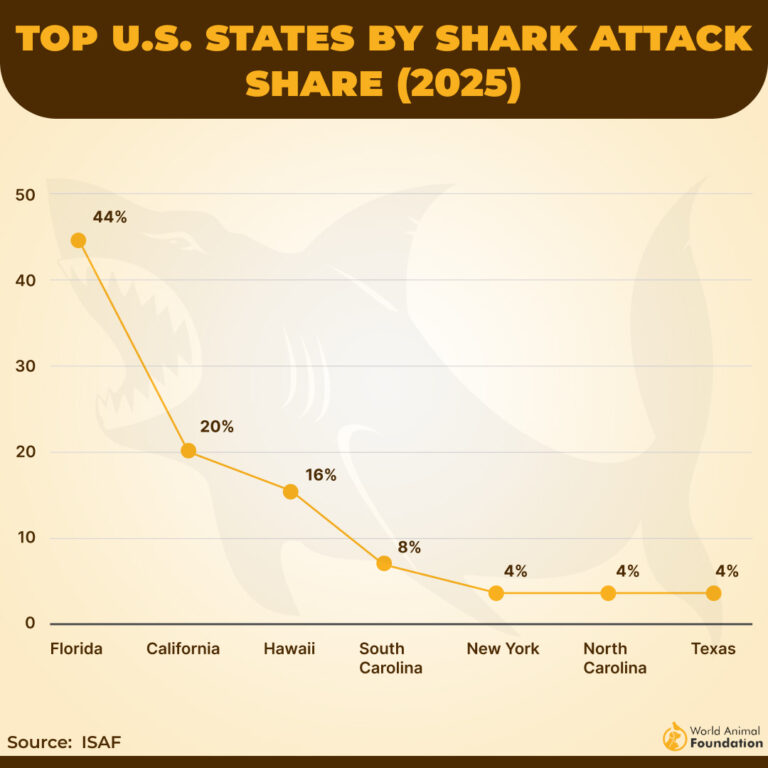
In a typical year, Florida accounts for roughly 40% to 50% of the total shark bites in the United States, and about 25% to 30% of the worldwide total. For instance, in 2023, the state recorded 16 unprovoked shark bites out of a global total of 69.
Volusia County—home to Daytona Beach—is frequently labeled the shark bite capital of the world. This is not because its sharks are uniquely aggressive, but because of a confluence of geography and human activity. The county features heavy tourist traffic, incredible local baitfish populations, and an estuary-rich coastline that attracts juvenile sharks looking for food.
Putting the Odds into Perspective
While the raw numbers sound high, they must be contextualized by the millions of residents and tourists who enter Florida's coastal waters every single year. The statistical probability of being bitten by a shark is exceptionally low.
- You are statistically more likely to be killed by a lightning strike in Florida than by a shark.
- Drowning is a vastly greater risk to beachgoers than any marine animal encounter.
- Heart attacks while swimming or exerting oneself in the surf claim far more lives annually than sharks ever do.
When you divide the millions of beach visits by the handful of bites that occur, the risk becomes microscopic. Most bites are minor, categorized as exploratory nips rather than predatory attacks.
Why Do Sharks Bite Humans?
Sharks do not hunt humans. We are not on their dietary menu; most sharks prefer bony fish, rays, and marine mammals like seals, which are rich in the blubber that sharks need for energy. When a shark bites a human, it is almost always a case of mistaken identity or curiosity.
Video: How common are shark bites in Florida really?

Case of Mistaken Identity
Florida's coastal waters are often murky due to wave action, sand stirring, and plankton blooms. A shark swimming in low visibility relies on its other senses, like electroreception and smell. To a shark in murky water, a splashing human foot or hand can easily mimic the erratic movement of a wounded fish.
Once the shark bites, it instantly realizes we do not taste like its preferred prey—which is why the vast majority of bites involve a single snap followed by the shark swimming away. Unfortunately, even a single exploratory bite from a medium-sized shark can cause significant tissue damage.
Are We Overreacting?
Given the statistical improbability of a serious encounter, our cultural reaction to sharks is almost certainly an overreaction. This disproportionate fear is largely driven by media amplification.
A single shark sighting or bite can dominate news cycles for days, generating massive web traffic through sensationalized headlines. Meanwhile, the thousands of people who safely enjoy Florida's beaches every day go completely unnoticed. This media bias creates an availability heuristic in our brains—because shark attacks are vivid and terrifying, we overestimate how frequently they happen.
This overreaction has real-world consequences. Unfounded panic can lead to calls for aggressive shark culling or nets, which disrupt fragile marine ecosystems. Sharks play a vital role in keeping ocean ecosystems healthy by culling sick and weak marine species.
Smart Steps for Ocean Safety
While we are definitely overreacting if we avoid the ocean entirely, it is still wise to practice basic water safety. Minimizing your chances of an interaction is easy when you follow a few common-sense guidelines:
- Stay out of the water at dawn and dusk: These are peak feeding times for many coastal shark species.
- Avoid swimming near people fishing: Bait in the water and struggling hooked fish act as a dinner bell for sharks.
- Leave the shiny jewelry at home: Flashy metal or bright watches can reflect light in a way that mimics fish scales.
- Swim in groups: Sharks are naturally wary of larger, noisy groups of humans.
- Avoid murky water or river mouths: Reduced visibility increases the chance of accidental contact.
Conclusion
How common are shark attacks in Florida? Statistically, they are rare events, even if Florida leads the world in total numbers simply due to its massive beachgoing population and geography. While the fear of sharks is hard-wired into human psychology, letting that fear keep you out of the water—or turning you against these magnificent marine animals—is an overreaction. By respecting the ocean, understanding shark behavior, and practicing basic safety, you can safely enjoy everything Florida's stunning coastline has to offer.