Sheila Jackson Lee's Financial Empire Uncovered
Introduction to Congressional Wealth

Public interest in the personal finances of long-serving politicians is a staple of American political discourse. When examining the career of the late Texas Representative Sheila Jackson Lee, observers frequently look beyond her legislative record to understand her personal economics. Witnessing Wealth in Action: Sheila Jackson Lee’s Financial Empire Uncovered! offers a factual, data-driven look at the financial disclosures, real estate holdings, and salary history of a prominent fixture in modern American politics.
Understanding a public official's financial standing requires looking at official congressional financial disclosure reports, public records, and standard compensation packages for members of the United States House of Representatives. Rather than relying on sensationalized rumors, examining the actual documentation provides a clear picture of how career longevity in Washington shapes a lawmaker's financial profile.
The Foundation: Congressional Salaries and Tenure
The primary baseline for any career politician's income is the federally mandated congressional salary. Sheila Jackson Lee served in the U.S. House of Representatives representing Texas's 18th congressional district from 1995 until her passing in 2024. This tenure spanning nearly three decades formed the steady economic foundation of her household.
Breaking Down the Legislative Pay Scale
For decades, the standard annual salary for members of the House of Representatives has been set at $174,000. While leadership positions or committee chairmanships can occasionally alter compensation structures, standard representatives maintain this baseline salary.
- Total Decades in Office: Nearly 30 years of continuous service.
- Base Salary Consistency: $174,000 annually for the majority of her tenure.
- Cumulative Earnings: Millions in gross salary over nearly 30 years of public service, subject to federal, state, and local taxes.
While this salary places federal lawmakers well above the median American household income, financial advisors note that maintaining residences in both Washington, D.C., and a home district (in this case, Houston, Texas) incurs significant duplicate living expenses.
Assets, Investments, and Financial Disclosures
Members of Congress are legally required to file annual financial disclosure reports under the Ethics in Government Act. These documents provide ranges for assets, liabilities, unearned income, and transactions rather than exact dollar amounts, making precise net worth calculations a matter of estimation.
Interpreting the Disclosure Reports
An analysis of Jackson Lee’s historical filings reveals a fairly conservative approach to personal finance compared to some of her multi-millionaire congressional colleagues. Her reported assets typically included:
- Standard checking and savings accounts holding modest cash reserves.
- Government-backed retirement accounts and pension eligibility tied to federal service.
- Standard municipal or corporate bonds and mutual funds within permitted congressional trading guidelines.
Unlike lawmakers who amass vast fortunes through venture capital, high-risk stock trading, or pre-existing family enterprises, Jackson Lee's financial portfolio largely reflected the typical profile of a career public servant relying primarily on government salary and standard retirement accruals.
Real Estate Holdings in Houston and Washington
Video: Sheila Jackson Lee: ‘Happy Days Are Here Again’ For Billionaire ‘Tax Cheats’
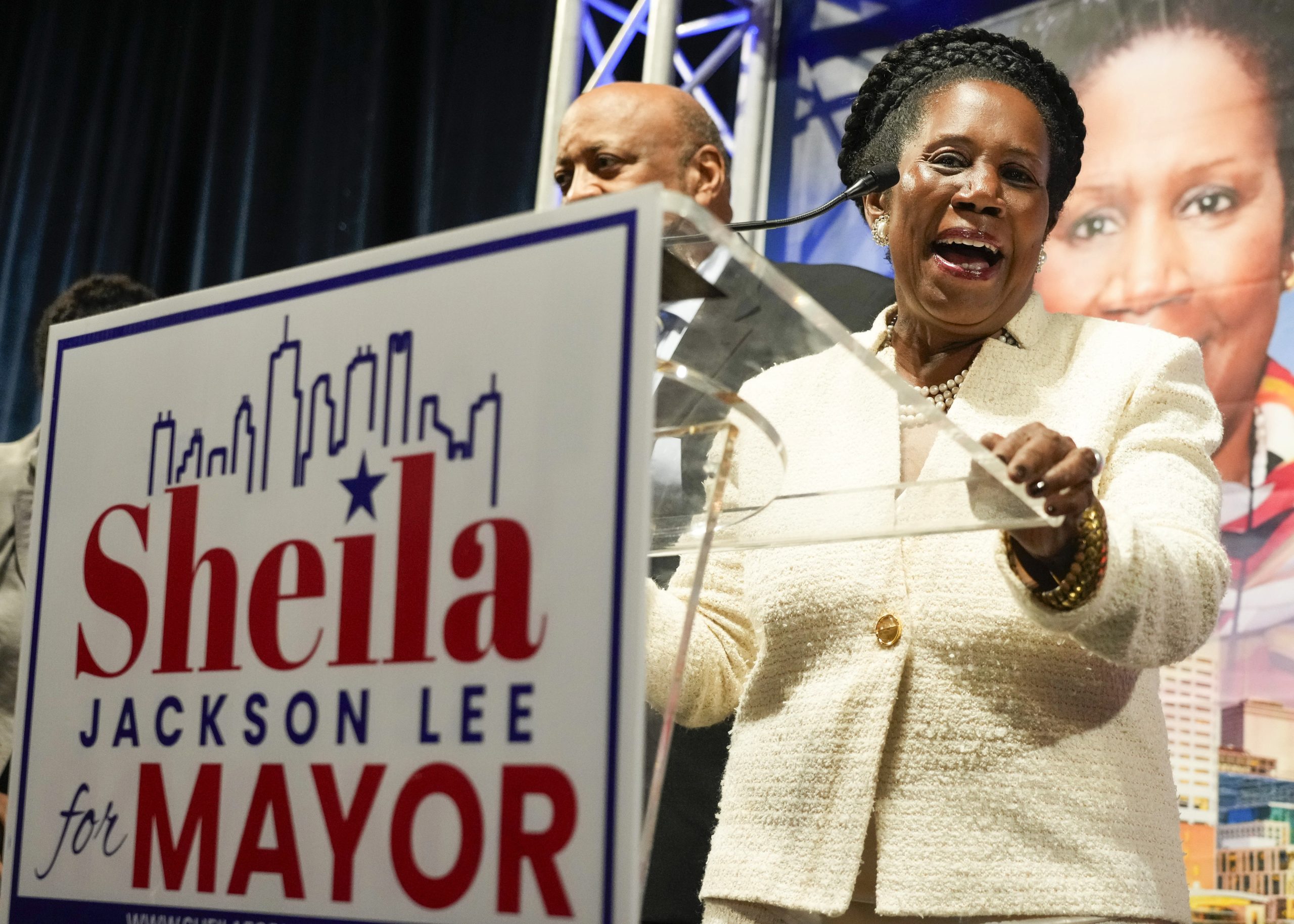
Real estate is often the largest component of a politician's net worth. For representatives from Texas, maintaining a primary residence in their home district is essential, while securing lodging in the Washington, D.C., metropolitan area is a practical necessity during legislative sessions.
Property Management and Living Expenses
Property records in Harris County, Texas, document long-standing residential holdings associated with Jackson Lee in Houston. In Washington, D.C., like many lawmakers, she navigated the high cost of the local housing market through a combination of residential rentals, cooperative apartments, or shared living arrangements common among Capitol Hill legislators.
Because congressional salaries do not fully subsidize the dual-housing burden required of out-of-state representatives, lawmakers often allocate a significant portion of their earnings toward maintaining these two households.
Pensions and Post-Service Benefits
A significant portion of long-term wealth accumulation for members of Congress comes via the Federal Employees Retirement System (FERS) and the Thrift Savings Plan (TSP).
The Value of Federal Retirement Packages
After serving nearly 30 years in the House of Representatives, Jackson Lee qualified for federal pension benefits. Under FERS rules, congressional pensions are calculated based on:
- Length of federal service (years and months).
- The average of the highest three consecutive years of basic pay (the "high-3" average).
- An accrual rate typically set at 1.7% for the first 20 years of service, plus 1.0% for any years thereafter.
This pension structure ensures long-serving members achieve financial security in their later years, though it differs vastly from the private-sector wealth generated by corporate executives or entrepreneurial titans.
Separating Fact from Fiction Regarding Political Wealth
In the digital age, viral social media posts frequently exaggerate the financial status of prominent politicians, turning standard salaries and public pensions into perceived "empires." When examining the actual financial disclosures filed throughout Jackson Lee's career, a more nuanced reality emerges.
While earning a steady six-figure government salary for decades places an individual among top earners nationwide, it does not inherently equate to the staggering multi-million dollar portfolios often attributed to public figures online. Her financial footprint remained firmly rooted in public sector compensation rather than private commercial syndicates.
Conclusion
The financial journey of Sheila Jackson Lee mirrors the structural realities of long-term public service in the United States. Driven primarily by congressional salary, federal retirement planning, and standard real estate holdings, her financial history reflects the compensation structure established for federal lawmakers. By reviewing public disclosures and official records, taxpayers and observers can gain an accurate, grounded understanding of how congressional careers translate into personal finance.