Shock & Beauty: Daisy Bloom Naked Exposes Nature’s Hidden Delight
The common lawn daisy is perhaps the most deceptively simple flower on Earth. Children pluck its white petals in games of chance, and gardeners often dismiss it as a persistent turf weed. Yet, within botanical science and macro-photography, looking past the familiar surface reveals something extraordinary. The phrase Shock & Beauty: Daisy Bloom Naked Exposes Nature’s Hidden Delight captures precisely what happens when an observer peels back the outer ray petals and confronts the bare anatomical core of the inflorescence.

Far from being a solitary blossom, the daisy is a dense, hyper-efficient cooperative colony of individual flowers. When laid bare—stripped of the distracting white perimeter—the naked receptacle and central disk expose a world of dynamic geometry, miniature floral pistons, and ancient evolutionary strategies that remain completely invisible to the casual passerby.
The Illusion of a Single Flower: Deconstructing the Pseudanthium
To understand the naked anatomy of a daisy, one must first dismantle a widespread botanical misconception: a daisy is not a single flower. It belongs to the family Asteraceae (formerly Compositae), characterized by what botanists classify as a pseudanthium, or "false flower."
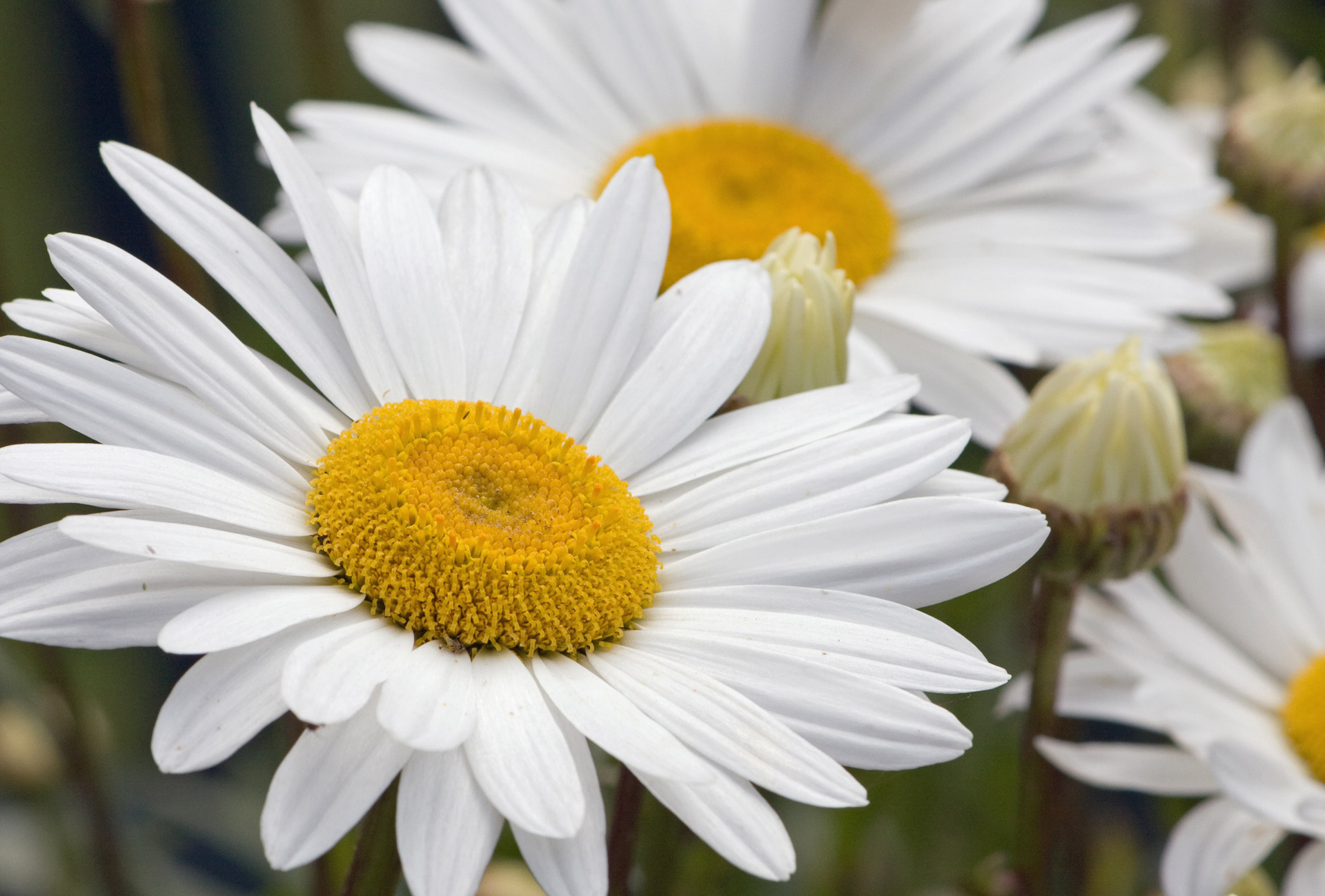
What the human eye interprets as an individual bloom is actually a composite head consisting of dozens, sometimes hundreds, of distinct, functional florets rooted upon a shared platform called the receptacle. These florets fall into two distinct anatomical classes:
- Ray Florets: The outermost ring, colloquially called the "petals." These are sterile or purely female flowers modified with a strap-shaped corolla (the ligule) designed primarily as an optical beacon to attract flying pollinators.
- Disk Florets: The densely packed, golden-yellow center. Each tiny cylinder is a complete, hermaphroditic flower equipped with its own five-toothed corolla, nectar gland, anther tube, and receptive stigma.
When the ray florets are removed or naturally wither away, the naked disk emerges not as a flat yellow button, but as a thrumming architectural dome of living machinery.
Shock & Beauty: Daisy Bloom Naked Exposes Nature’s Hidden Delight
Stripping the daisy down to its bare disk florets brings an immediate aesthetic shock: the sudden appearance of strict, hypnotic mathematical order. Every disk floret in a healthy daisy head is positioned according to principles of botanical phyllotaxis governed directly by the Fibonacci sequence and the Golden Angle (approximately 137.5 degrees).
Under a magnifying lens, the naked capitulum resolves into intersecting families of counter-rotating logarithmic spirals. Typically, an observer will count 21 spirals curving in one direction and 34 in the other; larger members of the Asteraceae family scale this ratio up to 34/55 or 55/89. This mathematical distribution is not merely decorative. It represents the physical optimum for packing circular bodies within a confined circular space without leaving gaps or creating directional pressure points.
As each micro-bud forms at the apex of the naked receptacle, it emerges at exactly 137.5 degrees relative to its predecessor. This single geometric constant guarantees that regardless of how large the flower head grows, floret density remains uniform from the center to the outermost perimeter, maximizing the biological real estate available for reproductive organs.
The Micro-Mechanics of Secondary Pollen Presentation

Viewing the naked floret cluster through a macro lens exposes a synchronized kinetic performance known as secondary pollen presentation (specifically, the "plunger" or "piston" mechanism). Because hundreds of individual flowers must share a tight arena, the daisy cannot afford random, disorganized pollen release.
To avoid self-fertilization, each disk floret operates on a strict timeline, dividing its life cycle into two distinct stages:
- The Male (Staminate) Phase: Five internal stamens fuse together into a hollow cylinder. As the pollen grains mature, they shed inward into this tube. Simultaneously, the immature style deep inside begins to elongate like a piston, pushing a specialized ring of sweeping hairs upward through the cylinder. This sweeps the golden pollen out of the top of the floret, presenting it cleanly to visiting insects.
- The Female (Pistillate) Phase: Once the floret is wiped clear of its own pollen, the style emerges fully into the open air. Its tip bifurcates, peeling back into two curling stigma lobes to expose the receptive inner surfaces to pollen brought in from older or younger neighboring blooms.
Because the florets mature concentrically—advancing slowly from the outer edge inward toward the center—a naked daisy disk is never uniform. It presents a moving wave of distinct zones: mature seed capsules on the periphery, receptive female stigmas next, bursting male pollen towers just inside, and tight, unopened green micro-buds guarding the very center.
The Naked Receptacle: Architecture of Seed Dispersal
Once pollination is accomplished and the yellow corollas dry and drop away, the daisy reaches its ultimate state of naked exposure: the bare receptacle. Stripped of all floral tissue, the underlying platform is revealed as a pitted, conical dome that serves as a launchpad for future generations.
Each tiny pit on the receptacle marks the insertion point where an individual ovary was tethered to the plant's vascular system. As the fertilized ovary transforms into a hardened seed (an achene or cypsela), the receptacle often flexes upward, shifting from a flattened saucer to a steep cone. This postural shift angles each seed outwards into the breeze, preventing aerodynamic interference between neighboring seeds when raindrops or foraging animals brush the spent head.
How to Observe the Hidden Details at Home
Experiencing this microscopic landscape does not require an advanced university laboratory. Any curious naturalist or macro photographer can uncover these structural wonders with a few simple steps:
- Select an Active Specimen: Choose a freshly opened field daisy (such as Bellis perennis or Leucanthemum vulgare) that features both open florets around the perimeter and tightly closed buds in the center.
- Use a 10x to 20x Hand Lens or Macro Lens: Standard magnification brings the five-pointed star shape of each individual disk corolla into crisp focus.
- Dissect with Care: Using fine-tipped tweezers or a clean razor blade, gently slice the flower head vertically through the central axis. This cross-section lays bare the convex receptacle dome, the vascular pathways nourishing the floret bases, and the delicate pistil shafts pushing upward within each tube.
Conclusion: Rethinking the Humble Lawn Flower
Nature rarely wastes energy on superficial adornment. While humanity values the daisy for its bright, sunny presentation in fields and borders, the flower's true triumph lies in the microscopic machinery concealed beneath the surface. Stripping away the petals reveals an intricate convergence of high-level mathematics, hydraulic mechanics, and communal reproductive strategy. Looking at the naked daisy bloom is an invitation to appreciate that even the most commonplace organism harbors astonishing complexity, waiting only for an observant eye to look a little closer.