Skunks in Florida: Identification and Removal Guide
Encountering wildlife is a daily reality for many Sunshine State residents, but few animal visits cause as much immediate panic as finding a skunk on the property. Dealing with skunks in Florida requires a blend of local knowledge, preventative yard maintenance, and an understanding of these nocturnal mammals' behavior. Whether you have caught a whiff of their distinct odor or spotted one rummaging through your garbage, knowing how to handle the situation safely protects both your household and your pets.

Skunk Species Found in Florida
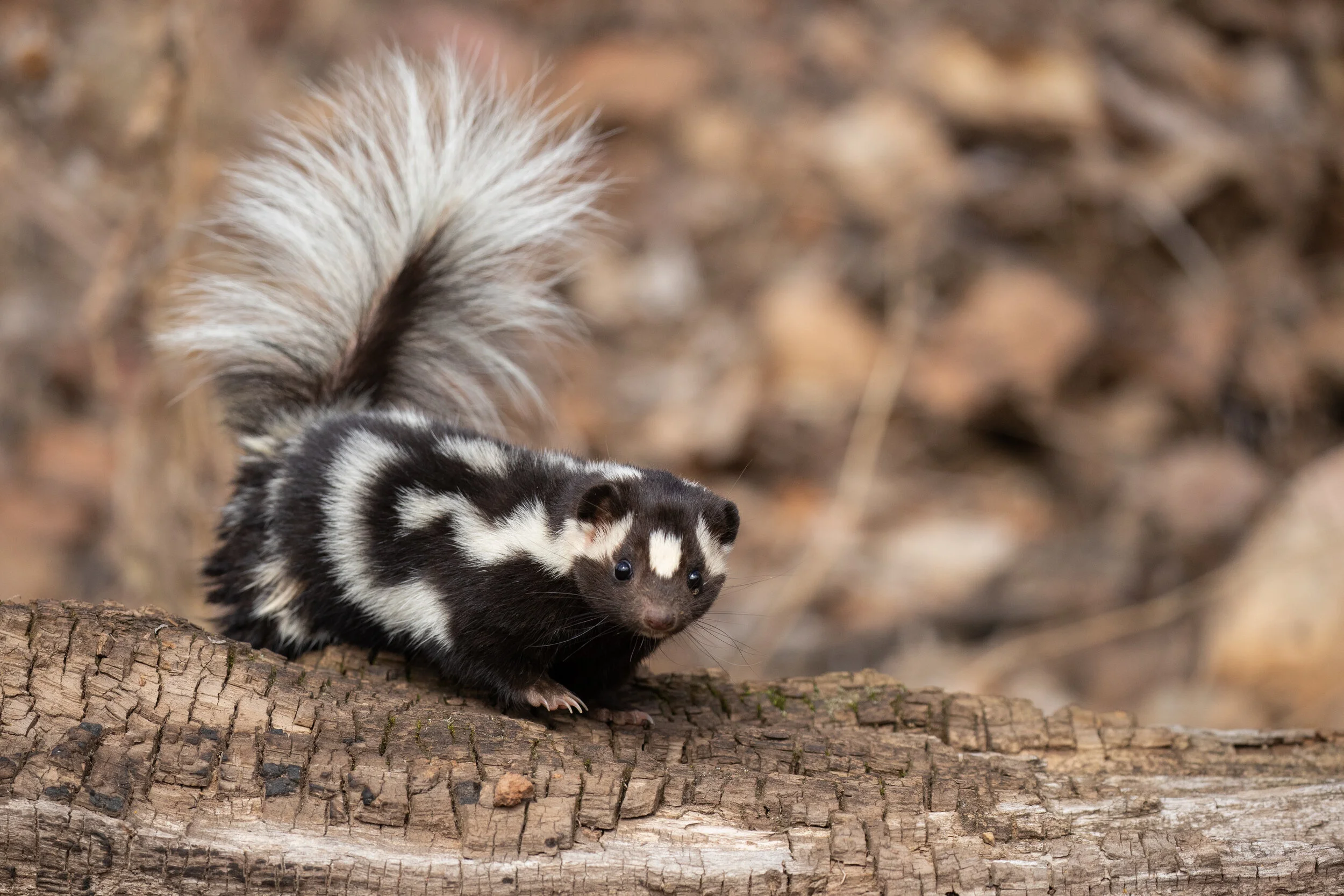
Florida is home to two primary species of skunks: the Striped Skunk and the Eastern Spotted Skunk. While both possess the infamous defense mechanism that makes them famous, their appearances and habits differ significantly.
The Striped Skunk
The Striped Skunk (*Mephitis mephitis*) is the larger of the two Florida species, typically growing to the size of a domestic house cat. They feature coarse black fur with two broad white stripes running from the back of the head down to a bushy tail. Striped skunks are adaptable and comfortable living near human development, making them the most common culprit behind suburban yard raids.
The Eastern Spotted Skunk
The Eastern Spotted Skunk (*Spilogale putorius*) is smaller, more slender, and remarkably agile. Instead of solid stripes, their coats feature broken white bands and spots that give them a mottled appearance. Spotted skunks are excellent climbers and are sometimes able to scale low fences or access elevated porches, though they are generally less commonly seen than their striped cousins.
Behavior and Habitat Preferences
Skunks are nocturnal animals, meaning they are most active from dusk until dawn. During daylight hours, they seek shelter in secure, dark spaces. In natural settings, they dig burrows or use hollow logs, but in urban and suburban environments, they readily exploit man-made structures.
Common denning sites include:
- Underneath wooden decks and porches
- In crawl spaces beneath homes
- Inside abandoned sheds or outbuildings
- Beneath concrete slab foundations and concrete steps
- Piles of brush, lumber, or stacked firewood
Skunks are opportunistic omnivores. Their diet consists largely of insects like grubs, beetles, and grasshoppers, but they also eat fruit, plant roots, small rodents, bird eggs, and garbage. If your lawn has brown patches where turf has been rolled back, it is often a sign that skunks are digging for lawn grubs.
Signs of a Skunk Infestation
Because they are nocturnal, you might notice the signs of a skunk long before you spot the animal itself. Keep an eye out for these common indicators:
- The Odor: A faint, musky scent or a full-blown chemical spray is the most obvious sign that a skunk is nearby.
- Cone-Shaped Holes: Skunks leave small, conical holes in lawns (about 3 to 4 inches deep) where they snuffle out grubs and earthworms.
- Tracks: Skunk tracks show five toes on both front and rear feet, with the front claws noticeably longer than the rear claws for digging.
- Scrapings and Damage: Rummaged garbage bins and damaged ground-level vegetation point toward foraging mammals.
- Use heavy-duty trash cans with locking lids to prevent midnight raids.
- Bring pet food indoors at night rather than leaving it on the patio.
- Harvest fallen fruit from backyard trees promptly.
- Treat your lawn for grubs to eliminate their primary food source in the soil.
- Install Barriers: Attach hardware cloth or wire mesh around the base of decks, sheds, and porches. Bury the mesh at least 6 to 12 inches underground, angling the bottom outward to prevent digging underneath.
- Clear Clutter: Remove brush piles, old building materials, and dense overgrown vegetation where skunks love to hide.
- Illuminate Dark Areas: Motion-activated floodlights can deter nocturnal foragers from lingering near your home's perimeter.
- 1 quart of 3% hydrogen peroxide
- 1/4 cup of baking soda (sodium bicarbonate)
- 1 to 2 teaspoons of liquid dish soap
Prevention: How to Keep Skunks Away
The best way to manage skunks is to make your property unappealing to them. By removing food sources and blocking potential shelter, you can drastically reduce the chances of an unwanted wildlife takeover.

Secure Food Sources
Skunks visit yards looking for easy meals. Deny them access by taking these simple steps:
Exclusion and Yard Maintenance
To prevent skunks from moving onto your property permanently, focus on habitat modification:
Safe Removal and Handling
If a skunk has already taken up residence under your home, removal requires patience and caution. Skunks are generally docile unless cornered, frightened, or defending their young, but handling them improperly guarantees a face full of potent musk.
Can You Relocate Skunks in Florida?
Florida Fish and Wildlife Conservation Commission (FWC) regulations dictate how nuisance wildlife can be handled. Homeowners can legally trap nuisance wildlife on their own property, but relocated mammals must be released on the same property or euthanized according to state guidelines. Transporting wildlife across county lines or releasing them into public parks is restricted due to the risk of spreading diseases like rabies.
When to Call a Professional
While DIY deterrents work well for prevention, dealing with an established den—especially during spring when females have dependent kits—is best left to licensed wildlife removal professionals. Pest control experts use specialized one-way doors that allow skunks to exit a denning site to forage, but prevent them from re-entering. Once the animals have cleared out, the professional can permanently seal the opening to prevent future occupation.
Dealing with Skunk Spray
If a pet or family member gets sprayed, traditional tomato juice baths are largely a myth. Instead, mix a solution that neutralizes the chemical compounds in the oil rather than just masking the smell.
DIY Skunk Odor Remover Recipe:
Mix the ingredients in an open bowl immediately before use (do not store in a closed container, as the reaction creates gas). Thoroughly wash the affected pet or surface, let it sit for five minutes, and rinse thoroughly with tap water. Wear rubber gloves and old clothing during the process.