Small Canvas Painting Ideas & Beginner Guide
Introduction to Small Canvas Painting
There is a unique kind of freedom that comes with a pint-sized surface. While massive blank canvases can feel intimidating, working on a small canvas painting invites playfulness, speed, and low-stakes experimentation. Whether you are an absolute beginner picking up a brush for the first time or an experienced artist looking to loosen up your style, mini canvases offer a rewarding creative outlet that won't overwhelm your schedule or your living space.
Miniature art has surged in popularity due to its accessibility and charm. These bite-sized artworks take up very little storage space, require minimal setup and cleanup, and make deeply personal gifts. In this guide, we will explore the essential supplies you need, simple step-by-step techniques, and inspiring ideas to help you create your own miniature masterpieces.
Essential Supplies for Mini Canvas Art
You do not need a professional studio or expensive equipment to start creating small canvas paintings. Keeping your toolkit simple allows you to focus purely on the creative process.
- Canvases: Standard stretched mini canvases (like 4x4, 5x7, or 8x10 inches) or canvas panels work wonderfully. Panels are especially great if you want to frame your finished pieces easily.
- Paint: Heavy-body or fluid acrylics are the go-to choice because they dry quickly and clean up with water. Gouache is another fantastic, matte option for small surfaces.
- Brushes: Invest in a pack that includes fine liner brushes (sizes 0, 00, or 000) for details, alongside a couple of small flat and filbert brushes for backgrounds and blending.
- Palette and Water: A simple paper plate or a wet palette will keep your acrylic paints from drying out too fast. Always keep two jars of clean water nearby—one for washing and one for thinning paint.
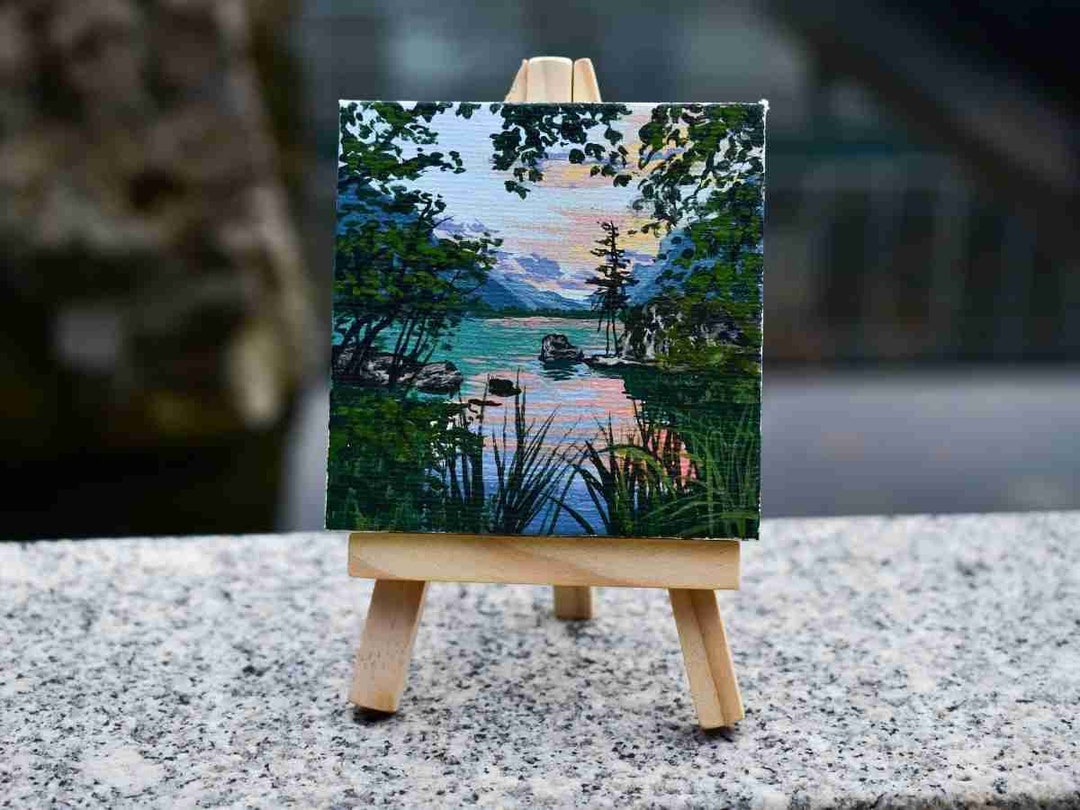
- Easel: A miniature desktop easel isn't strictly necessary, but it props your work up at eye level, making it much easier to see proportions and avoid hand fatigue.
Easy Small Canvas Painting Ideas for Beginners
If you are staring at a blank square and feeling stuck, lean into subjects that naturally translate well to a reduced scale. Because the working area is tiny, simple compositions often have the most visual impact.
1. Minimalist Sunset or Sunrise
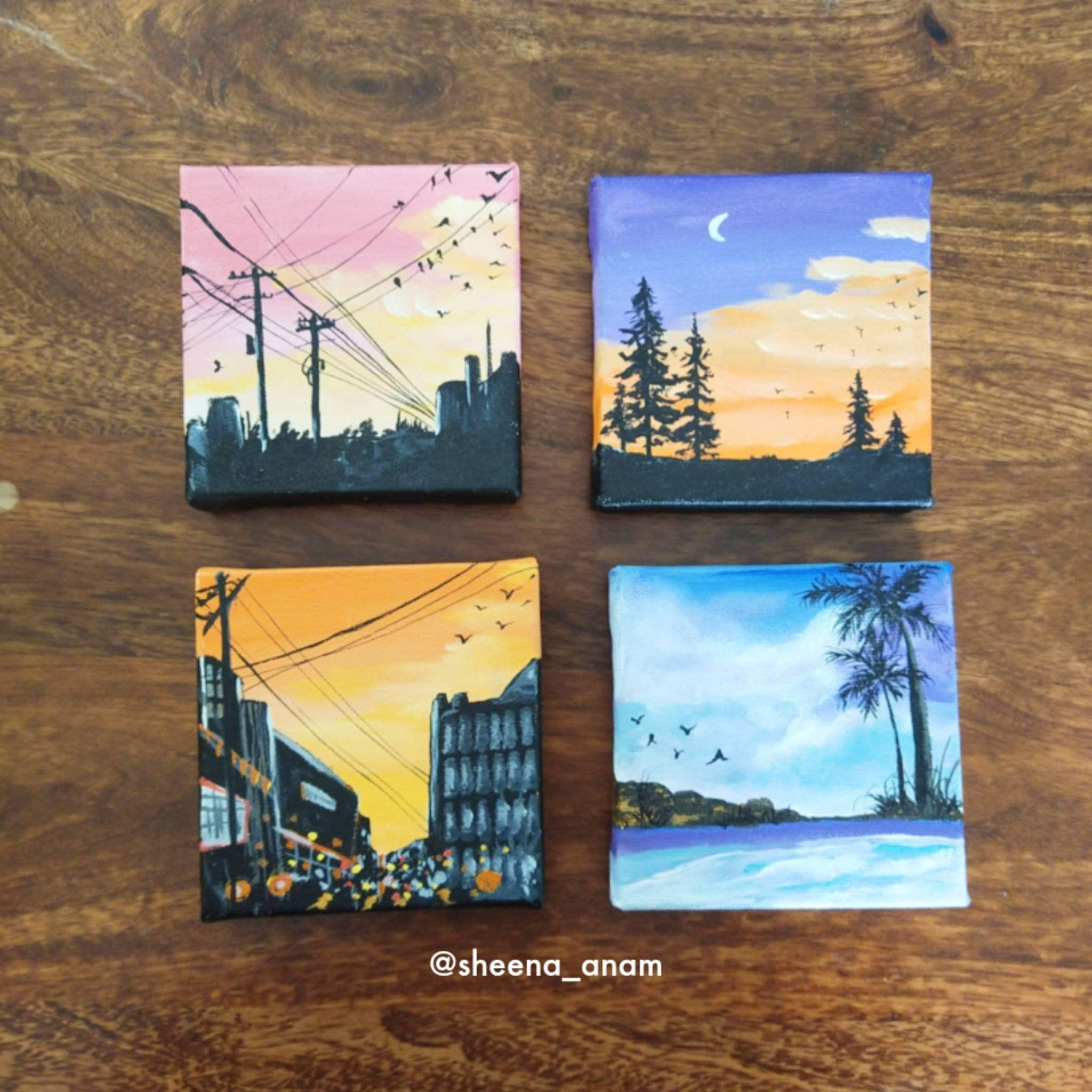
Gradient skies are exceptionally satisfying to paint on a small scale. Start by mixing white, yellow, orange, and pink acrylics. Blend them horizontally while the paint is still wet to create a smooth sunset. Once dry, use a fine brush or a permanent black marker to silhouette a simple mountain range, a solitary tree, or a pair of birds flying across the horizon.
2. Abstract Color Blocks

Abstract art thrives on small surfaces. Use painter's tape to section off geometric lines and shapes on your canvas. Fill the sections with contrasting or monochromatic colors. Peel away the tape while the paint is slightly tacky to reveal crisp, clean lines. This style looks remarkably modern and fits effortlessly into contemporary home decor.
3. Botanical Studies
Nature is full of micro-inspirations. Paint a single monstera leaf, a delicate sprig of lavender, or a minimalist cactus. You don't need to capture every vein; simple, confident brushstrokes often convey the essence of a plant much better than hyper-realism. A solid pastel or neutral background makes botanical greens pop.
Step-by-Step Technique: Painting a Mini Mountain Landscape
Ready to try your hand at a complete piece? Follow these simple steps to create a charming mountain landscape on a 5x7 inch canvas.
- Prime and Background: Apply a light wash of titanium white mixed with a touch of ultramarine blue across the top half of the canvas to establish your sky. Let it dry completely.
- Add the Background Mountains: Mix a muted grayish-blue by combining blue, white, and a tiny dab of black. Use a flat brush to sweep jagged, triangular shapes across the middle of the canvas. Keep the edges softer so they recede into the distance.
- Layer Foreground Elements: Mix a darker shade of green or charcoal grey. Paint a second, sharper layer of mountains closer to the bottom, overlapping the first layer.
- Highlight and Detail: Use a fine liner brush and pure white paint to add snowy peaks along the top edges of your mountains. Add a few vertical dark strokes at the very bottom to suggest pine trees.
- Seal Your Work: Once the acrylic paint is completely dry (usually 24 hours), apply a clear acrylic varnish or matte medium to protect the surface from dust and UV fading.
Pro Tips for Success
Working on a miniature scale comes with a few unique challenges. Keep these practical tips in mind to elevate your finished pieces:
- Mind Your Hand Placement: Because the canvas is small, it is easy to accidentally smudge wet paint with the side of your hand. Work from the top-left corner down to the bottom-right (if you are right-handed) to avoid smears.
- Embrace Bold Contrast: Small paintings can easily get lost visually from a distance. Ensure you have a healthy balance of very dark darks and very bright highlights to create visual depth.
- Don't Overwork It: The biggest trap in small canvas painting is fussing over details for too long. Step back frequently, squint your eyes, and know when to put the brush down. Often, less is more.
Conclusion
Small canvas painting is a delightful, low-pressure way to explore your artistic side. By keeping your supplies basic and focusing on simple, high-contrast subjects, you can build a collection of charming mini artworks in no time. Grab a brush, pick a miniature canvas, and enjoy the creative process without the pressure of perfection.