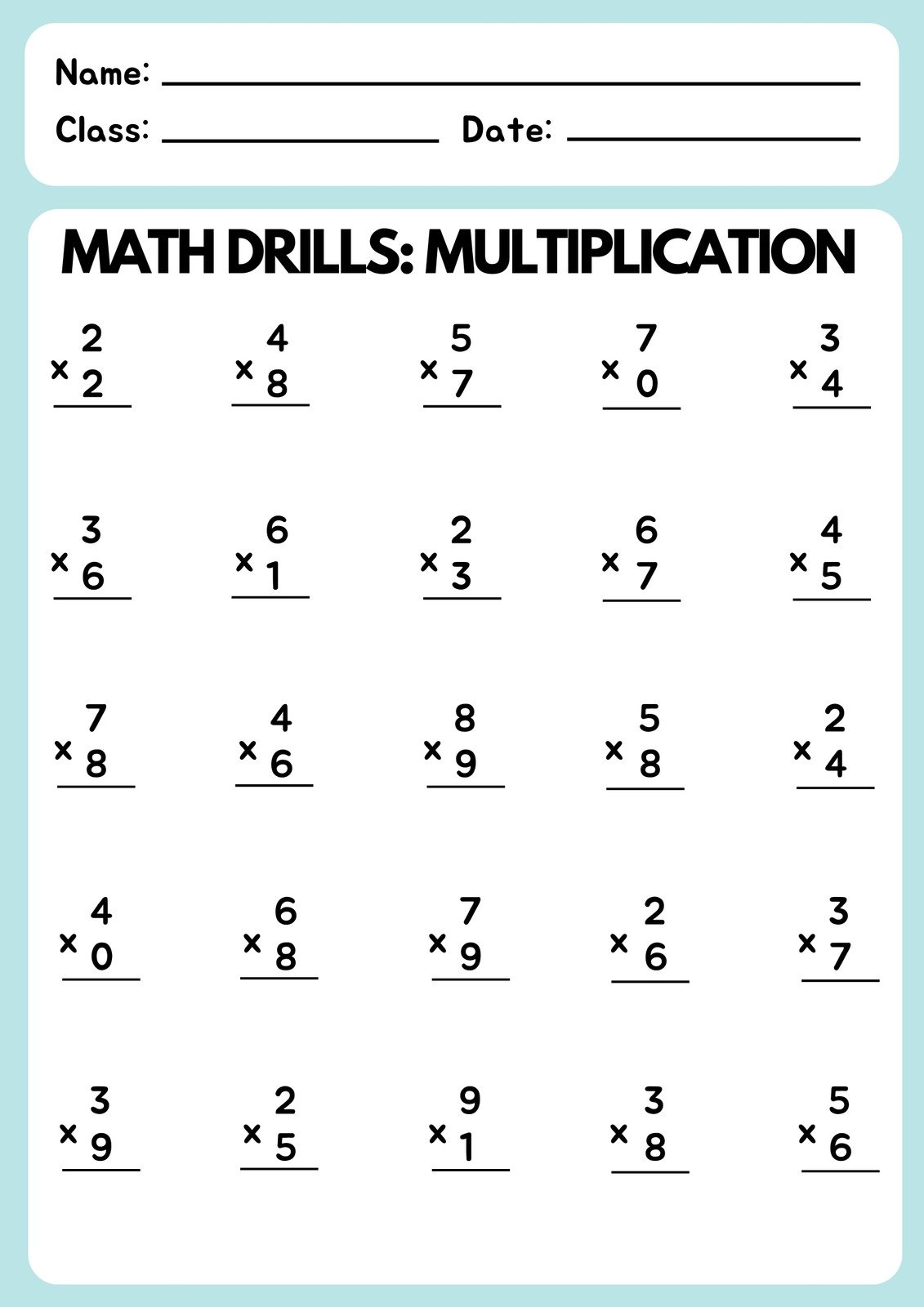
Solve Multiplication Problems with Cute Printables Fast
When elementary students hit the multiplication wall, traditional flashcards and repetitive drills often produce tears rather than fluency. Memorizing tables in isolation creates unnecessary cognitive friction, making simple arithmetic feel like an insurmountable chore. If your goal is to help your child or classroom solve multiplication problems with cute printables fast, you need resources that merge sound pedagogical design with engaging visual themes.

Multiplication is not merely memorization; it is pattern recognition, spatial awareness, and repeated addition. The right printables turn abstract arithmetic into tactile, visually intuitive puzzles that accelerate computational fluency while keeping engagement high.
Why Cute, Visual Printables Accelerate Math Fluency
Child psychologists and educational researchers have long recognized the impact of affective engagement on working memory. When a child experiences math anxiety, their working memory constricts, leaving little room for problem-solving. Playful, aesthetically pleasing printables mitigate this tension by lowering emotional stakes.
Cute illustrations—such as friendly woodland animals, space rockets, or colorful baked goods—serve three distinct educational purposes:
- Anchoring abstract concepts: A picture of 4 baskets containing 3 apples each clarifies the concept of equal groups faster than the equation
4 × 3 = 12written on a plain whiteboard. - Fostering intrinsic motivation: Children naturally want to complete a sheet that reveals a picture or guides a character through a maze, giving them a tangible sense of accomplishment.
- Reducing visual fatigue: Dense rows of black-and-white equations intimidate struggling learners. Thoughtfully designed printables use negative space, charming borders, and distinct visual sections to make practice manageable.
The Best Types of Multiplication Printables for Quick Results
Not all math worksheets are created equal. To build speed and conceptual depth simultaneously, focus on printables that utilize concrete mathematical representations.
1. Array-Based Coloring Sheets
Arrays are rows and columns that represent equal groups. A printable featuring a grid where kids color in a 6-by-4 rectangle to build a skyscraper or design a robot turns abstract multiplication into area-based geometry. Students physically see why 6 × 4 equals 24 square units, cementing the commutative property (that 6 × 4 is identical in area to 4 × 6).
2. Skip-Counting Paths and Mazes
Fluent skip-counting is the bedrock of rapid multiplication. Printables shaped as stepping stones across a river or planets across a solar system encourage kids to count by 3s, 4s, 6s, or 7s. When kids master the rhythm of skip-counting on paper, their recall speed skyrockets when faced with standard equation sheets.
3. Color-by-Number Fact Wheels
Color-by-number pages often get dismissed as busywork, but when designed around fact families, they provide rapid-fire self-correction. If a student calculates 8 × 7 = 54, they will quickly realize that 54 is not an option on the color key, prompting them to re-evaluate their work immediately without teacher intervention.
4. Triangle Fact-Family Cards
Multiplication and division should never be taught in silos. Triangle-shaped printable cards place the product at the top vertex and the two factors at the bottom corners. Covering one corner with a thumb instantly creates a targeted problem, helping kids master four related equations (e.g., 3 × 5 = 15, 5 × 3 = 15, 15 ÷ 3 = 5, and 15 ÷ 5 = 3) in a single pass.

How to Solve Multiplication Problems With Cute Printables Fast
Handing a child a stack of worksheets will not magically build speed. To get rapid results, implement a structured, five-step study routine that pairs printables with proven retrieval practice.
Step 1: Isolate One Fact Family at a Time
Avoid comprehensive mixed-fact sheets until foundational sets are secure. Follow an optimal sequence based on mathematical connections:
- Foundational zero and identity properties: 0s and 1s.
- Doubles and easy patterns: 2s, 5s, and 10s.
- Double-doubles: 4s (double the 2s) and 8s (double the 4s).
- Clock and pattern numbers: 3s, 6s, and 9s (utilizing the finger-trick or sum-of-digits patterns).
- The remaining tough facts: 7s and isolated combinations like
7 × 8.
Step 2: Start with the Concrete Representation
Before asking a student to solve 7 × 3, give them a printable that features groups—such as 7 flowerpots with 3 blossoms each. Have them count the groups, write the repeated addition sentence (3 + 3 + 3 + 3 + 3 + 3 + 3), and then write the multiplication equation underneath. This links visual geometry directly to symbolic math.
Step 3: Run 5-Minute Daily Speed Sprints
Marathon study sessions lead to cognitive overload and diminishing returns. Instead, print out a mini-sheet with 15 to 20 targeted equations featuring a fun design. Set a timer for 3 to 5 minutes. The short duration creates an energizing game environment rather than a high-stakes test, prompting faster automatic recall.
Step 4: Use Dry-Erase Pockets for Repetition
Constant erasing on paper can frustrate young learners who make mistakes. Slip your printables into clear, heavy-duty dry-erase sleeves. Using brightly colored dry-erase markers makes writing smoother, lowers resistance, and allows the child to wipe away errors with a single swipe, encouraging risk-taking and fast correction.
3 Clever Hacks to Make Printable Math Practice Stick
To maximize the return on your printing investment, integrate these simple home and classroom adaptations:
- Create a "Math Badge" Tracker: Print a sheet with cute, blank character badges or passport stamps. Each time a child masters a specific table (such as the 6s), let them color in or sticker that specific badge. Visual progress tracking builds sustained momentum.
- Incorporate Tactile Manipulatives: Place small treats, colored buttons, or building bricks directly onto the printable grids. Laying physical items onto printable arrays bridges the gap between physical objects and mental math.
- Turn Printables into Matching Games: Cut up printable equations and their illustrated answers to play a classic memory-matching card game. Finding the card showing 4 rows of 5 stars to match with the card reading "20" activates both visual and linguistic memory pathways.
Building Long-Term Confidence
Speed is a natural byproduct of understanding and confidence. When children use cute, structured printables, they stop viewing multiplication as an arbitrary list of facts to be memorized under stress. By providing visual anchors, approachable micro-practice sessions, and engaging artwork, you empower young learners to decipher multiplication patterns quickly and develop an enthusiastic, resilient attitude toward mathematics.