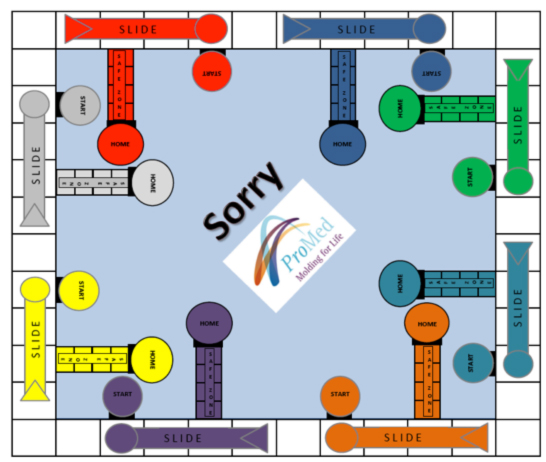
Sorry Game Printable Boards vs Traditional Boards
Few board games evoke as much nostalgic tactical betrayal as Sorry! For decades, racing pawns around the track, sliding down safety zones, and knocking opponents back to start has been a rainy-day staple. However, modern board gamers and DIY enthusiasts face a unique choice when setting up family game night: should you buy a boxed retail copy or use a Sorry game printable boards vs traditional boards approach?

While traditional manufactured boards offer ready-to-play durability and tactile familiarity, printable boards provide unmatched convenience, instant access, and unique customization options. This comprehensive comparison breaks down the key differences in cost, quality, portability, and overall gameplay experience to help you choose the right format for your next game night.
Understanding the Competitors
Before diving into the direct comparison, it helps to understand what each option brings to the table.
Traditional Sorry! Boards
Traditional boards are mass-produced by game publishers like Hasbro. They are typically made of thick, multi-fold cardboard, featuring glossy finishes, vibrant primary colors, and precise square track alignments. They come bundled with matching pawns, a specialized deck of cards (or spinner, depending on the edition), and a sturdy cardboard box designed for shelf storage.
Printable Sorry! Boards
Printable boards are digital files (usually high-resolution PDFs or image files) that you download from the internet and print on your own home printer or through a local print shop. To make them functional, you must print them on cardstock or laminate standard paper, and source your own pawns and cards separately.
Direct Comparison: Key Factors to Consider
When weighing printable versions against store-bought classics, several practical factors come into play.
1. Cost and Accessibility
Traditional Boards: Buying a brand-new retail copy of Sorry! generally costs between $15 and $25. While affordable, it requires a trip to the store or waiting for shipping.
Printable Boards: Many digital versions are available for free online or for a nominal fee (usually under $5 on marketplaces like Etsy). If you already own a printer, cardstock, and spare pawns from other games, the cost is virtually zero. You can download, print, and play within five minutes.
2. Durability and Material Quality
Traditional Boards: Factory-made boards use heavy-duty greyboard covered in wrap paper. They are engineered to withstand repeated folding, spills, and enthusiastic slamming of pawns. They easily last for decades with proper care.
Video: Sorry ! PC Board Games
Printable Boards: Standard home printer paper will tear or crumple within a few games. To match traditional durability, you must print on heavy cardstock (110lb+) and preferably laminate the sheet or mount it to thin cardboard or foam board. Without these extra steps, printables wear out much faster.

3. Portability and Storage
Traditional Boards: Retail game boxes are bulky. They take up significant shelf space and can be cumbersome to pack into a suitcase for vacation.
Printable Boards: Printables win hands down in the travel category. You can roll up laminated sheets, fold standard paper into a backpack, or simply save the PDF to your cloud storage and print a fresh copy at your destination. If a printable board gets ruined at the beach or a campsite, you can simply print another one.
4. Customization and Aesthetics
Traditional Boards: You get what you buy. The colors, track layout, and artwork are fixed by the manufacturer.
Printable Boards: The DIY route opens up endless creative possibilities. You can find printable boards featuring custom themes (such as Star Wars, holiday motifs, or personalized family photos), resize the board to fit a giant outdoor playing mat, or adjust high-contrast color schemes for players with visual impairments.
The Gameplay Experience: Does the Board Affect the Rules?
Fundamentally, the core mechanics of the game remain identical regardless of which board you use. The track length, safety zones, slide spaces, and 'Start' and 'Home' areas function the exact same way. However, the physical interaction differs:
- Card Compatibility: Official Sorry! rules rely heavily on specific card actions (e.g., Move 1 or 4, Switch, Sorry!). If you use a printable board, you will still need a standard deck of playing cards (mapped to Sorry! rules) or a printed sheet of Sorry! cards to play accurately.
- Pawn Fit: Mass-produced boards feature molded plastic tracks or indented paths that keep pawns securely in place. Flat printable boards lack these physical grooves, meaning pawns may slide around if someone bumps the table. Using heavier pawns or magnetic pieces can easily solve this issue.
Pros and Cons Summary
To help you make a final decision, consider this quick summary of the advantages and disadvantages of each format.
Traditional Boards
- Pros: Ready to play out of the box, highly durable, includes official cards and pawns, retains collectible value.
- Cons: Takes up storage space, fixed design, costs more upfront, inconvenient for spontaneous travel.
Printable Boards
- Pros: Instant download, highly affordable or free, infinitely customizable, easy to replace if damaged, great for travel.
- Cons: Requires DIY effort (printing, cutting, laminating), you must source your own pawns and cards, lower baseline durability unless reinforced.
Final Verdict: Which One Should You Choose?
The choice ultimately comes down to your immediate needs and lifestyle. If you want a reliable, long-lasting game night staple that lives on your shelf for years, stick with a traditional board. It requires zero prep work and offers the authentic tactile experience.
However, if you need a game right now for an impromptu party, want to pack light for a road trip, or want to design a personalized game for a birthday or classroom activity, a printable board is the clear winner. By investing just a few minutes into laminating and cutting, you can create a customized, portable version of a timeless classic that fits any occasion.