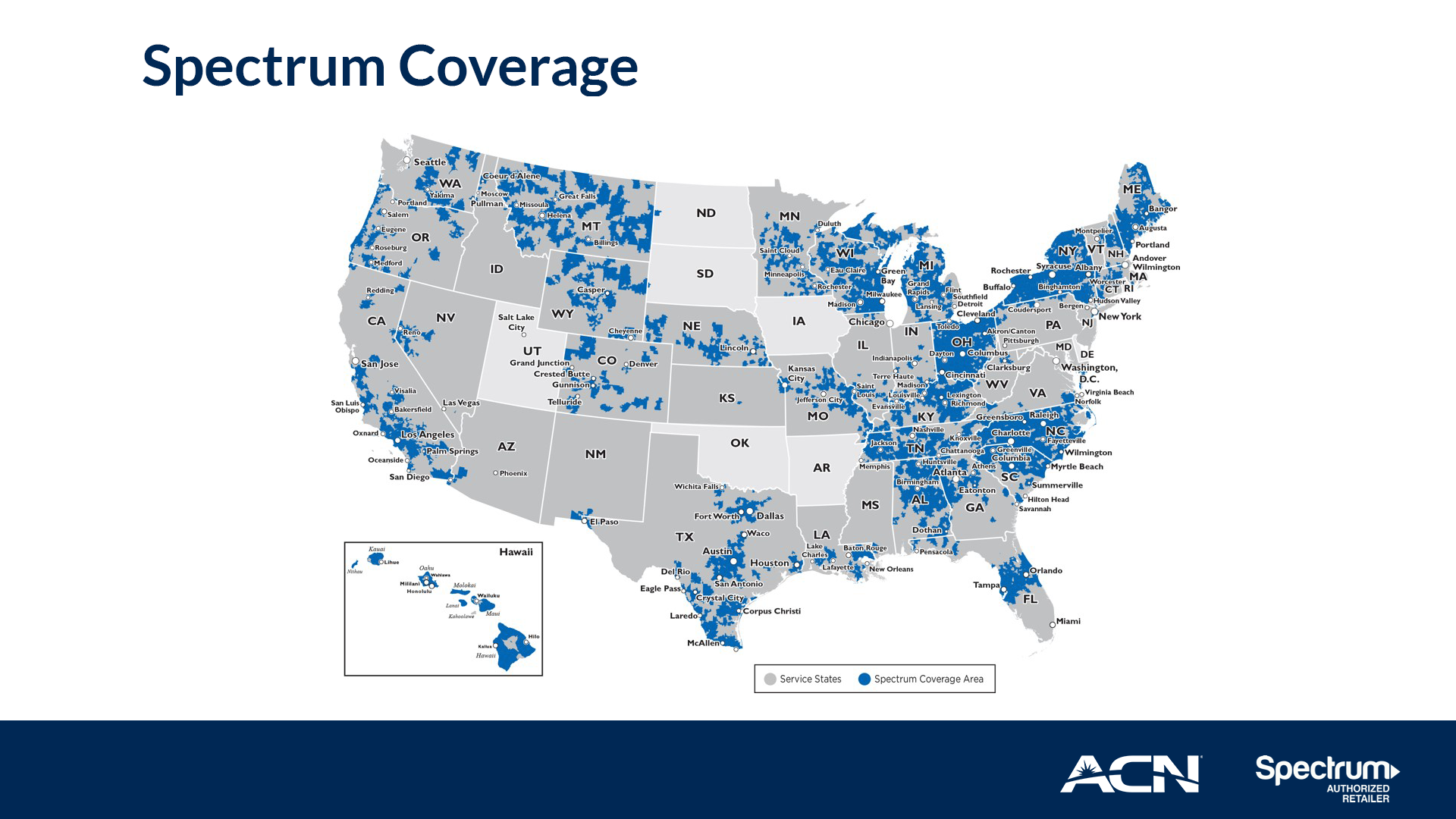
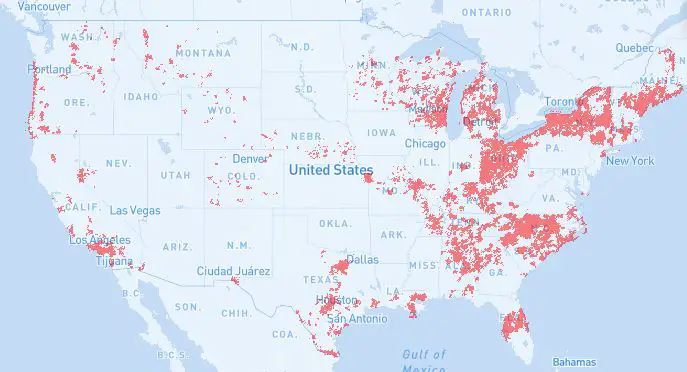
Spectrum Fiber Availability Map: Where Is It Live?
If you are looking for gigabit speeds with ultra-low latency, checking the spectrum fiber availability map is one of the smartest first steps you can take. While Spectrum (Charter Communications) is traditionally known as a cable internet provider, the company has quietly become one of the fastest-growing pure fiber builders in the United States.
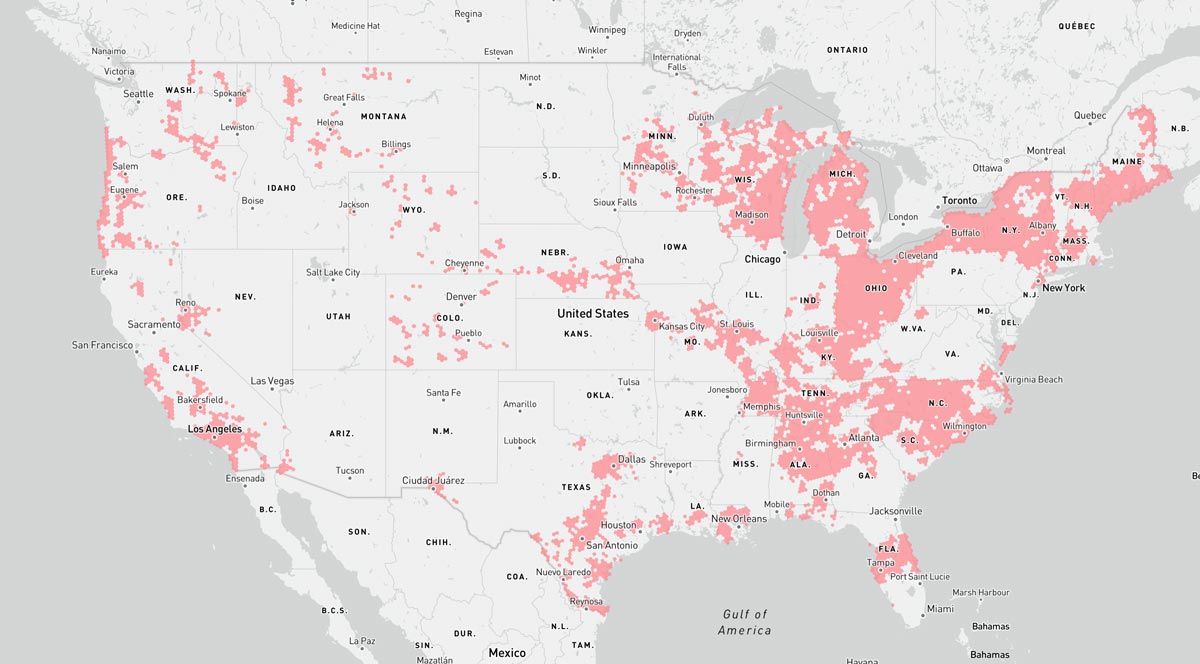
However, finding out whether Spectrum delivers pure Fiber-to-the-Home (FTTH) or traditional Hybrid Fiber-Coaxial (HFC) cable to your doorstep can be confusing. Spectrum markets both technologies under similar plan names. This guide breaks down where Spectrum fiber is actually deployed, how to interpret coverage maps, and how to verify the exact connection type at your address.
Spectrum Fiber vs. Cable: Understanding the Network
Before diving into the maps, it helps to understand what Spectrum means when it mentions "fiber." Spectrum operates two distinct network architectures for residential customers:
- Hybrid Fiber-Coaxial (HFC): This constitutes the majority of Spectrum's legacy footprint. Fiber-optic lines run to a neighborhood optical node, and traditional coaxial copper cables deliver the signal into your home. While download speeds reach up to 1 Gbps, upload speeds on traditional HFC are typically capped between 10 Mbps and 35 Mbps.
- Pure Fiber-to-the-Home (FTTH): In newer construction zones and federally funded rural expansion areas, Spectrum runs pure optical glass directly into the customer's home using EPON (Ethernet Passive Optical Network) technology. These connections support symmetrical speeds, meaning your upload speed matches your download speed (e.g., 500 Mbps down / 500 Mbps up).
How to Use the Spectrum Fiber Availability Map and FCC Data
Spectrum does not maintain a public, interactive web map on its commercial homepage that allows users to toggle strictly between "fiber" and "coax." Instead, their consumer site uses an address-verification tool. To see macro-level fiber deployment, third-party and regulatory mapping tools offer the best view.
1. The FCC National Broadband Map
The Federal Communications Commission (FCC) maintains the most accurate, property-level database of broadband availability in the United States. You can view pure Spectrum fiber coverage across entire counties using this tool:
- Visit the FCC National Broadband Map (broadbandmap.fcc.gov).
- Click the Gear/Filter Icon on the right side of the screen.
- Under Technologies, uncheck all options except Fiber to the Premises.
- Under Providers, search for and select Charter Communications (Spectrum's parent company).
- Zoom into your state or county to view the exact properties where Spectrum has confirmed active fiber installations.
2. The Spectrum Online Address Validator
While the FCC map shows general infrastructure, Spectrum’s official address checker confirms whether your home is serviceable today. Enter your street address and ZIP code. If the order flow displays symmetrical upload and download tiers (such as 500/500 Mbps or 1000/1000 Mbps) or mentions an Optical Network Terminal (ONT), your home qualifies for pure fiber.
Where Is Spectrum Expanding Its Pure Fiber Footprint?
Because converting dense urban copper networks to full FTTH is cost-prohibitive, Spectrum is focusing its pure fiber expansion on two specific sectors: federal grant zones and newly constructed neighborhoods.
The Rural Digital Opportunity Fund (RDOF)
Charter Communications was the largest winner in the FCC's Rural Digital Opportunity Fund auction. The company committed over $5 billion—supplemented by $1.2 billion in federal subsidies—to build pure FTTH networks across more than 1 million unserved and underserved rural locations.
Video: How to Check Spectrum Fiber Internet Availability at Your Address - Find Plans in Your Area

Major states seeing heavy Spectrum pure-fiber construction under RDOF include:
- Texas: Extensive rural buildouts throughout central, eastern, and southern rural counties.
- Ohio & Indiana: Broad agricultural corridors that previously lacked access to wireline broadband.
- North Carolina & Georgia: Significant expansion into foothill and rural communities surrounding metropolitan hubs.
- Missouri, Kentucky, and Alabama: High concentrations of grant-funded rural line-extension projects.
Greenfield Developments
For newly planned subdivisions, master-planned communities, and modern apartment complexes, Spectrum rarely installs coaxial cable anymore. The company lays fiber directly to the premises during the initial utility trenching process, making brand-new neighborhoods prime candidates for pure fiber service.
Spectrum Business vs. Residential Fiber
If you run a company or work from a commercial location, the availability map looks very different. Spectrum Enterprise operates a nationwide, dedicated fiber-optic backbone spanning over 230,000 route miles.
Unlike residential FTTH, Spectrum Enterprise fiber offers:
- Dedicated Internet Access (DIA) where your bandwidth is never shared with neighbors.
- Symmetrical speeds scalable from 25 Mbps up to 100 Gbps.
- Strict Service Level Agreements (SLAs) guaranteeing 99.99% uptime and four-hour repair response windows.
Enterprise fiber can often be constructed to order. If your commercial facility sits within a reasonable distance of an existing Spectrum fiber trunk line, Spectrum will engineer and build a lateral connection directly to your server room.
How to Identify What Equipment You Have
If you already have Spectrum and want to verify whether your connection is fiber or coaxial, inspect your network hardware setup:
- Coaxial Setup: A round, threaded black or white copper cable (RG6) screws into the back of your modem.
- Pure Fiber Setup: A thin, flexible optical cable terminates into an Optical Network Terminal (ONT)—often branded by CommScope, DZS, or Sercomm. A standard Ethernet patch cable then connects the ONT to your Wi-Fi router. There is no copper coaxial cable used for data delivery.
What If Pure Fiber Isn’t on Your Map?
If the availability map shows that your address only has access to Spectrum's standard cable network, you may not have to wait for a physical fiber line to enjoy faster performance. Spectrum is currently rolling out "High-Split" DOCSIS 3.1 and DOCSIS 4.0 upgrades across its legacy cable network.
This network upgrade expands the radio frequencies allocated to upstream data, allowing Spectrum to offer symmetrical or near-symmetrical gigabit speeds over existing copper coaxial lines. While it isn't physically a fiber-to-the-home connection, it delivers a virtually identical speed profile for video conferencing, large file uploads, and cloud backups.
Summary: Checking Your Availability
To summarize, pure Spectrum fiber is actively expanding, particularly across rural America and new construction corridors. To check your status, cross-reference the FCC National Broadband Map filtered for Charter's fiber premises, run your home address through Spectrum's site, and keep an eye out for local utility work, which typically precedes new fiber activations by 60 to 90 days.