Sunset September 1 2023: Times & Astronomy
Understanding Sunset September 1 2023
As the vibrant energy of summer begins to cool, the exact timing of dusk shifts noticeably. The sunset September 1 2023 marked a distinct milestone in our annual calendar, sitting right on the threshold between the long, sun-drenched days of July and the crisp, shorter evenings of autumn. For stargazers, photographers, and everyday evening-walkers alike, understanding when and why the sun dips below the horizon on this specific date provides a fascinating glimpse into Earth's axial tilt and orbital mechanics.
While calendar dates are human constructs, the solar events attached to them are governed by precise celestial geometry. By early September, the rate at which we lose daylight accelerates in the Northern Hemisphere. Examining the sunset on this particular Friday offers insight into seasonal pacing, daylight savings adjustments, and how latitude dramatically dictates our daily light.
Global Sunset Times on September 1, 2023
The exact minute the sun sets depends entirely on your geographic coordinates—specifically your latitude and longitude. As Earth rotates from west to east, different longitudes experience twilight at different local times, while latitude dictates the overall duration of the day.
Major North American Cities
In North America, the transition into September brought visibly earlier evenings compared to the solstice in June. Here is when twilight closed out the day in select cities:
- New York City, USA: 7:29 PM EDT
- Los Angeles, USA: 7:31 PM PDT
- Chicago, USA: 7:35 PM CDT
- Denver, USA: 7:36 PM MDT
- Toronto, Canada: 7:55 PM EDT
- Vancouver, Canada: 8:01 PM PDT
European and International Locations
Across the Atlantic, European cities were already experiencing a more advanced retreat of daylight by the first of September:
- London, United Kingdom: 8:03 PM BST
- Paris, France: 8:23 PM CEST
- Rome, Italy: 7:48 PM CEST
- Sydney, Australia: 5:37 PM AEST (experiencing the reverse, as early spring arrived in the Southern Hemisphere)
The Astronomy Behind the September Sunset
Why did the sun set when it did on September 1, 2023? The answer lies in Earth’s 23.5-degree axial tilt. As our planet travels around the sun, this tilt causes the Northern Hemisphere to gradually angle away from our star following the summer solstice in June.

By September 1, this tilt has translated into a rapid loss of daylight. In mid-northern latitudes, the day length is shrinking by roughly two to three minutes every single day. This rate of change is actually faster around the equinoxes than it is near the solstices, which explains why the shift in evening darkness feels so sudden and pronounced right around Labor Day weekend.
The Role of Latitude
Latitude plays a massive role in sunset timing and the speed at which twilight occurs. The further north you traveled on September 1, 2023, the more extreme your daylight conditions were:
- Tropical Regions: Near the equator, sunset times remain relatively stable year-round, usually hovering close to 6:00 PM local time with very short twilight phases.
- Mid-Latitudes: Cities like New York, Madrid, and Beijing experienced standard temperate twilight, lasting roughly 30 to 45 minutes after the sun crossed the horizon.
- High Latitudes: Locations in northern Scandinavia or Canada still enjoyed extended twilight periods, though the midnight sun of mid-summer was now firmly a memory.
Atmospheric Conditions and Visual Effects
The visual quality of a sunset is just as important as the clock time. September often brings unique meteorological conditions that make sunsets particularly vibrant. As summer haze clears in many regions and humidity levels shift, the scattering of light changes.
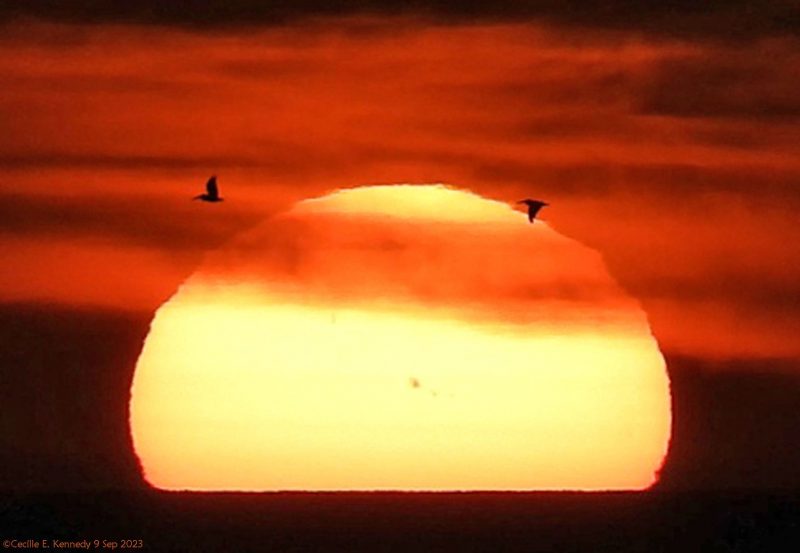
Rayleigh scattering—the process where molecules and small particles in the atmosphere scatter shorter blue and violet wavelengths of light out of the line of sight—leaves behind longer red, orange, and yellow wavelengths. On September 1, 2023, clear post-summer storm fronts in various parts of North America and Europe created brilliant, fiery canvases as evening fell.
Cultural and Practical Significance
Beyond astronomy and optics, the sunset on the first day of September holds practical and cultural weight:
- The End of Peak Summer: For many cultures, September 1 marks the beginning of meteorological autumn, shifting thoughts from vacation to school schedules, harvest preparation, and cooler weather gear.
- Energy Consumption: Earlier sunsets directly impact energy grids, as residential lighting and heating or cooling loads shift during the evening transition hours.
- Agriculture: Farmers rely on the dwindling daylight to gauge harvest timelines, particularly for crops that mature in the late summer and early autumn.
Summary of the Date's Solar Legacy
While a single evening comes and goes quickly, tracking events like the sunset on September 1, 2023, connects us to the reliable, cosmic rhythm of our solar system. As the sun dipped below the horizon that evening, it served as a quiet reminder of the Earth's continuous journey through space—ushering out the warmth of summer and opening the door to the rich, reflective season of autumn.