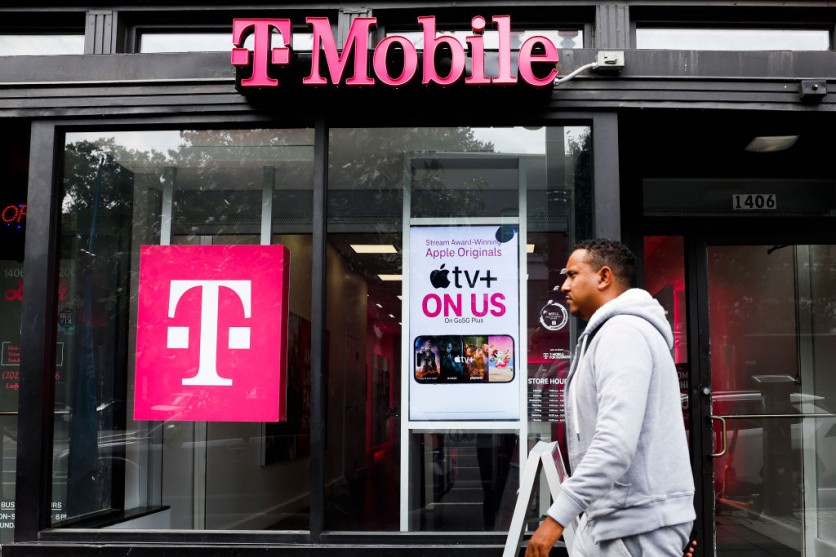
T-Mobile's Billion-Dollar Fortune: Growth Secrets
Unlocking T-Mobile’s Billion-Dollar Fortune: The Honest Factors Behind Its Growth!

Two decades ago, T-Mobile was viewed as a distant fourth-place runner in the crowded United States wireless market. Today, it stands shoulder-to-shoulder with telecom giants AT&T and Verizon, frequently surpassing them in subscriber growth, brand perception, and financial performance. T-Mobile’s billion-dollar fortune is no fluke. It is the result of a calculated, multi-year business transformation that completely redefined how consumers view mobile network operators.
Reaching this level of success required a radical departure from traditional telecom playbooks. Instead of relying on rigid contracts and hidden fees, leadership bet on customer-centric disruption. Below, we break down the genuine, hard-earned factors that propelled T-Mobile from an industry underdog into an undisputed market leader.
1. The 'Un-Carrier' Revolution
Perhaps the single biggest catalyst for T-Mobile's explosive growth was the launch of its "Un-Carrier" strategy in 2013, spearheaded by then-CEO John Legere. At a time when the wireless industry was universally disliked for two-year service contracts, early termination fees, and convoluted data caps, T-Mobile decided to solve actual consumer pain points.
The company eliminated traditional service contracts, introduced early upgrade programs, and pioneered unlimited data plans when competitors were aggressively pushing metered data. By openly challenging industry norms and positioning itself as the customer's champion, T-Mobile sparked massive organic word-of-mouth marketing. Millions of frustrated customers from rival networks migrated over, providing the revenue engine needed to fuel future expansion.
2. Aggressive Spectrum Acquisition and 5G Leadership
Marketing and customer service goodwill only go so far if the underlying product fails to deliver. Recognizing that data demand was skyrocketing, T-Mobile made massive, high-stakes investments in wireless spectrum—the invisible airwaves that carry mobile data.
The turning point arrived with the acquisition of crucial low-band 600 MHz spectrum. This move allowed T-Mobile to build a robust network footprint that could penetrate deep inside buildings and cover rural areas previously left underserved. When the industry shifted toward next-generation connectivity, T-Mobile leveraged this spectrum foundation to deploy a nationwide 5G network years ahead of schedule, giving them a distinct technical advantage.
3. The Merger with Sprint

While organic growth built momentum, the 2020 merger with Sprint cemented T-Mobile’s status as a financial powerhouse. The $26 billion deal faced intense regulatory scrutiny, but once approved, it immediately transformed the competitive landscape.
Synergies and Asset Consolidation
The Sprint acquisition provided T-Mobile with two major assets:
- A massive pool of mid-band spectrum (specifically the 2.5 GHz band), which is the holy grail for high-speed, high-capacity 5G coverage.
- Millions of additional subscribers, instantly boosting market share and enterprise scale.
By absorbing Sprint's infrastructure and intelligently shutting down redundant cell sites, T-Mobile unlocked billions of dollars in cost synergies. These operational savings flowed directly into the bottom line, fueling further network improvements and shareholder returns.
4. Value-Driven Pricing and Convergence
While Verizon and AT&T often positioned themselves as premium, high-cost providers, T-Mobile carved out a unique positioning strategy. They offered premium network performance at a noticeably lower price point, frequently bundling perks like streaming service subscriptions, international roaming, and taxes-and-fees-included pricing.
This value-focused approach protected T-Mobile during economic downturns and made it the default choice for budget-conscious families. Furthermore, the company successfully expanded beyond smartphones into fixed wireless home internet, tapping into a lucrative new revenue stream by utilizing excess capacity on its 5G towers.
Conclusion
T-Mobile’s billion-dollar fortune was built on a foundation of bold customer advocacy, visionary spectrum investments, and a transformative merger. By accurately reading shifts in consumer behavior and refusing to play by legacy rules, T-Mobile turned industry disruption into lasting financial dominance.