Taylor's 'Slip' Moment That Made Her Voice Unstoppable
On January 31, 2010, Taylor Swift walked onto the Staples Center stage at the 52nd Annual Grammy Awards to share a microphone with rock icon Stevie Nicks. Swift was just twenty years old and on the brink of winning Album of the Year for Fearless. Yet, within minutes of singing Fleetwood Mac’s “Rhiannon,” something went noticeably wrong. Pitch wavered, vocal control slipped, and the acoustic duet sounded strained. The trigger that made Taylor’s voice unstoppable—her “slip” moment—unfolded before an audience of over 25 million live viewers, setting off a wave of industry criticism that would permanently alter her trajectory as a live performer.

The 2010 Grammy Performance: What Actually Happened?
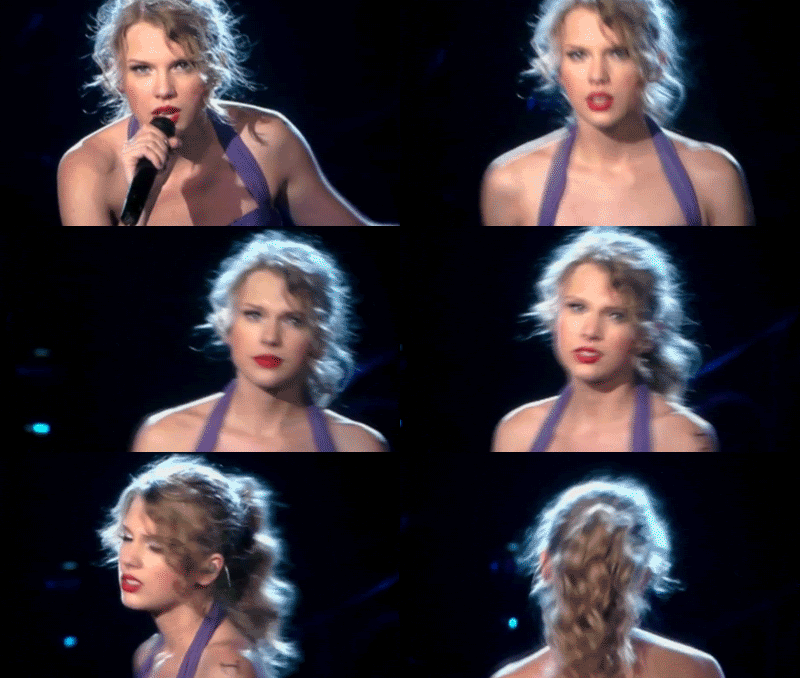
During the medley of “Today Was a Fairytale” and “Rhiannon,” Swift struggled to lock onto the correct pitch. Live sound engineers later acknowledged technical monitor difficulties onstage, meaning Swift likely could not hear her own pitch return clearly over the house audio and live instruments. Performing alongside a vocal powerhouse like Stevie Nicks, whose lower, smoky register required precise dynamic matching, made any pitch variation painfully obvious.
While occasional technical malfunctions happen to every touring artist, the reaction from the music press was swift and unforgiving. Critics seized on the performance as supposed evidence that Swift was purely a studio-crafted product who lacked foundational vocal talent.
The Backlash That Threaten to Define Her
The morning after the ceremony, music blogger and industry commentator Bob Lefsetz published an eviscerating critique titled “Grammys,” claiming Swift’s off-key performance showed that she “cannot sing” and arguing that she had damaged her career in a single evening. Other mainstream outlets echoed the sentiment, questioning whether she deserved her breakthrough industry accolades.
Scott Borchetta, then-head of Big Machine Records, publicly defended Swift by emphasizing that she was a genuine songwriter performing live without backing tracks or pitch correction. Behind the scenes, however, the public scrutiny left an indelible mark. Swift was deeply affected, later recounting how the feeling of public humiliation pushed her into isolation. But rather than retreating or relying on heavy lip-syncing for future televised appearances, she made a deliberate choice: rebuild her vocal instrument from the ground up.
The Trigger That Made Taylor’s Voice Unstoppable—Her “Slip” Moment in Retrospect
Musicians often face a critical juncture when public failure strikes. They either minimize live risks by hiding behind aggressive post-production and backing tracks, or they treat the failure as diagnostic data. Swift chose the latter. The 2010 Grammys served as the catalyst for an intense, years-long overhaul of her vocal technique.
1. Breath Support and Diaphragmatic Anchoring
Early in her career, Swift relied on a breathy, head-dominant vocal placement common in country-pop storytelling. While charming on record, this tone lacked the core acoustic support needed to stay stable during high-stress live events. Swift began working extensively with premier vocal coaches to anchor her breathing into her lower abdominal core, stabilizing her airflow and eliminating the pitch drift that occurs when adrenaline surges.
2. Strengthening the Mixed Voice and Belt Range

To sing higher notes without strain, a vocalist must navigate the transition between chest voice and head voice—often referred to as the vocal break or passaggio. Prior to 2010, Swift frequently flipped abruptly between registers or pushed her chest voice past its natural limit. Through disciplined vocalizing, she developed a resonant, balanced “mix” that allowed her to deliver punchy, dynamic notes between A4 and D5 without throat tension.
3. Cardiovascular Stamina for Live Performance
Swift realized that vocal stability means little if physical exhaustion compromises breath control. Ahead of the record-breaking Eras Tour, she revealed that her preparation involved running on a treadmill every single day while singing the entire 44-song, three-and-a-half-hour setlist out loud—fast songs for running, slower songs for jogging or fast walking. This extreme conditioning created a vocal mechanism capable of enduring three consecutive stadium nights without pitch fatigue.
From 'Mean' to Stadium Dominance
The immediate creative response to the 2010 backlash was the track “Mean,” released on her 2010 album Speak Now. Written entirely by Swift without co-writers, the song explicitly addressed critics who claimed she couldn't sing. Two years later, at the 2012 Grammy Awards, Swift performed “Mean” solo with a banjo. At the climax of the song, she held a clean, resonant, sustained belt on the lyric, “Someday, I’ll be big enough so you can’t hit me,” receiving a standing ovation from the very room that had critiqued her 24 months earlier.
The long-term evolution became even more striking as her discography expanded into demanding pop and alternative genres:
- 1989 (2014): Shifted to sustained, full-voiced synth-pop anthems like “Out of the Woods” and “I Know Places,” showing rapid agility across wide intervals.
- Reputation (2017): Introduced aggressive lower-register delivery, rhythmic syncopation, and powerful sustained belts on tracks like “Don’t Blame Me.”
- Folklore & Evermore (2020): Demonstrated refined dynamic restraint, head-voice control, and expressive vibrato on lower-tempo pieces like “Exile” and “My Tears Ricochet.”
- The Eras Tour (2023–2024): Proved her physical and vocal stamina across a three-hour marathon show, sustaining accurate intonation, projection, and breath support across 150+ stadium dates worldwide.
What Artists Can Learn from Swift's Vocal Turnaround
Swift’s trajectory offers clear lessons for any performing artist navigating vocal growth or professional failure:
- Critique Can Highlight Technical Blind Spots: Even when media criticism is harsh or unfair, assessing the root technical cause—whether monitoring issues, poor breath support, or performance nerves—creates an actionable roadmap for improvement.
- Longevity Requires Vocal Hygiene: Consistent warming up, proper vocal rest, hydration, and safe belting mechanics prevent long-term damage and extend a touring career by decades.
- Consistency Outweighs Raw Natural Volume: You don’t need an operatic four-octave range to be an elite live performer. Pitch accuracy, stamina, tone consistency, and emotional delivery are what command stadium crowds.
The Final Verdict
Taylor Swift’s 2010 Grammy performance could have remained an embarrassing footnote or an excuse to shy away from high-stakes live environments. Instead, she treated that public stumble as the ultimate baseline from which to grow. Today, whether navigating intricate acoustic sets or belting across three hours of heavy choreography, her vocal consistency is one of the most reliable in modern pop music—all rooted in the decision to turn a painful slip into relentless technical mastery.