Terminate With Extreme Prejudice Meaning Explained
Few phrases carry as much cinematic weight and chilling finality as "terminate with extreme prejudice." Immortalized by films like Francis Ford Coppola's Apocalypse Now, the phrase is instantly recognized as a euphemism for assassination or absolute destruction. However, understanding the terminate with extreme prejudice meaning requires looking past Hollywood fiction to examine its real-world military origins, bureaucratic structuring, and legal boundaries.
What Does "Terminate With Extreme Prejudice" Mean?
At its core, the phrase means to kill someone or completely and permanently destroy a target, without any possibility of appeal, trial, or reprieve. It combines cold corporate-style bureaucratic language with lethal military intent.
To break down the components:
- Terminate: To end or bring to a conclusion. In official jargon, it frequently applies to contracts, employment, or missions, but it can also refer to human life.
- Extreme: Pushed to the furthest possible limit, surpassing normal bounds of severity or scope.
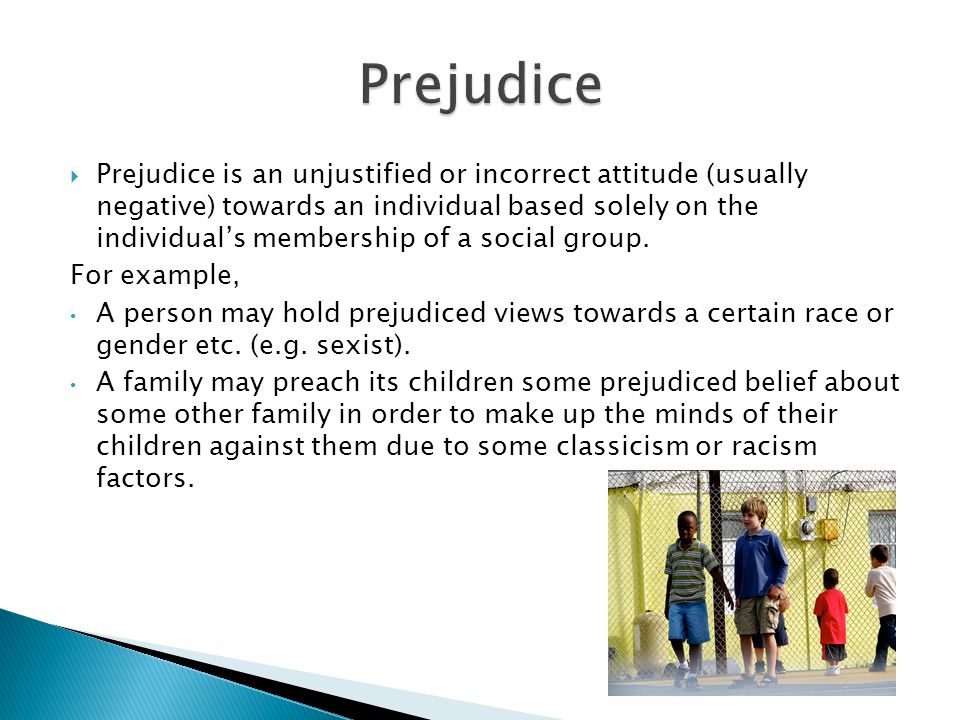
- Prejudice: In legal contexts, acting "without prejudice" means a decision doesn't bar future legal action. Therefore, acting with "extreme prejudice" means the action is final, absolute, and leaves no room for future reconsideration, legal review, or reversal.
When welded together, the phrase becomes a calculated euphemism designed to sanitize the ultimate act of taking a human life through layers of administrative abstraction.
Military and Intelligence Origins
Despite its reputation as standard military slang, "terminate with extreme prejudice" is not an official United States Department of Defense doctrine term. You will not find it in formal military field manuals, the Uniform Code of Military Justice (UCMJ), or standard operating procedures for conventional armed forces.
Instead, historians and linguistic researchers trace the phrase's roots to the intelligence community, specifically the Central Intelligence Agency (CIA) and clandestine operations during the Cold War. In the shadowy world of espionage, operatives and handlers often relied on carefully crafted euphemisms to maintain plausible deniability and distance themselves from illegal or morally grey actions.
The Phoenix Program and Vietnam
The phrase gained wider circulation and public awareness during the Vietnam War era. During this time, programs like the CIA-backed Phoenix Program aimed to neutralize the Viet Cong infrastructure through capture, defection, or assassination. While official documents used sanitized terminology like "neutralization" or "elimination," operatives on the ground and military advisors frequently adopted harsher, more descriptive slang.
Popular Culture and the Hollywood Effect
The primary driver behind the phrase's cultural ubiquity is undeniably Hollywood. Writers and filmmakers recognized that bureaucratic euphemisms possess a unique, chilling aesthetic that ordinary dialogue lacks.

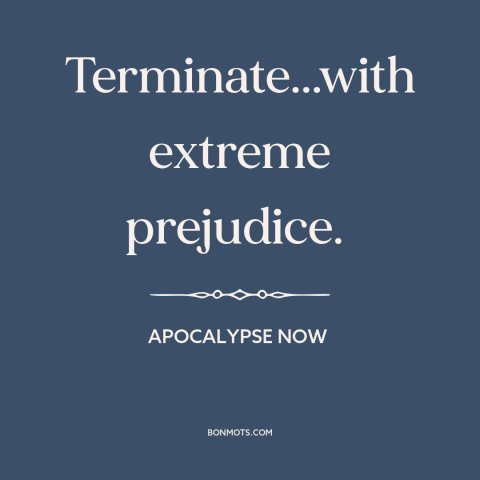
The phrase entered the global lexicon in a major way with the 1979 masterpiece Apocalypse Now. In the film, Captain Willard (played by Martin Sheen) receives his infamous briefing from military intelligence officers regarding Colonel Walter Kurtz (played by Marlon Brando):
"Your mission is to proceed up the river in a Navy patrol boat, with absolute command, up to Nu Mung Ba, and to find Colonel Kurtz... and terminate him with extreme prejudice."
Following the release of Apocalypse Now, the phrase exploded into popular culture. It appeared in countless action movies, spy thrillers, science fiction franchises (such as Terminator and various cyberpunk novels), and video games. Over time, it transitioned from a dark espionage euphemism into a widely understood idiom used both seriously and satirically.
Legal Reality vs. Cinematic Fiction
In movies, a superior officer giving a subordinate an order to "terminate with extreme prejudice" usually absolves the shooter of legal consequences. In the real world, however, the law operates quite differently.
Under international law and the laws of armed conflict:
- Unlawful Orders: Military personnel are legally obligated to refuse unlawful orders, including orders to commit summary executions, assassinations, or war crimes. Following an illegal order is rarely accepted as a valid defense in a court-martial.
- Targeted Killings: Modern targeted killings conducted by state actors (such as drone strikes against recognized terrorist leaders) operate under strict legal frameworks, presidential findings, and Department of Justice memos. They require rigorous oversight, justification, and adherence to the laws of war, rather than arbitrary field assassinations.
- Murder Charges: If a civilian or a soldier kills someone outside of authorized combat or self-defense based on an informal order, that act constitutes premeditated murder, regardless of what terminology the commanding officer used.
Figurative and Everyday Usage
In modern everyday conversation, people rarely use the phrase in its literal, violent sense. Instead, it has been widely adopted into corporate, political, and casual slang for extreme professional action.
You might hear someone jokingly say they are going to "terminate with extreme prejudice" a pesky software bug, a struggling business contract, or an annoying administrative task. This hyperbole relies on the stark contrast between the triviality of the target and the terrifying weight of the language.
Conclusion
The terminate with extreme prejudice meaning bridges the gap between cold administrative bureaucracy and lethal clandestine operations. While popularized by Vietnam-era intelligence lore and cemented by cinema classics like Apocalypse Now, the phrase remains fundamentally a linguistic tool—a way to clothe a violent act in clinical, bureaucratic armor. Whether used in a high-stakes spy thriller or as office hyperbole, it continues to symbolize absolute, irreversible destruction.