Thankful Acrostic: Creative Ideas and Examples
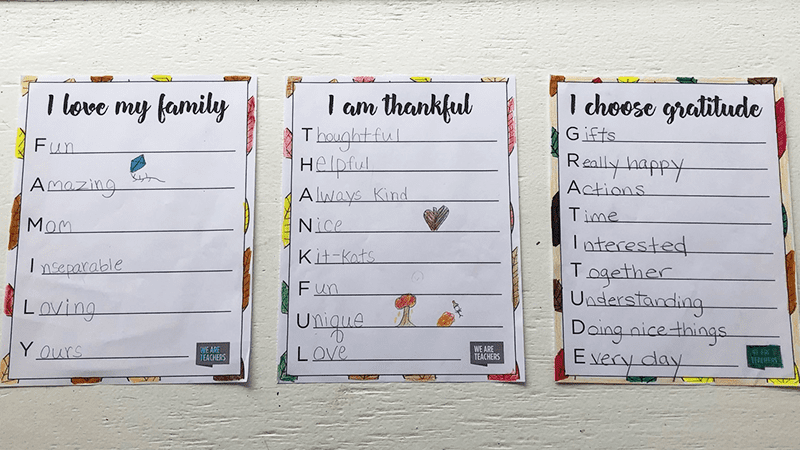
Practicing gratitude can dramatically shift our outlook on life, and writing poetry is one of the most accessible ways to make that practice tangible. A thankful acrostic is a versatile creative exercise where each letter of the word “THANKFUL” begins a new word, phrase, or sentence describing something you appreciate. Whether you are a teacher planning a seasonal classroom activity, a parent looking for meaningful holiday crafts, or someone seeking an intentional mindfulness prompt, this structured form of poetry makes expressing appreciation simple and engaging.

What Is an Acrostic Poem?
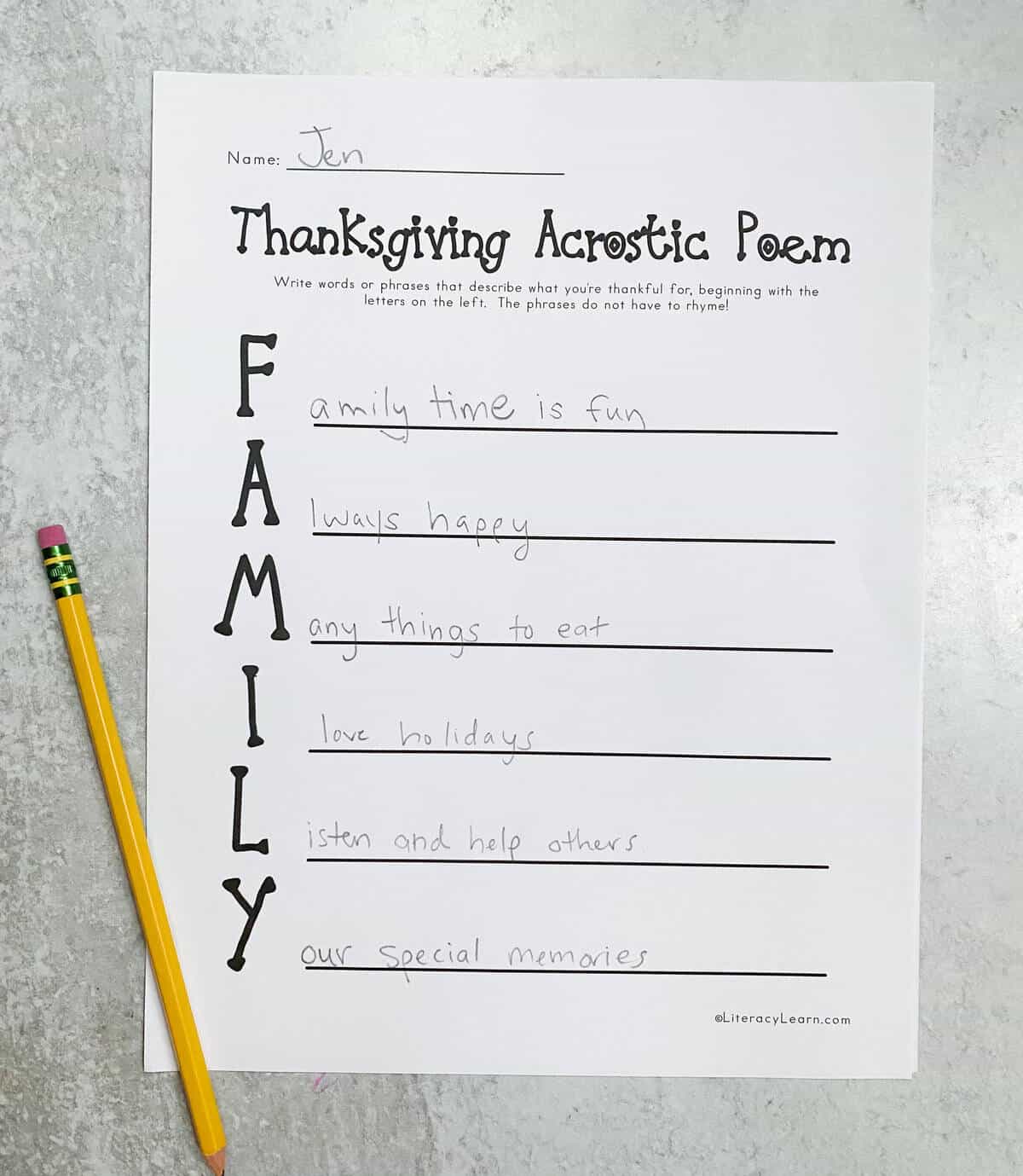
An acrostic poem is a poetic form where the first letter of each line spells out a specific word, message, or alphabet vertically down the page. Unlike traditional verse, acrostic poetry does not require meter, rhyme, or strict syllable counts. This freedom lowers the barrier to entry, making it an ideal format for writers of any age or skill level.
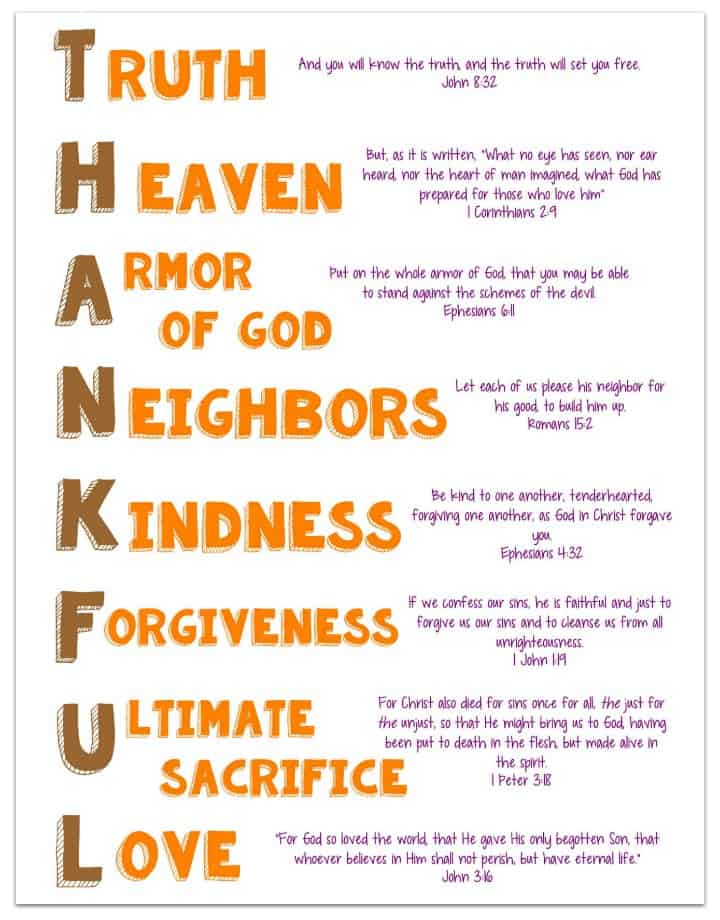
When focused on gratitude, the vertical spine of the poem typically uses the word T-H-A-N-K-F-U-L. Each line serves as an invitation to pause, reflect, and name specific blessings, relationships, or comforts that often get overlooked during busy routines.
How to Write an Acrostic Poem for Gratitude
Crafting an acrostic poem is straightforward, but taking a systematic approach yields deeper, more meaningful results than rushing to find the first word that comes to mind.
- Write the base word vertically: Write the letters T-H-A-N-K-F-U-L down the left margin of your paper or document, leaving plenty of space between lines.
- Choose your format: Decide whether your poem will feature single descriptive words, active phrases, or complete narrative sentences.
- Brainstorm specific memories: Rather than defaulting to generic terms like “tea” or “home,” anchor each line in genuine feeling. What specific memory, person, sensory experience, or opportunity comes to mind for that letter?
- Refine and revise: Read through the finished piece. If a line feels clunky or forced, swap it for an alternative synonym or descriptive phrase that resonates more authentically.
Acrostic Word Bank for T-H-A-N-K-F-U-L
Certain letters—particularly K and U—can occasionally cause writer’s block. Use this curated list of gratitude-oriented vocabulary to spark your imagination across every letter of the word.
- T: Togetherness, teachers, traditions, trust, time, tranquility, triumph, thoughtful gestures, twilight walks.
- H: Hope, health, home, hugs, humor, hearth, honesty, healing, handshakes, harmony.
- A: Acceptance, abundance, affection, autumn colors, artists, appreciation, adventure, answers.
- N: Nature, neighbors, novel ideas, nourishment, new beginnings, nurturing friends, nights under the stars.
- K: Kindness, kin, knowledge, keepsakes, kindred spirits, kisses, kettle whistling on the stove.
- F: Family, friendship, forgiveness, freedom, faith, fireside chats, fresh morning air, food on the table.
- U: Understanding, unity, unconditional love, unique memories, umbrellas on rainy days, uplifting words.
- L: Love, laughter, light, loyal companions, learning opportunities, longevity, listening ears.
Inspiring Examples of a Thankful Acrostic
Because acrostics are adaptable, they can range from simple word associations to contemplative free verse. Below are three distinct examples illustrating different approaches to the format.
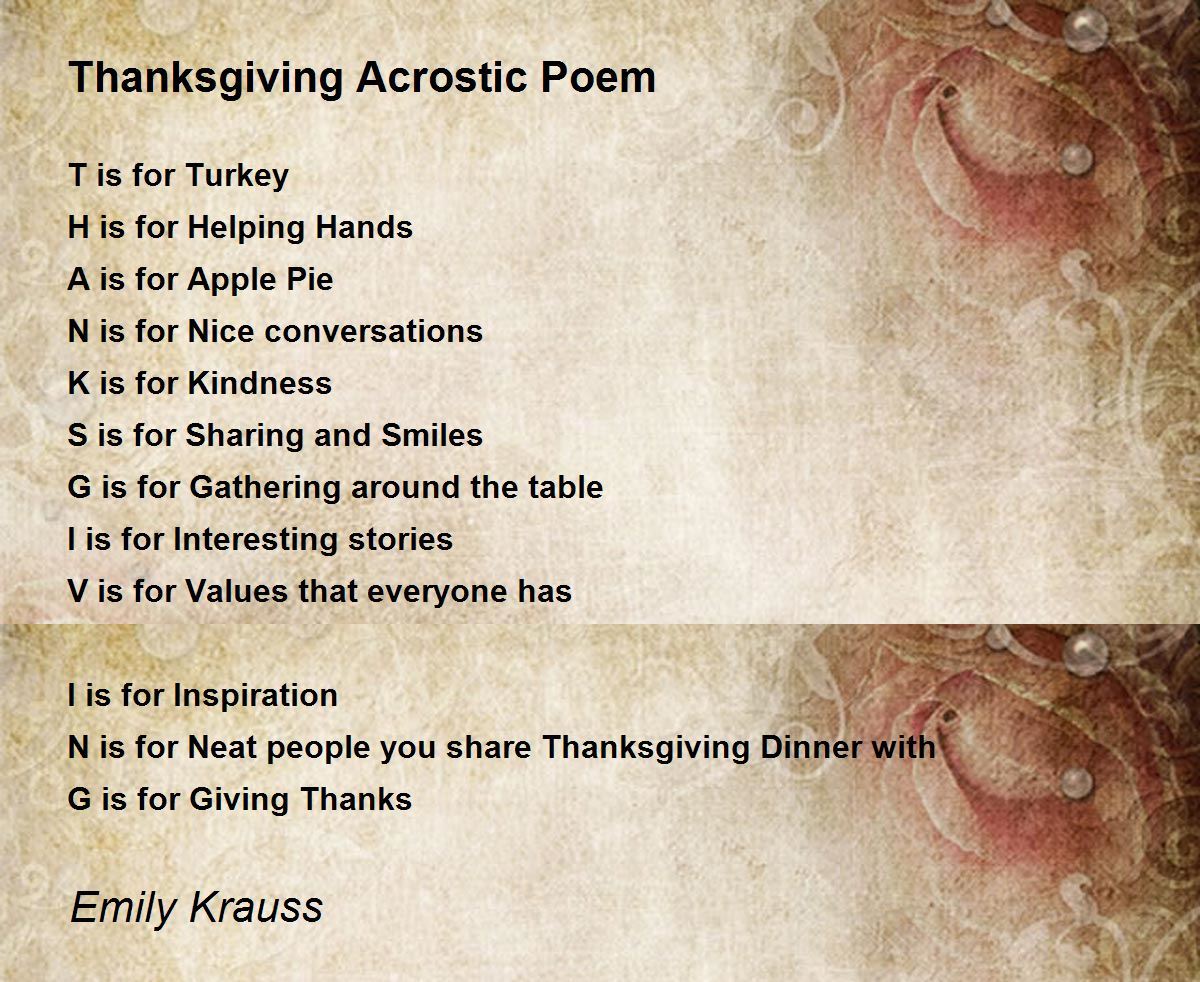
Example 1: Single-Word Associations (Great for Early Learners)
This approach works well for younger elementary students who are building their vocabulary and practicing spelling fundamentals:
Video: "THANKFUL" - Shawna Edwards Music Lyric Video
Time
Home
Apples
Nature
Kindness
Family
Unity
Laughter
Example 2: Descriptive Phrases (Ideal for Middle Grades and Journals)
Adding adjectives and prepositional phrases gives the poem sensory texture and paints clearer imagery:
Trees glowing in shades of amber and gold
Hot cider warming chilled hands
A room filled with familiar voices
Notebooks full of creative dreams
Kind words shared by a true friend
Footsteps crunching over fallen leaves
Unexpected moments of peaceful rest
Laughter echoing across the dinner table
Example 3: Reflective Verse (Ideal for Mindfulness and Adults)
An acrostic can also function as a sophisticated personal meditation by forming interconnected thoughts that flow naturally from line to line:
Treasuring the quiet mornings before the world begins to rush,
Honoring both the easy triumphs and the hard-won lessons,
Accepting grace when plans unravel and paths diverge,
Noticing beauty hidden inside ordinary routines,
Keeping close the people who steady me when things shake,
Feeling deeply grateful for another year of breath and growth,
Unbound by worries about things outside my control,
Learning to live fully present right where I stand.
Creative Ways to Use Thankful Acrostics
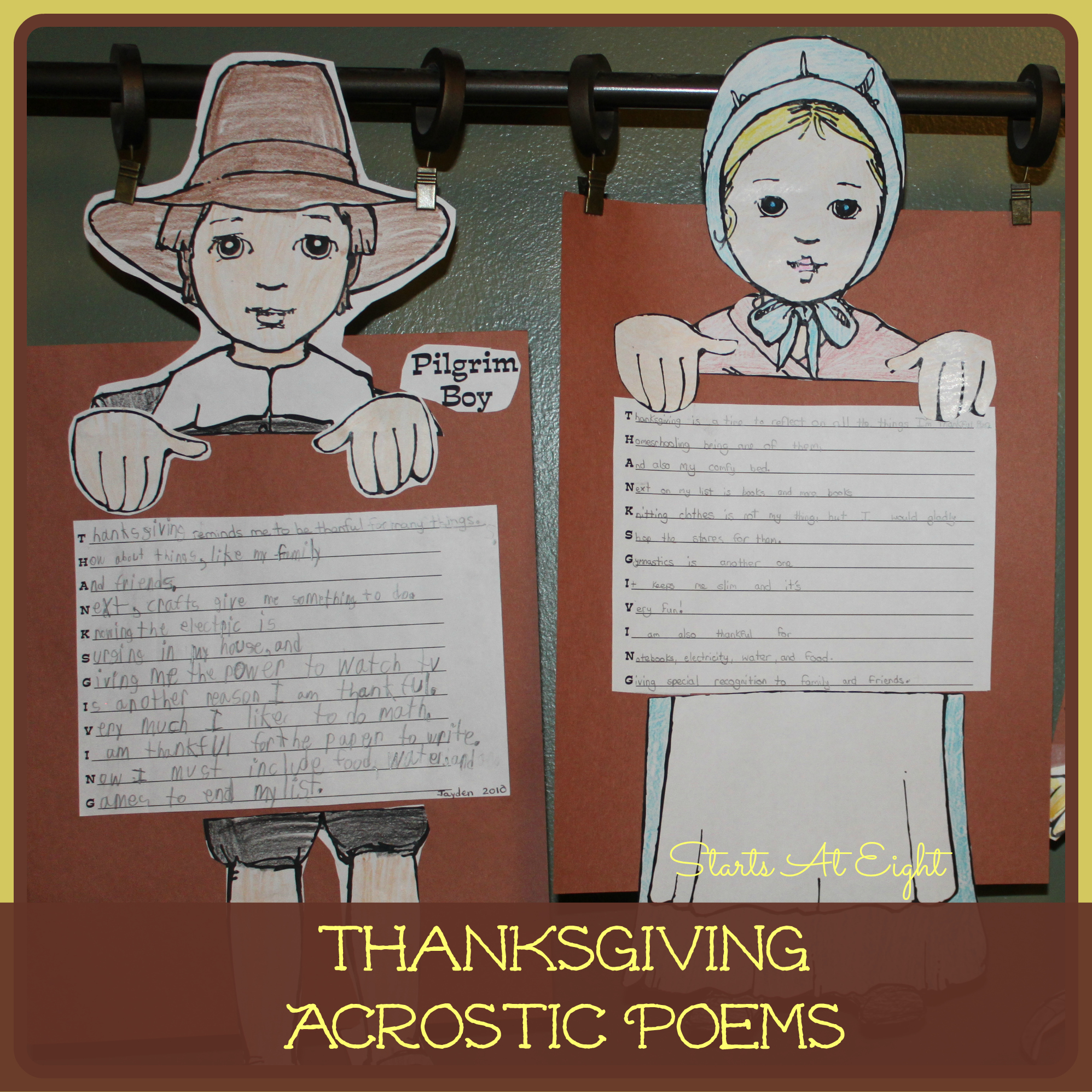
Once written, these poems do not have to stay tucked inside a notebook. Consider these practical ways to integrate them into social gatherings, family routines, or classroom settings:
- Thanksgiving Table Place Cards: Write an acrostic for each guest, using “THANKFUL” or the guest’s own name, highlighting specific qualities you appreciate about them.
- Gratitude Jar Additions: Slip individual lines or full acrostic slips into a glass jar throughout the month of November, then read them aloud during holiday meals.
- Classroom Bulletin Boards: Have students decorate their poems with watercolor autumn leaves, handprints, or original illustrations for a vibrant classroom display.
- Holiday Gift Tags: Write miniature acrostics on the back of gift tags or inside Thanksgiving greeting cards for an inexpensive, personalized touch.
- Morning Warm-Up Routine: Use an acrostic format during morning journaling to set an intentional, appreciative tone before starting work or study.
Overcoming Difficult Letters
When drafting your poem, letters like “K” and “U” can feel restrictive. If common nouns do not fit your theme, try these strategies:
- Focus on actions: Instead of searching for an object, look for verbs. For “K,” consider knowing, keeping, or kneeling. For “U,” consider unwinding, uncovering, or understanding.
- Use modifying adverbs: If you cannot find a noun, begin the line with an adverb such as Kindly, Knowingly, Unapologetically, or Uniquely.
- Pivot to people: “Kin” and “Kindred spirits” are timeless choices for “K” that naturally honor family and close friends.
By transforming simple letters into personal declarations of appreciation, a thoughtful acrostic serves as both an entertaining writing activity and an effective exercise in gratitude that anyone can master in minutes.