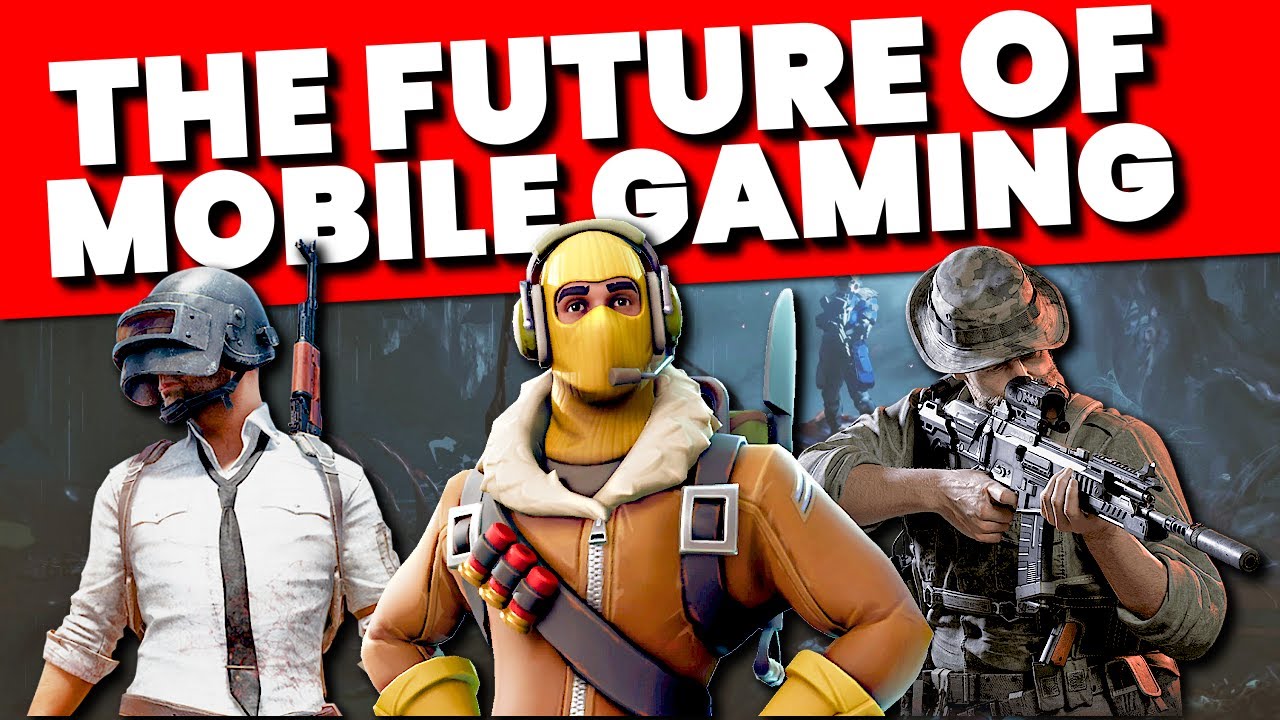
The #1 Nerdballer Move Plainly Rewrites Mobile Gaming’s Future
Introduction to a Paradigm Shift

For years, mobile gaming occupied a specific niche. It was a realm defined by casual puzzle games, bite-sized arcade titles, and heavily monetized gacha loops. If you wanted deep, visually stunning, mechanically complex experiences, you turned to a dedicated console or a high-end gaming PC. Smartphones simply lacked the sustained thermal performance, architectural headroom, and standardized ecosystems to compete on a AAA level.
That rigid boundary is vanishing right before our eyes. A confluence of advanced silicon engineering, aggressive software-level scheduling, and cloud-hybrid rendering has given birth to a phenomenon that industry insiders are calling the #1 nerdballer move plainly rewrites mobile gaming’s future. Far from a mere marketing catchphrase, this shift represents a fundamental realignment in how hardware and software work together to deliver console-grade performance inside your pocket.
The Hardware Evolution: Beyond Raw Clock Speeds
To understand why mobile gaming is entering a golden age, we have to look past simple benchmarks. For a long time, mobile chip manufacturers engaged in a specs race, pushing gigahertz and core counts higher. The problem was thermal throttling. A smartphone processor could hit peak performance for roughly ninety seconds before melting in your hands and dropping frame rates drastically.
The turning point came when engineers stopped treating mobile chips like miniaturized desktop CPUs and started designing them with mobile-specific constraints in mind. This is where the #1 nerdballer move plainly rewrites mobile gaming’s future through advanced hardware integration:
- Asymmetric Processing: Modern System-on-Chips (SoCs) use intricate task-scheduling algorithms that route background processes to ultra-low-power efficiency cores, leaving the prime cores entirely dedicated to game rendering.
- Hardware-Accelerated Ray Tracing: Bringing desktop-grade lighting calculations to mobile GPUs without destroying battery life requires radical hardware redesigns, now standard in flagship chipsets.
- Advanced Vapor Chambers: Tiny, custom-engineered cooling systems inside modern gaming phones dissipate heat actively, allowing for hours of sustained peak performance.
Software and API Optimization
Hardware is only half the battle. Historically, mobile operating systems were bogged down by general-purpose overhead. Every tap, notification, and background sync competed with the game for system resources.
Today, low-level graphics APIs like Vulkan and Metal allow developers to speak directly to the device's hardware with minimal translation layers. Game developers can now implement predictive rendering and variable rate shading—techniques borrowed straight from PC rigs—on mobile hardware. This software synergy squeezes every last drop of juice out of the silicon, making high-fidelity gaming remarkably stable.

Why This Matters for Developers and Players
This technical renaissance changes the economic and creative calculus of game development. In the past, porting a major game to iOS or Android meant gutting the graphics, simplifying the controls, and often rebuilding the game from scratch. That approach was costly and frequently resulted in an inferior product that fans ignored.
Now, cross-platform engines like Unreal and Unity make it feasible to scale modern titles down to mobile architectures with astonishing fidelity. Players no longer have to settle for watered-down spin-offs. They can play the exact same massive open-world RPGs, competitive shooters, and strategic simulations on their phones that they enjoy on their living room consoles—with full cross-play support.
The Rise of Universal Input Ecosystems
Of course, high-end graphics mean nothing if the controls feel miserable. Touchscreens work well for endless runners, but they fail miserably when you need precision movement and a twelve-button hotbar.
The mobile gaming ecosystem has responded by embracing universal accessories. High-quality telescopic controllers, official console gamepad support via Bluetooth, and low-latency USB-C peripherals have turned smartphones into legitimate handheld consoles. Coupled with cloud streaming options as a fallback, players have unprecedented flexibility in how, where, and when they game.
Looking Ahead: The Next Decade of Play
As we look to the future, the line separating mobile devices from dedicated gaming hardware will continue to blur. Battery technology is improving, edge-computing networks are reducing latency for cloud-assisted rendering, and silicon designers are finding even more efficient ways to execute complex code.
The convergence of powerful mobile silicon, smart thermal management, and developer-friendly APIs proves that the biggest innovations often come from solving seemingly impossible constraints. Mobile gaming is no longer the kid brother of the gaming industry; it is rapidly becoming the most accessible and technologically dynamic frontier in interactive entertainment.