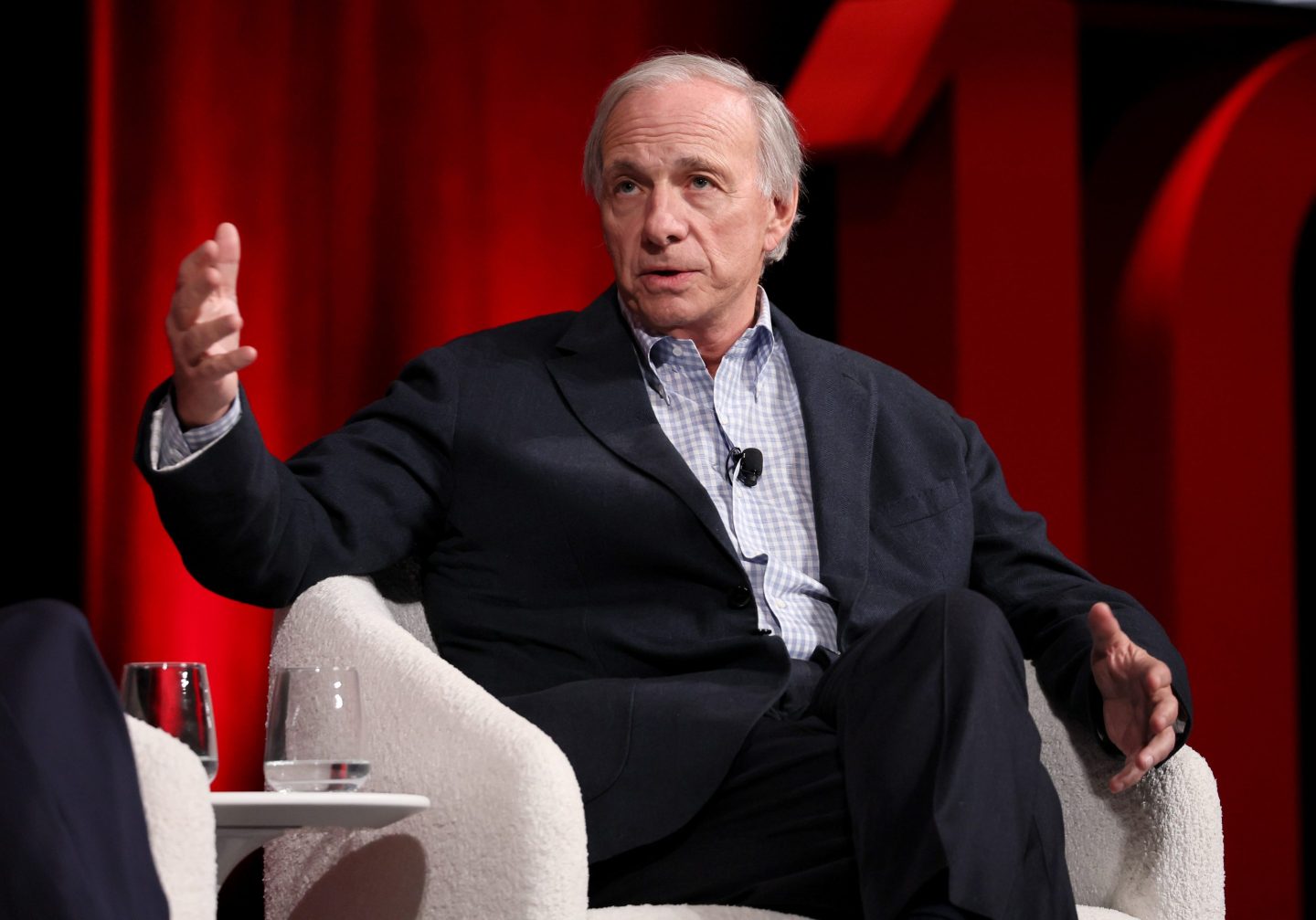
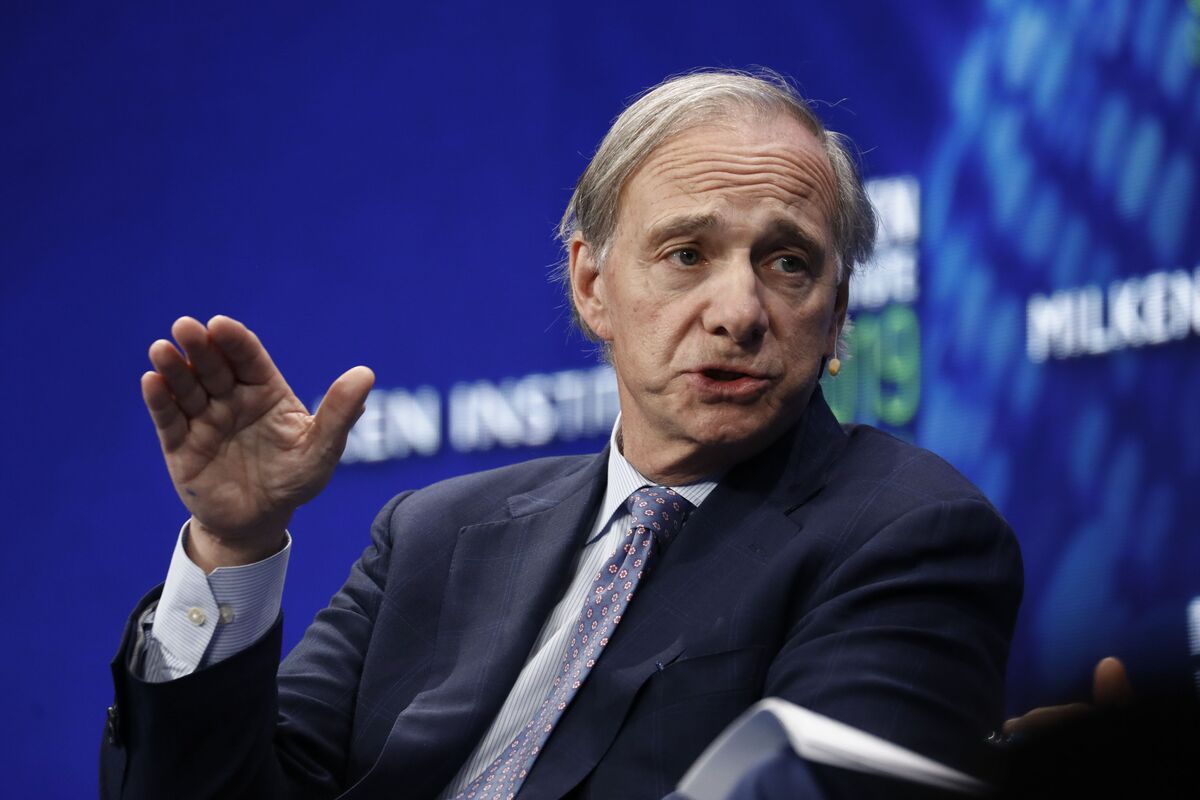
The $100 Billion Mystique of Ray Dalio
Few figures in modern finance inspire both intense fascination and deep study quite like the founder of Bridgewater Associates. The $100 Billion Mystique of Ray Dalio—How He Built His Legendary Empire! has become a case study in macroeconomic mastery, disciplined risk engineering, and an unconventional corporate culture that transformed a modest two-bedroom apartment operation into the world’s largest hedge fund.

At its peak, Bridgewater managed upwards of $150 billion in assets, advising sovereign wealth funds, central banks, and public pensions across the globe. Dalio’s success was neither a stroke of luck nor the result of standard Wall Street stock picking. Instead, it was forged through painful early failure, a pioneering conceptual framework of global debt cycles, and an obsession with converting human intuition into systematic, algorithmic execution.
The Humbling Origin: From Market Crash to Systematic Epiphany
Ray Dalio launched Bridgewater Associates in 1975 from his Manhattan apartment, primarily offering risk consulting and macroeconomic analysis to corporate clients dealing with commodities and currencies. But his defining moment arrived not with an early triumph, but with a devastating miscalculation in 1982.
Convinced that the Mexican debt default would trigger a severe global depression, Dalio took highly leveraged, bearish positions and publicly testified before the U.S. Congress about the impending economic ruin. Instead, Federal Reserve Chairman Paul Volcker eased monetary policy, fueling one of the greatest bull markets in American history. Dalio lost everything. He was forced to lay off his entire staff and borrow $4,000 from his father just to cover family living expenses.
That catastrophic loss reshaped Dalio’s mental model forever. It instilled in him what he calls 'radical open-mindedness'—the humility to accept that no matter how confident he felt, he could always be wrong. From that moment on, Dalio resolved never to bet on market outcomes based purely on subjective conviction. Every decision had to be rigorously backtested, stress-tested, and codified into systematized rules.
The $100 Billion Mystique of Ray Dalio—How He Built His Legendary Empire!
Bridgewater’s ascent from a boutique advisory firm to an institutional juggernaut rested on Dalio’s ability to demystify financial markets and separate investment skill from broad market exposure. The empire was built on two core breakthroughs that revolutionized modern institutional asset allocation:
1. The Separation of Alpha and Beta
Before Dalio introduced this framework in the late 1980s and early 1990s, most institutions bundled market returns (Beta) with active managerial skill (Alpha). Dalio recognized that Beta should be cheap and passive, while true Alpha should be unconstrained, market-neutral, and uncorrelated to the underlying economic environment.
This insight birthed Bridgewater’s flagship fund, Pure Alpha, launched in 1989. Pure Alpha takes active long and short positions across dozens of global liquid markets—currencies, bonds, equities, and commodities—aiming to generate positive returns regardless of whether the broader economy is expanding or contracting.
2. The All Weather Strategy and the Invention of Risk Parity
In 1996, Dalio and his team sought to solve a fundamental institutional problem: how to create a portfolio that performs reliably across any economic environment without requiring the investor to forecast the future. The result was the All Weather fund, which laid the foundation for what the industry now calls 'Risk Parity.'
Dalio identified that market assets are driven by two main economic variables:

- Growth: Rising above expectations or falling below expectations.
- Inflation: Rising above expectations or falling below expectations.
By mapping asset classes into four distinct quadrants (e.g., equities during rising growth, inflation-linked bonds during rising inflation, government bonds during falling growth), Bridgewater balanced risk rather than capital. Instead of the traditional 60/40 equity-to-bond allocation—where equities account for 90% of portfolio volatility—All Weather equalized the risk contributions of uncorrelated asset classes, providing institutional investors with stable, long-term capital preservation.
The Economic Machine: Viewing Markets Mechanistically
A central pillar of Dalio’s mystique is his conceptualization of the economy not as an unpredictable chaos, but as a mechanical system. His famous 30-minute treatise, How the Economic Machine Works, outlines the dynamic interplay between three primary forces:
- Productivity Growth: The steady, upward trend of human innovation and output that unfolds over decades.
- The Short-Term Debt Cycle: The typical 5- to 8-year business cycle driven by central bank interest rate adjustments.
- The Long-Term Debt Cycle: The 50- to 75-year super-cycle where debts rise faster than incomes until interest rates hit zero, requiring a 'beautiful deleveraging' through austerity, debt restructurings, wealth redistribution, and currency devaluation.
By understanding these mechanics long before his competitors, Dalio successfully steered Bridgewater through the 2008 Global Financial Crisis. While the S&P 500 plunged by nearly 37%, Pure Alpha gained around 9.5% in 2008, cementing Dalio's reputation as a generational macro investor.
Radical Truth and Radical Transparency: The Cultural Engine
You cannot separate Bridgewater’s portfolio performance from its internal culture. Dalio codified his leadership philosophy into a set of principles designed to build an 'idea meritocracy' powered by radical truth and radical transparency.
Inside Bridgewater's Westport, Connecticut headquarters, virtually every meeting, interview, and conversation is recorded and archived for any employee to review. Dalio instituted custom software, such as the Dot Collector, which allows participants in a room to evaluate each other’s critical thinking, logic, and open-mindedness in real time.
Why the System Works
- Elimination of Office Politics: When decisions are made transparently based on quantifiable merit, back-channel maneuvering loses its power.
- Believability-Weighted Decision Making: Rather than relying on simple democracy or unilateral executive decrees, votes are weighted by an individual’s track record in that specific domain.
- Pain + Reflection = Progress: Dalio taught his staff to view mistakes not as shameful failures, but as evolutionary puzzles that highlight underlying systemic weaknesses.
While the culture is notoriously intense—weeding out nearly a third of new hires within their first eighteen months—those who thrive become elite systemic thinkers capable of challenging market consensus with empirical rigor.
Actionable Lessons from Dalio’s Playbook
Whether managing billions of dollars or building a small business, Dalio's career offers universal principles for operating in an uncertain world:
- Find 15 Uncorrelated Streams of Return: Dalio calls this the 'Holy Grail of Investing.' Combining 15 to 20 profitable, uncorrelated return streams reduces risk by up to 80% without sacrificing expected returns.
- Stress-Test Against History: Markets encounter crises that have never occurred in your lifetime, but have happened repeatedly throughout history. Bridgewater studied the Weimar Republic, the Great Depression, and ancient currency collapses to prepare for modern shocks.
- Codify Your Logic: Convert your operating rules into clear criteria. If you cannot explain the logic of a decision in a way that can be written down or programmed, you are relying on emotion rather than reason.
Conclusion: The Enduring Legacy of Bridgewater
Ray Dalio stepped down from co-chief executive duties in 2017 and fully relinquished control of Bridgewater Associates in 2022, completing a rare, successful leadership succession in the hedge fund industry. Today, his legacy extends far beyond his multi-billion-dollar net worth.
By transforming macroeconomic forecasting from intuitive guesswork into a rigorous engineering discipline, Dalio demystified the global economy. His enduring gift to investors is the proof that supreme resilience comes not from pretending to know everything, but from constructing systems that gracefully endure when you are wrong.