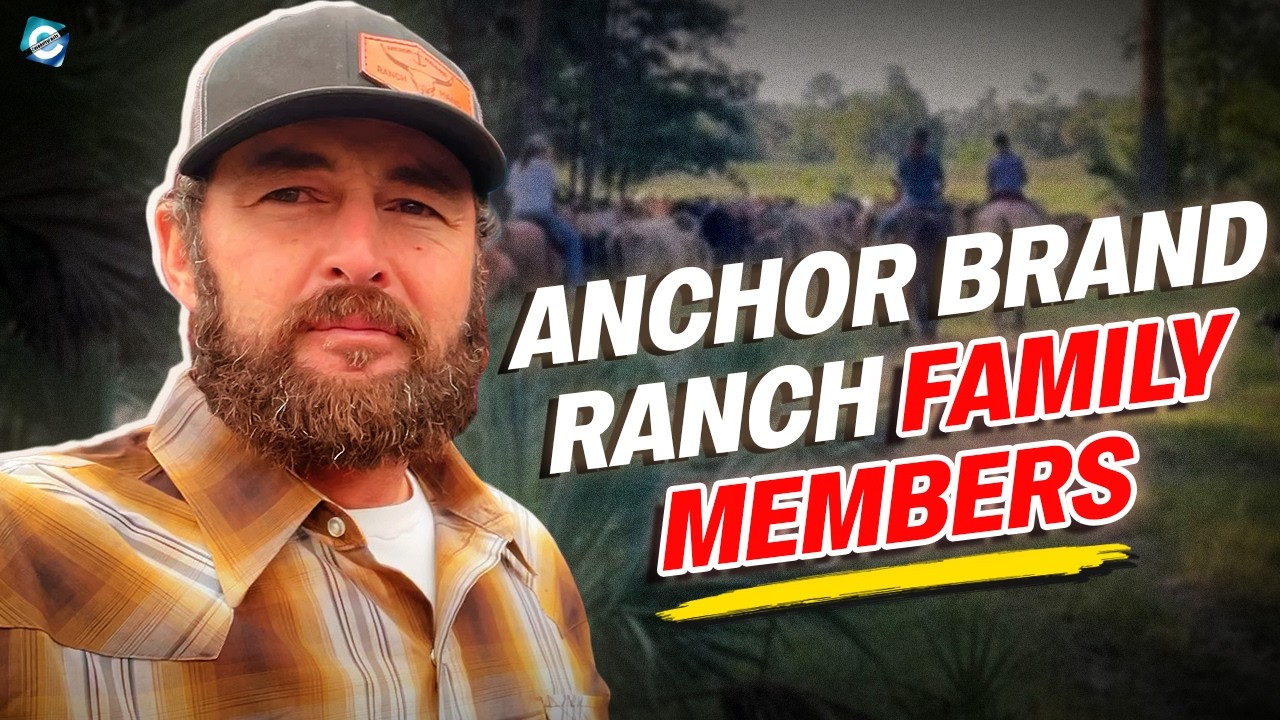
The $2 Billion Ranch Empire Explained
Introduction to Modern Agricultural Wealth

For decades, traditional real estate wealth was measured by commercial skyscrapers, residential subdivisions, and bustling retail centers. However, a quiet revolution has been taking place in the vast open spaces of the American West and beyond. Institutional investors and private conglomerates are recognizing that dirt, water rights, and grazing acreage represent some of the most resilient assets on earth. At the forefront of this movement is The $2 Billion Ranch Empire — How Anchor Brand Redefined Wealth in Real Estate!
Anchor Brand didn't just buy land; they re-engineered how rural property is valued, managed, and monetized. By treating sprawling pastures and working cattle operations with the financial rigor of a Wall Street portfolio, they turned legacy lifestyle properties into high-yielding, multi-asset conglomerates. This article examines the exact strategies, operational pivots, and market forces that propelled Anchor Brand into the upper echelons of agricultural real estate.
The Evolution of Land as an Asset Class
Historically, ranch ownership was reserved for generational families, wealthy industrialists seeking a tax shelter or weekend retreat, and actual working cattlemen. Land was viewed as illiquid, capital-intensive, and prone to low annual yields relative to its purchase price. Anchor Brand challenged this paradigm by identifying structural inefficiencies in the rural property market.
Shifting from Lifestyle to Logistics
The core breakthrough of the Anchor Brand model was moving away from the purely emotional or lifestyle-driven purchase of land. While aesthetic beauty and historical prestige still mattered, every acquisition had to pass rigorous financial stress tests. Key valuation metrics included:
- Carrying capacity for livestock per acre.
- Deed-restricted water rights and aquifer access.
- Timber, mineral, and subsurface carbon offset potential.
- Proximity to growing regional supply chains and transportation corridors.
By underwriting ranches as multi-revenue ecosystems rather than single-use properties, the brand unlocked hidden layers of value that traditional buyers routinely missed.
The $2 Billion Ranch Empire — How Anchor Brand Redefined Wealth in Real Estate!
Scaling a portfolio of rural real estate to the two-billion-dollar milestone requires a playbook vastly different from urban development. You cannot simply bulldoze a ranch to build a strip mall; instead, you must optimize the natural biological and geographical assets already in place. Anchor Brand achieved this massive scale through three primary pillars: strategic consolidation, sustainable intensification, and technological integration.
Strategic Consolidation and Contiguity
One of the hardest lessons in rural real estate is that fragmented land parcels are difficult to manage efficiently. Anchor Brand focused on contiguous aggregation—buying smaller, distressed, or undercapitalized family ranches that bordered their core holdings. By stitching these parcels together, they created mega-ranches with economies of scale.
This contiguity reduced fencing costs, simplified livestock rotation, and allowed for centralized water distribution networks. More importantly, large continuous tracts of land command a scarcity premium. Institutional buyers and ultra-high-net-worth individuals are willing to pay significantly more per acre for a massive, unified footprint than they are for scattered, disconnected holdings.
Sustainable Intensification of Operations
Owning land is only half the battle; generating consistent cash flow requires operational excellence. Anchor Brand modernized traditional ranching by implementing data-driven grazing management. Instead of overgrazing pastures—a common historical pitfall—they utilized rotational grazing systems that actually improved soil health, increased native grass yields, and sequestered carbon.

Furthermore, they diversified revenue streams across every property. A typical Anchor Brand acquisition might simultaneously generate income from:
- Premium grass-fed beef production sold directly to consumer markets.
- Agritourism, luxury hunting leases, and eco-lodge partnerships.
- Government conservation easements and biodiversity credits.
- Renewable energy leases, including wind and solar farm hosting agreements.
Risk Mitigation and Inflation Hedging
In an era defined by macroeconomic volatility, inflation, and fluctuating public equities, tangible assets have regained their luster. Land has historically served as one of the most reliable hedges against inflation because its supply is fundamentally finite. You cannot manufacture more prime riverfront valley acreage.
Anchor Brand structured its $2 billion portfolio to withstand economic downturns. Agricultural real estate has a very low correlation with traditional stock and bond markets. When corporate earnings falter or commercial real estate vacancy rates spike, the demand for food, fiber, and open space remains stable or increases.
Water Rights: The New Gold Standard
Perhaps the most brilliant aspect of the Anchor Brand strategy was its aggressive acquisition of senior water rights. In many western states, land without water is worth a fraction of its potential. By securing adjudicated water rights tied to major river basins and underground aquifers, Anchor Brand effectively monopolized the lifeblood of agricultural production in their target regions.
These water rights not only sustained their vast cattle operations and crop irrigation systems but also provided immense optionality. As municipal growth and industrial water demands increased, the value of surplus water rights appreciated faster than the dirt itself.
Lessons for Modern Real Estate Investors
While most individual investors do not have the capital to assemble a billion-dollar agricultural portfolio, the principles behind the Anchor Brand empire offer profound lessons for modern wealth building.
Look Beyond Traditional Sectors: Diversifying away from standard residential and commercial assets into alternative real estate classes—such as timberland, farmland, and ranches—can protect your portfolio against systemic shocks.
Monetize Multiple Use Cases: Never view a piece of real estate through a single lens. Ask yourself what subsurface, airspace, conservation, and operational revenues can be extracted from the property.
Focus on Supply Constraints: Assets that cannot be replicated—such as waterfront acreage, senior water rights, or large contiguous land blocks—will always retain long-term pricing power.
Conclusion
The ascent of Anchor Brand proves that wealth in real estate is not restricted to glass towers and concrete jungles. By bringing institutional discipline, technological efficiency, and a multi-revenue mindset to rural acreage, they transformed traditional ranching into a formidable asset class. As global populations grow and natural resources become scarcer, the blueprint established by this $2 billion empire will serve as the gold standard for land-based investing for generations to come.