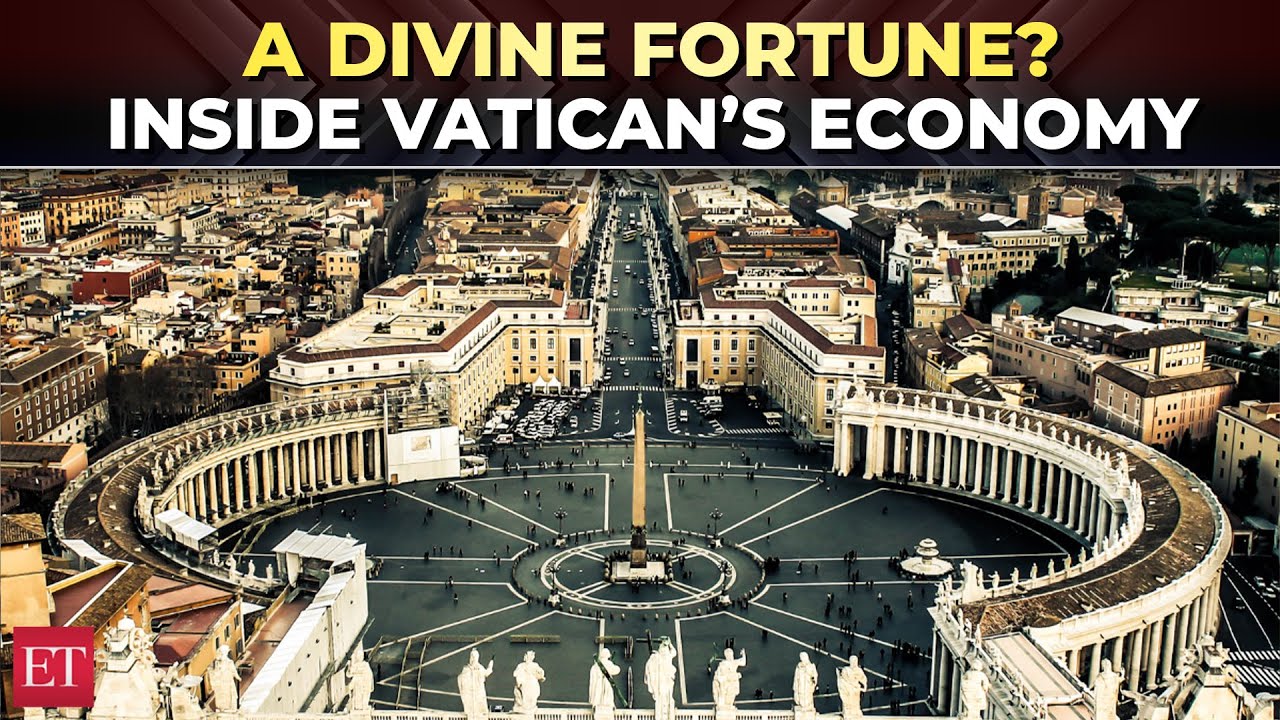
The $30 Billion Vatican Enigma: Faith vs. Finance
When discussing global financial powerhouses, Wall Street, the City of London, and Frankfurt immediately come to mind. Yet, tucked inside a 121-acre sovereign city-state in Rome sits an institution that operates outside traditional market pressures entirely: the Holy See. Often shrouded in mystery and public speculation, the sheer scale of the church's assets creates what financial analysts call **The $30 Billion Vatican Enigma—A Faith-Based Economic Gauntlet More Powerful Than Any Bank!**

Understanding this unique financial ecosystem requires looking beyond simple net worth calculations. The Vatican's economic strength does not rely on quarterly earnings reports or aggressive consumer lending. Instead, it is anchored in centuries of real estate, sovereign immunity, global investments, and a decentralized network of tithes and donations that span every continent.
Decoding the Financial Architecture of the Holy See
To understand how the Vatican manages its wealth, one must examine the distinct entities responsible for its administration. Unlike a standard corporation, the Holy See operates through specialized offices designed to balance spiritual missions with temporal upkeep.
The Administration of the Patrimony of the Apostolic See (APSA)
APSA functions essentially as the central bank and sovereign wealth fund of Vatican City. It manages the vast portfolio of Italian and international real estate, government bonds, and liquid assets. The real estate holdings alone—comprising thousands of residential and commercial properties in Rome, Paris, London, and Switzerland—are valued in the billions. Crucially, these properties often serve dual purposes, housing diplomatic missions, clerical offices, and income-generating commercial tenants simultaneously.
The Institute for the Works of Religion (IOR)
Popularly known as the Vatican Bank, the IOR is perhaps the most scrutinized financial entity in the world. It does not operate like a high-street bank. It holds accounts primarily for religious orders, Vatican departments, clergy, and accredited diplomats. Following sweeping financial transparency reforms initiated over the last decade, the IOR complies with international anti-money laundering standards, bringing modern oversight to centuries-old banking traditions.

The Power of Moral Economy and Soft Power
What makes the Vatican's economic position genuinely formidable is its immunity to standard market corrections. While commercial banks face liquidity crises during panics, the Holy See operates on a multi-centennial timeline.
- Global Real Estate Footprint: Prime properties acquired over centuries generate steady, inflation-resistant rental income.
- Sovereign Status: As an independent city-state, the Vatican maintains unique diplomatic and tax-exempt statuses across numerous jurisdictions.
- The Peter's Pence: Direct contributions from millions of faithful Catholics worldwide provide an agile, decentralized stream of cash flow independent of corporate bonds.
- Moral Authority: Economic influence is leveraged through ethical investing guidelines, directing capital away from weapons, abortion, and fossil fuels, thereby shaping global ESG (Environmental, Social, and Governance) trends long before they became corporate buzzwords.
Modern Reforms and Ongoing Challenges
Despite its vast resources, the Holy See is not immune to modern fiscal pressures. In recent years, declining European congregations, reduced tourism revenues during global crises, and high operational costs for the Roman Curia have led to structural budget deficits.
In response, Pope Francis and his financial advisors implemented rigorous centralization measures. All Vatican departments were mandated to consolidate their investments under APSA, eliminating independent slush funds and introducing transparent, professional auditing firms like PwC to oversee operations.
These reforms ensure that the Vatican's economic engine remains sustainable, proving that faith-based governance can adapt to 21st-century regulatory demands without compromising its spiritual mission.
Conclusion
The $30 Billion Vatican Enigma represents more than just a massive collection of assets and real estate. It demonstrates a resilient, alternative economic model that merges spiritual longevity with sovereign financial strategy. While traditional banks rise and fall with economic cycles, the Holy See continues to navigate global markets with a unique blend of ancient stewardship and modern compliance.