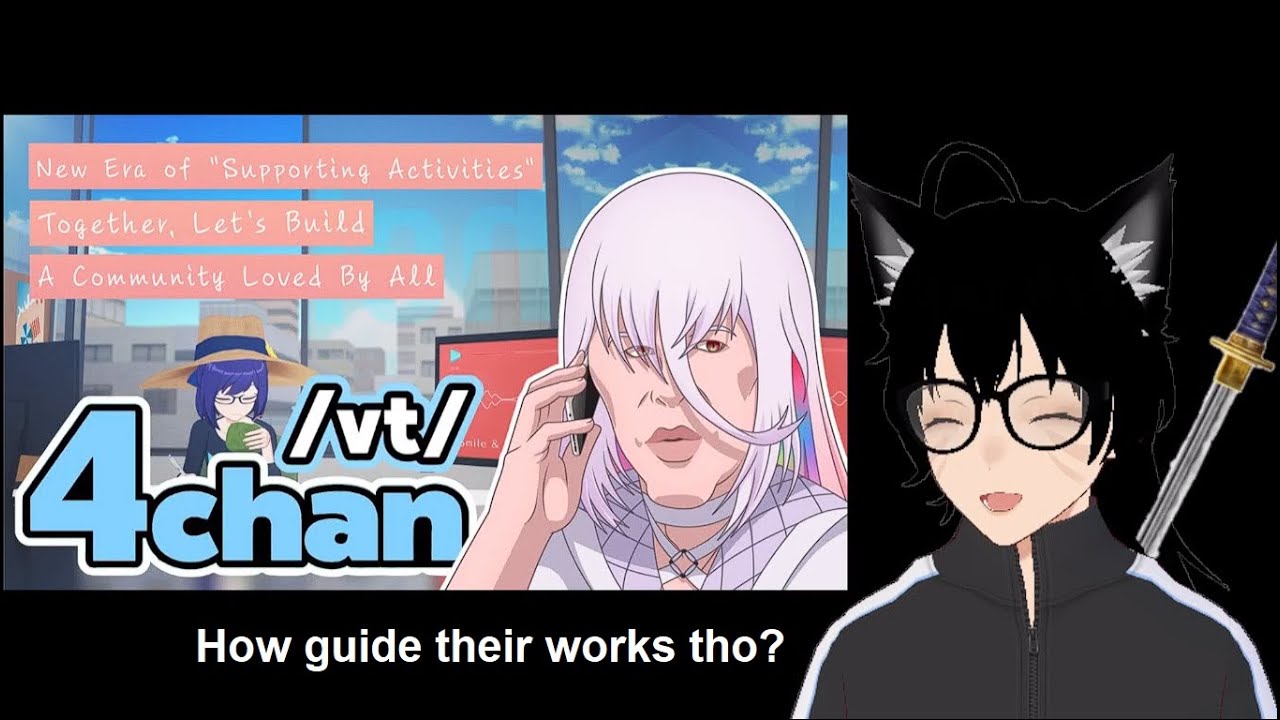
The 4chan VTuber Board: Culture, Slang, and /vt/ Guide
When the virtual YouTuber phenomenon exploded internationally around 2020, dedicated fan communities sprang up across Reddit, Discord, and X (formerly Twitter). However, few digital spaces hold as much notoriety and subcultural weight as the 4chan vtuber board, officially designated as /vt/. Known for its unfiltered commentary, rapid-fire posting, and unique dialect, the board occupies a polarizing but influential corner of the virtual entertainment world.

Whether you are a casual fan trying to decipher unfamiliar community slang or a digital culture enthusiast studying online fandoms, understanding how /vt/ operates provides valuable insight into the modern streaming landscape.
The Origins of /vt/: From Otaku Culture to a Dedicated Board
Before having a board of its own, VTuber discussion on 4chan was primarily housed under /jp/ (Otaku Culture), with occasional crossover into /v/ (Video Games). During late 2019 and early 2020, the meteoric rise of agencies like Hololive Production and Nijisanji flooded /jp/ with hundreds of daily threads. Longtime users argued that VTuber discussions were cannibalizing the board's traditional focus on visual novels, doujin music, and niche Japanese media.
To resolve the friction, 4chan administration launched /vt/ - Virtual YouTubers in February 2021. The new board instantly became one of the most active sections on the entire platform, consolidating agency fandoms, indie supporters, and casual observers into a single high-velocity environment.
Understanding the Culture of the 4chan VTuber Board
Unlike moderated platforms such as Reddit or official Discord servers, the 4chan vtuber board operates under the standard rules of anonymous imageboards. The absence of persistent usernames strips away social credit, karma systems, and algorithmic curation. Every post competes solely on its content, image choice, and shock or humor value.
This structure fosters a culture characterized by several distinct dynamics:
- The "General" Format: The board is organized predominantly into "generals"—recurring mega-threads dedicated to specific talent agencies, individual streamers, or shared niches. Examples include threads for Hololive English, Nijisanji EN, independent VTubers, and corporate agencies like VShojo or Phase Connect.
- Hyper-Obsessive Analysis: Users track concurrent viewership (CCV), superchat earnings, subscriber deltas, and stream schedules down to the minute. This analytical fixation can range from enthusiastic celebration to hypercritical scrutiny.
- Aggressive Skepticism: Corporate decisions, talent statements, and PR releases are rarely taken at face value. Users routinely analyze subtext, vocal inflections, and schedule anomalies to infer backstage developments.
Essential Slang: Decoding the /vt/ Lexicon
Navigating the board requires familiarity with an insular vocabulary that mixes traditional imageboard jargon, Japanese loanwords, and community-specific coinages.
1. Rrat
A corruption of "narrative" (often attributed to the voice of Hololive's Hakos Baelz, a mouse/rat character). A "rrat" is a speculative theory, rumor, or conspiracy regarding backstage drama, corporate politics, or interpersonal relationships among streamers.
2. Roommate / PL (Past Life)
In VTuber culture, discussing the human behind the avatar is generally taboo on public social media. On /vt/, users frequently discuss a talent's "past life" or current independent persona, colloquially referring to the real individual as the avatar's "roommate."
3. Doomposting

The practice of exaggerating negative trends—such as a temporary dip in viewership, a delayed stream, or minor technical issues—to declare that a streamer's career or agency is on the brink of collapse. Much of this is done in bad faith as "bait" to provoke emotional defenses from fans.
4. Oshis and Kamioshis
Borrowed from Japanese idol fandom, an "oshi" is a creator one actively supports. A "kamioshi" represents an individual's absolute favorite streamer, often defended with intense loyalty.
5. Menhera
Short for "mental health," this Japanese slang term is used to describe streamers or posters exhibiting erratic, emotionally unstable, or vulnerable behavior during or outside broadcasts.
The Broader Impact of /vt/ on the VTuber Industry
Despite its reputation as an insular board, discussions on /vt/ frequently ripple outward into the mainstream VTuber ecosystem:
- Trend Incubation and Memes: Many running jokes, fan nicknames, and popular clip concepts originate in anonymous threads before migrating to YouTube clip channels, TikTok, and Twitter.
- Investigative Archiving: Users maintain extensive archives of unlisted broadcasts, deleted social media posts, and obscure public records. While this can cross into invasive territory, it has also occasionally brought genuine misconduct or corporate mishandling to light before traditional media picked it up.
- Talent Awareness: Numerous VTubers—both indie creators and agency talents—have acknowledged reading the board, either out of morbid curiosity or to gauge raw, unvarnished feedback that curated platforms filter out.
Criticism, Toxicity, and Risks
It is impossible to discuss the board without addressing its dark side. The anonymity that enables frank critique also provides cover for targeted harassment, malicious doxxing, and coordinate review-bombing campaigns against talents.
Because conflict generates more replies than polite appreciation, bad-faith actors frequently post inflammatory material solely to derail constructive threads. For creators, routinely reading /vt/ can be psychologically damaging, as the board often magnifies marginal controversies into existential crises.
Navigating the Board Safely
If you choose to browse the board, keep the following principles in mind:
- Never take unverified claims as fact: Treat all rumors, leaked screenshots, and "rrats" with extreme skepticism unless backed by primary, verifiable sources.
- Do not engage with obvious bait: Threads created purely to disparage a creator rely on emotional engagement to stay bumped to the top of the board. The best response is using the board's hide function.
- Respect creator boundaries: Avoid bringing discussion of private personal details, past lives, or board-specific drama into a streamer's live chat or public social media mentions.
Final Thoughts
The 4chan VTuber board remains a raw, complex reflection of digital fandom. It operates simultaneously as a 24/7 watch party, a high-speed rumor mill, and a cultural sounding board. While its abrasive atmosphere is certainly not for everyone, understanding /vt/ provides critical context for the currents shaping the wider world of virtual entertainment today.