The $50 Million Myth Shattered: Forbes Validates 50 Cent’s Radical Career Growth
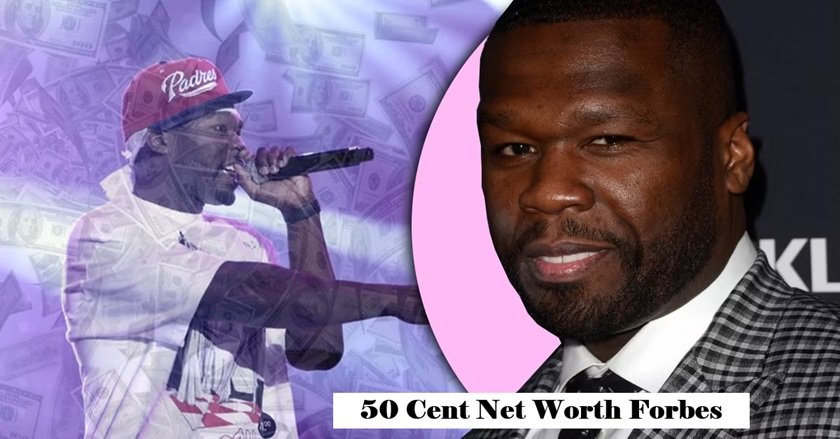
In the annals of entertainment finance, few case studies present as dramatic a transformation as Curtis "50 Cent" Jackson. Long after his record-breaking debut with Get Rich or Die Tryin' and his historic Glacéau Vitaminwater windfall, public perception of Jackson's financial standing remained warped by sensationalist headlines. With fresh analyses examining his television production dominance and premium spirits holdings, The $50 Million Myth Shattered: Forbes Validates 50 Cent’s Radical Career Growth stands as the defining thesis of his modern entrepreneurial chapter. Jackson did not merely survive financial reorganization; he systematically built an infrastructure that outpaces his peak recording years.

The Anatomy of the Financial Misconception
To understand why the public underestimated Jackson’s enterprise, one must examine the narrative collision of 2015. When Jackson filed for Chapter 11 bankruptcy protection, mainstream commentary misconstrued corporate restructuring as absolute insolvency. Tabloids reduced his net worth to punchlines, fixating on court filings that documented approximately $32.5 million in liabilities against estimated assets in the same range.
Chapter 11, however, is a strategic mechanism used by corporations and high-net-worth operators to reorganize debt obligations while continuing business operations—not Chapter 7 liquidation. Jackson utilized the court's protection to restructure costly legal judgments, including a $7 million verdict in a privacy lawsuit and an adverse $17 million arbitration award regarding Sleek Audio headphones. By early 2017, Jackson paid off more than $22 million in debt several years ahead of schedule, officially discharging the bankruptcy and wiping the slate clean.
Yet, the lingering rumor persisted: that 50 Cent was plateaued, capped at a modest estate, or permanently damaged by legal overhead. This static evaluation—what many market observers labeled the "$50 million ceiling"—completely ignored the foundational assets he was assembling behind the scenes.
The Television Empire: Turning Cable Into an Annuity
Jackson’s pivot to television executive producing marked the inflection point of his post-music financial ascension. Rather than accepting talent-for-hire fees, Jackson positioned G-Unit Film & Television Inc. as an equity-holding co-producer alongside Lionsgate and Starz.
The Power Universe Effect
When Power premiered in 2014, industry insiders viewed it as an ambitious cable drama. Within four seasons, it became Starz’s flagship property, rivaling premier premium cable franchises in viewership and subscriber retention. Jackson did not stop at a single hit; he engineered an expansive cinematic universe:
- Power Book II: Ghost: Proved the viability of spin-offs focusing on next-generation characters.
- Power Book III: Raising Kanan: Capitalized on 1990s nostalgia and Jackson’s own formative mythology.
- Power Book IV: Force: Relocated the narrative engine to Chicago, broadening geographic appeal.
- BMF (Black Mafia Family): Expanded his production footprint into docudrama storytelling rooted in hip-hop lore.
In 2018, Jackson negotiated an overall deal with Starz valued at a reported $150 million over four years. By the time that partnership ran its course in 2022, Jackson retained the intellectual leverage. In early 2023, he inked a non-exclusive broadcast direct deal with Fox Entertainment to develop scripted series, guaranteeing upfront development capital while preserving the right to license ancillary rights across global streaming markets.
Sire Spirits: The High-Margin Playbook
While Hollywood provided steady cash flow and cultural capital, Jackson applied the lessons of his 2007 Vitaminwater liquidity event to the beverage industry. Founded in 2014, Sire Spirits—housing Branson Cognac and Le Chemin du Roi champagne—became a masterclass in direct brand alignment.

Unlike celebrity endorsers who receive modest royalties or phantom equity, Jackson owns Sire Spirits outright. To bypass standard retail friction, he partnered directly with major sports franchises and arena operators, securing exclusive pouring rights and venue branding:
- Houston Rockets & Toyota Center: Establishing corporate hospitality and retail dominance in Texas.
- Sacramento Kings & Golden 1 Center: A multi-year partnership integrating Sire Spirits into premium suite hospitality.
- Indiana Pacers & Gainbridge Fieldhouse: Expanding midwestern distribution channels via direct stadium visibility.
- NFL and MLB Integrations: Commercial alignments with franchises like the Houston Texans and New York Mets.
By transforming luxury spirits into stadium staples, Jackson engineered an ecosystem where live events generate recurring commercial revenue without relying on traditional advertising budgets.
The $50 Million Myth Shattered: Forbes Validates 50 Cent’s Radical Career Growth
When financial analysts re-evaluated Jackson's holdings, the contrast between tabloid assumptions and balance-sheet reality became undeniable. In multiple breakdowns of hip-hop’s wealthiest figures, financial outlets noted that Jackson’s modern net worth is underpinned by hard operating assets rather than music catalog royalties alone.
His valuation no longer mirrors that of a legacy rapper playing heritage festivals. Instead, it reflects an enterprise diversified across media production, luxury spirits, touring rights, and real estate investments—including his massive 985,000-square-foot production studio development in Shreveport, Louisiana. Dubbed G-Unit Studios, the municipal lease agreement grants Jackson long-term facilities to scale feature film and television manufacturing, cutting production overhead while securing generous state tax incentives.
The validation provided by media monitors and business analyses confirms what Jackson's balance sheet long implied: his net worth has radically outgrown the conservative $30 million to $50 million brackets typically assigned to him during his restructuring era, pushing him firmly into the tier of multi-hundred-million-dollar entertainment moguls.
Core Tenets of Jackson’s Financial Strategy
Entrepreneurs and creative executives can extract clear principles from Jackson's systematic turnaround:
- Retain Operating Control: Jackson moved away from licensing his name to third parties. Through G-Unit Film & Television and Sire Spirits, he owns the underlying operational entities, maximizing long-term enterprise value over short-term licensing fees.
- Monetize Narrative Resistance: Jackson turned bankruptcy filings and legal disputes into public relations leverage, normalizing transparent business battles while steadily clearing balance sheet liabilities.
- Geographic and Municipal Arbitrage: By basing production infrastructure in Shreveport and targeting regional sports hubs across Texas, Indiana, and California, Jackson sidestepped the oversaturated, high-tax production hubs of Los Angeles and New York.
- Cross-Platform Synergy: His television series naturally feature his spirit brands through organic product placement, while his worldwide arena tours serve as promotional vehicles for his media properties and charitable foundations.
The Modern Benchmark for Creative Longevity
Curtis Jackson’s resurgence is not an accidental stroke of good fortune; it is a calculated execution of portfolio management. The narrative that his wealth was frozen in the mid-2000s has been thoroughly disassembled by concrete production slates, enterprise partnerships, and documented commercial distributions.
By treating intellectual property as an expandable universe and consumer goods as distribution channels, Jackson has engineered an enduring corporate machine. He remains a textbook example of how strategic restructuring, combined with unyielding operational discipline, can turn temporary setbacks into the foundation for generational wealth.