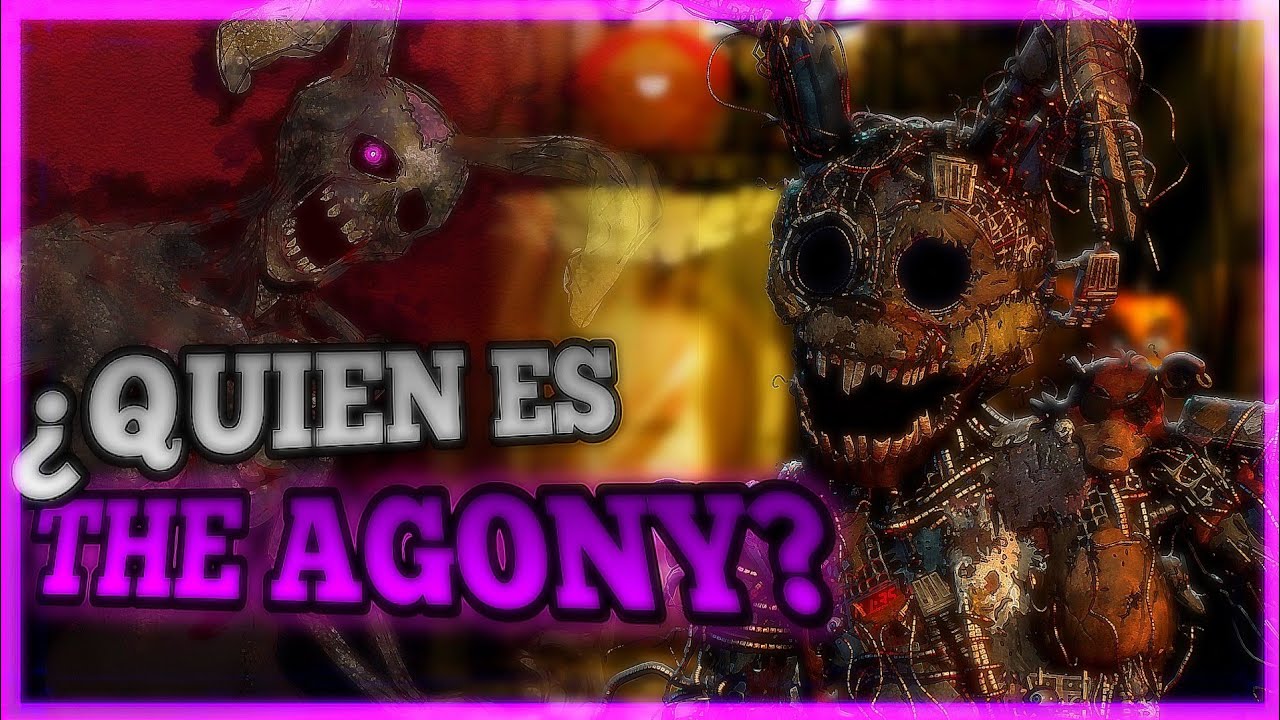
The Agony FNAF: Origin, Lore, and Meaning Explained
Understanding The Agony in FNAF

For years, the Five Nights at Freddy's (FNAF) franchise relied on a mix of haunted animatronics, tragic murders, and sci-fi robotics to explain its supernatural horrors. However, as the universe expanded through the Fazbear Frights book series and modern games, Scott Cawthon introduced a more abstract, terrifying concept that ties everything together: the agony fnaf phenomenon. Unlike simple haunting, agony represents a metaphysical force born from extreme human suffering, fear, and trauma.
In the expanded FNAF universe, agony is not just an emotion; it is a tangible energy source. When children were murdered or innocent people endured unimaginable terror within Fazbear Entertainment locations, their emotional anguish left a permanent stain on the environment. This concept reframes how we view haunted objects, explaining why inanimate plastic and metal can move, think, and inflict violence long after a soul has supposedly departed.
What is Agony and How Does It Work?
To truly understand the role of agony in the lore, we have to look closely at how it interacts with other supernatural elements in the FNAF universe, specifically remnant and soul possession. While a traditional haunting requires a human soul to anchor itself to an object, agony operates differently.
Agony vs. Remnant
Remnant is often described as liquid metal infused with memories and a soul's essence, allowing spirits to animate robotic chassis. Agony, on the other hand, is pure emotional residue. A soul is not strictly required to create agony. Instead, a person experiencing extreme trauma or agony can imbue nearby objects with this dark energy just by being near them. Over time, high concentrations of agony act like a battery, bringing lifeless things to life and warping them into monstrous versions of themselves.
- Emotional Imprint: Traumatic events bleed into physical surroundings, infecting toys, suits, and building structures.
- Sentience Without Souls: Objects saturated with agony develop a crude, malicious consciousness driven entirely by the pain that created them.
- Amplification: Agony feeds on more agony, meaning tragic events tend to compound in locations associated with Fazbear Entertainment.
The Agony in the Fazbear Frights Books
The concept of the agony fnaf mechanic was heavily fleshed out in the Fazbear Frights anthology series, particularly in the epilogues that connect multiple stories. In these books, a mysterious entity known simply as "The Agony"—or sometimes associated with the Stitchwraith stingers—serves as a grim reminder of what happens when emotional residue accumulates on a massive scale.

In the Stitchwraith arc, various objects tainted by tragedy are collected and brought together. When these items are combined, the collective agony reaches a critical mass, eventually manifesting into a towering, multi-limbed amalgamation of trash, Endoskeletons, and discarded Fazbear parts. This physical embodiment of agony becomes one of the most destructive threats in the entire canon, proving that human suffering, once concentrated, can become a physical monster.
The Shadow Animatronics and Agony
Long before the books explicitly named the mechanic, veteran fans speculated about the nature of characters like Shadow Freddy and RWQFSFASXC (Shadow Bonnie). These shadowy figures don't fit neatly into the traditional child-murder-and-possession rules of the original games.
Instead, many theorists in the community view the shadow animatronics as pure physical manifestations of agony. Created from the overwhelming fear and anguish of the victims at the Freddy Fazbear's Pizza locations, these entities linger in the shadows. They are not independent spirits seeking justice; they are walking projections of the very trauma the company inflicted upon its patrons and employees.
Impact on the Broader FNAF Timeline
Recognizing the presence of agony shifts our understanding of the entire FNAF timeline. It explains why haunted locations seem cursed even after being completely gutted and rebuilt. The emotional scars left behind by William Afton's heinous crimes created a well of agony that contaminated everything Fazbear Entertainment touched.
Even in modern entries like Five Nights at Freddy's: Security Breach, the underground remnants of the Pizzeria Simulator location radiate negative energy. This lingering agony provides a pseudo-scientific, supernatural justification for why Glitchtrap and the Mimic can corrupt systems, manipulate human minds, and bend reality to their will.
Conclusion
The introduction of agony as a fundamental force in the franchise elevates Five Nights at Freddy's from a simple ghost story into a cosmic tragedy. It emphasizes a bleak central theme: the pain we inflict on one another leaves a permanent mark on the world. Whether manifesting as shadowy phantoms, sentient robotic parts, or a towering amalgamation of trash, the agony fnaf lore proves that the scariest monster in the pizza parlor isn't just a killer in a fursuit—it's the enduring trauma he left behind.