The Balance Beam Situation: Gymnastics’ Ultimate Test
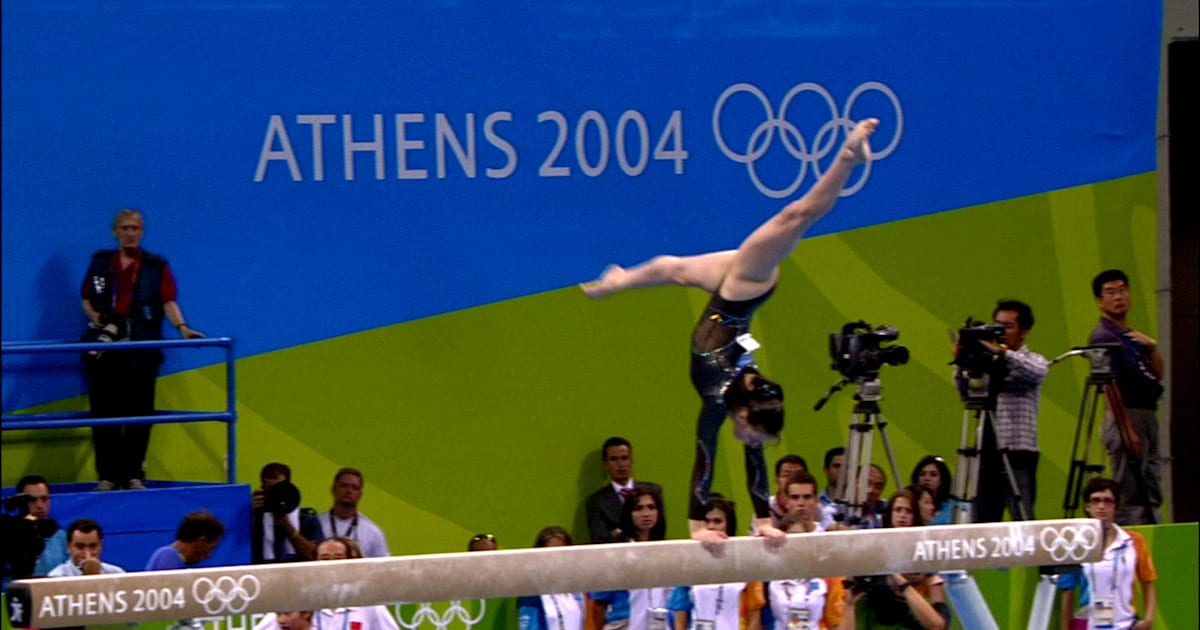
In artistic gymnastics, no apparatus carries the psychological weight or unpredictable drama quite like the 10-centimeter-wide strip of wood and leather elevated four feet off the floor. Whether fans are discussing a nail-biting team final or following dedicated commentary on the sport, the balance beam situation represents gymnastics at its most precarious. A single millimeter of miscalculation can erase years of preparation, turning a gold-medal trajectory into an off-the-podium finish in a fraction of a second.

While vault rewards explosive power, uneven bars demand fluid rhythm, and floor exercise blends tumbling with artistic expression, beam is an unforgiving test of poise under pressure. Understanding how athletes navigate this event—and why it routinely upends championship leaderboards—reveals the delicate balance of physics, technique, and mental fortitude required to master it.
The Anatomy of the Beam: Physics of a Four-Inch Surface
Standardized by the International Gymnastics Federation (FIG), an official competition beam measures exactly 5 meters (16.4 feet) long, 1.25 meters (4.1 feet) high, and just 10 centimeters (3.9 inches) wide. The core is constructed of reinforced wood or metal, wrapped in a thin layer of shock-absorbing foam and hygroscopic synthetic leather.
The core challenge stems from angular momentum and lateral margin of error. When an athlete performs a standard tumbling skill—such as a back handspring to layout stepout—their center of mass must track precisely along the linear axis of the beam. If their center of gravity drifts even one degree off-center during takeoff, landing forces will throw their weight sideways upon contact.
- Linear Alignment: Feet must land heel-to-toe or in precise alignment to absorb impact without twisting.
- Rotational Braking: Unlike floor tumbling, where athletes dissipate forward momentum by running out of bounds or rebounding, beam routines require gymnasts to immediately arrest their angular momentum on landing.
- Visual Spotting: In skills with blind takeoffs or aerial rotations, gymnasts have only milliseconds to spot the beam surface before impact to orient their feet properly.
Navigating the Balance Beam Situation in NCAA vs. Elite
Gymnastics operates under two distinct rulebooks at its highest levels: the FIG Code of Points used in elite international competition (including the Olympics and World Championships) and the modified Level 10 rules used in NCAA collegiate gymnastics. Navigating the balance beam situation looks drastically different across these two arenas.
The Elite Code of Points: High Risk, High Reward
In elite gymnastics, routines are scored through an open-ended system combining a Difficulty Score (D-score) and an Execution Score (E-score). Elite athletes are incentivized to pack their routines with complex acrobatic series, multi-rotation turns, and difficult dismounts to raise their start value.
A fall in elite gymnastics incurs a mandatory 1.00-point neutral deduction. However, because difficulty scores can vary by more than a full point between competitors, an athlete with an exceptionally high D-score can occasionally absorb a fall and still post a competitive score. The strategic gamble lies in whether to risk connections—such as linking two tumbling skills directly together for bonus tenths—when an off-kilter connection can trigger balance checks that bleed execution points.
NCAA Gymnastics: The Pursuit of the Perfect 10
Collegiate gymnastics retains the traditional 10.0 maximum score. Because nearly every athlete in a top-division collegiate lineup can achieve a 10.0 start value through standard composition requirements, NCAA beam becomes a game of microscopic execution.
In college meets, a fall carries a 0.50-point deduction. While smaller than the elite penalty, a 0.50 loss is devastating in a dual meet where team scores are often decided by tenths or hundredths of a point. NCAA coaches prioritize consistency, rock-solid landings, and the elimination of small balance checks (deducted at 0.05 to 0.10 points each). The pressure here is collective: collegiate teams put up six athletes and drop the lowest score, meaning a second fall in a rotation guarantees a damaged team total.
Crucial Routine Elements That Define the Event
A complete balance beam routine lasts up to 90 seconds and must incorporate specific categories of movement to fulfill judging requirements.

1. The Acrobatic Series
Judges require an acrobatic flight series containing at least two connected skills, at least one of which must be a salto or aerial element. The back handspring connected to a layout stepout remains the gold standard of consistency, though elite gymnasts often upgrade to back handsprings into back tucks, layout fulls, or Arabian front saltos.
2. The Dance Elements and Leap Series
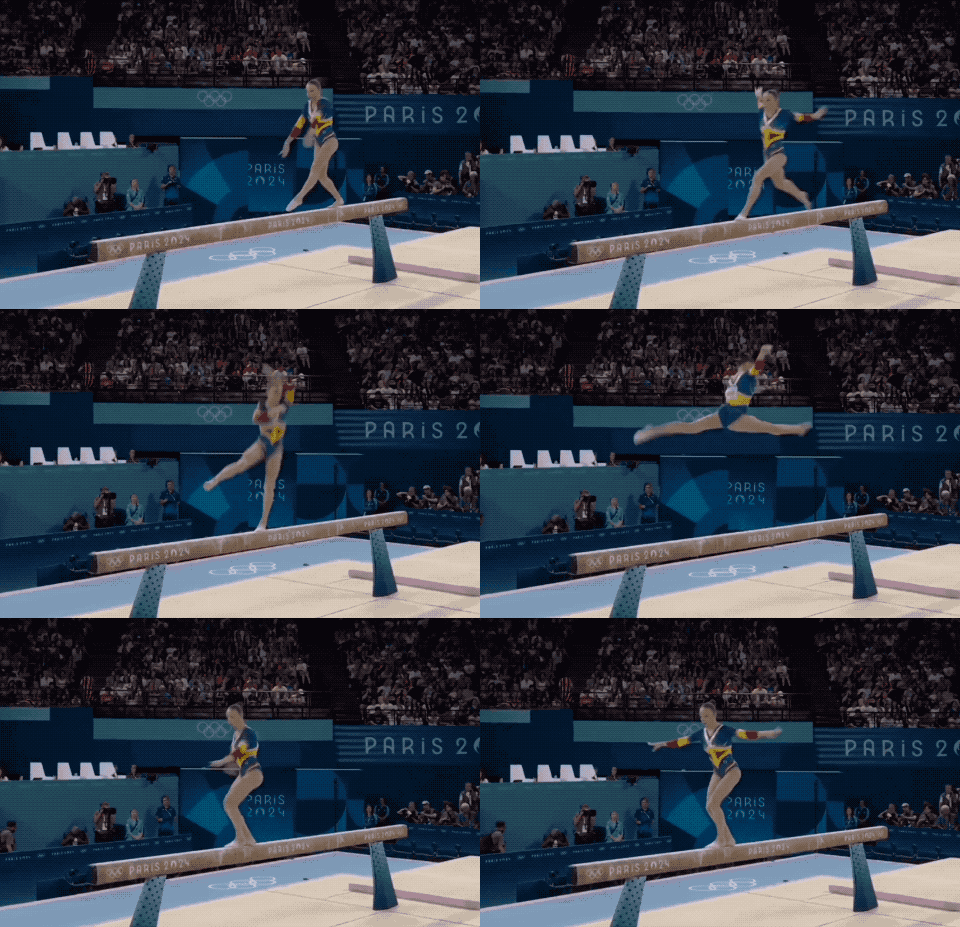
Gymnasts must demonstrate flexibility and rhythm through split leaps, switch leaps, and jumps. To avoid deductions, split positions must reach an exact 180-degree angle. Furthermore, leaps connected directly into back passes or other jumps earn valuable connection value in elite scoring.
3. The Turns (and the Infamous Wolf Turn)
While standard pirouettes on one toe demand control, recent Olympic cycles have seen an explosion of the "wolf turn"—a spin performed in a deep squat with one leg extended outward. While polarizing among commentators and fans for its aesthetics, the skill offers high difficulty value (a triple wolf turn earns an E-rating) with relatively low risk of a catastrophic fall compared to acrobatic skills.
4. Dismounts
The routine concludes with an acrobatic dismount into a landing mat. Elite athletes routinely throw double tucks, double pikes, or twist-heavy combinations (such as a round-off two-and-a-half twist). A clean dismount requires not only rotating the skill safely but "sticking" the landing—freezing the feet in place without taking a step or hop, which judges penalize instantly.
The Psychology of Beam: The Mental Game
Every gymnast will tell you that balance beam is 90% mental. While uneven bars and floor routines feature continuous movement and loud musical accompaniment that mask nervous energy, beam takes place in near-silence. The gymnast is hyper-aware of every breath, heartbeat, and glance from the judging panel.
Coaches use specific training methodologies to harden athletes against the psychological volatility of the event:
- Pressure Sets: Simulating meet conditions in practice, where an athlete must stick a routine while teammates make noise, scream, or simulate visual distractions.
- The "One and Done" Rule: Forcing a gymnast to perform a single routine at the start of a training session without a full warm-up, mimicking the cold pressure of an arena competition.
- Micro-Recovery Training: Teaching athletes how to fight through a wobble without letting panic trigger a second, larger error. A well-trained gymnast knows how to drop their hips and engage their core to absorb off-center momentum rather than waving their arms or bending at the waist.
Why Beam Remains the Definitive Team Final Decider
In Olympic and World Championship team finals, beam is almost universally recognized as the rotation where medals are won or lost. Teams that build comfortable leads on vault and uneven bars can see a multi-point cushion evaporate in three minutes if multiple athletes fall off the apparatus.
It is this knife-edge dynamic that makes beam the emotional center of artistic gymnastics. The apparatus leaves no room for hesitation; confidence must be absolute from the mount to the dismount. When an athlete delivers a routine devoid of wobbles, hitting every connection with rhythm and sticking the dismount, it remains one of the most mesmerizing, technically demanding achievements in world sport.