The Burstfade Haircut: Styles, Guard Tips & Care
Few haircuts in modern barbering offer the precision, versatility, and visual impact of the burstfade. While classic skin fades and low tapers remain perennial favorites, the burst fade breaks the traditional horizontal fade line by curving tightly around the ear, creating a radiant, sunburst-like transition. It leaves significant volume along the nape of the neck and down the center of the head, making it the foundational cut for modern mohawks, mullets, and textured crops.
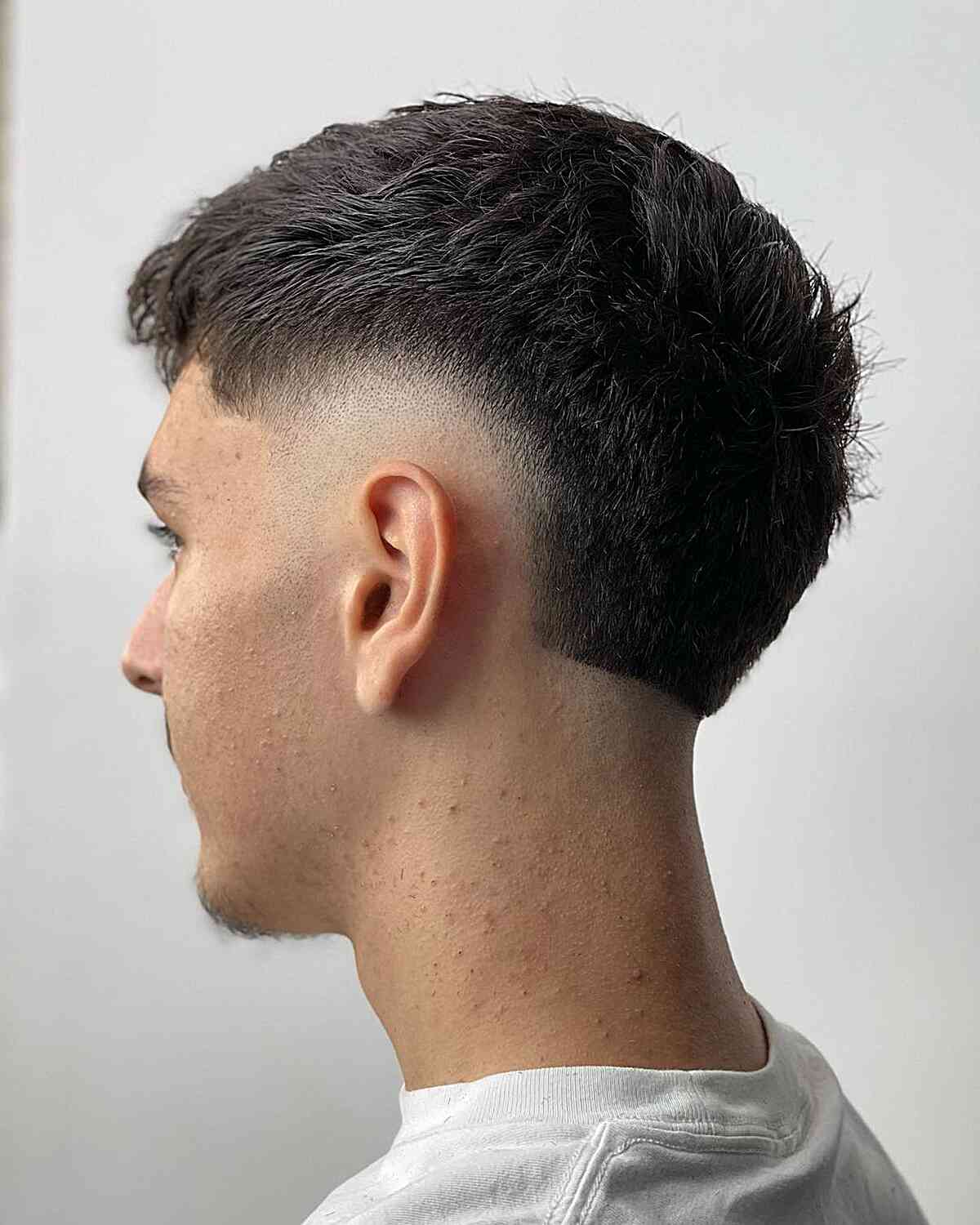
Whether you want to modernize naturally curly hair, add an edge to straight strands, or clean up the sides of a retro mullet, mastering the mechanics of this cut will ensure you leave the barbershop with exactly what you envisioned.
What Is a Burst Fade?
A burst fade is a specialized tapering technique where the hair is faded down to the skin in a semi-circular arc around the ear. Starting at the temple and tracing behind the ear toward the base of the skull, the fade expands outward like an explosion or sunburst—hence the name.
The defining structural feature of this cut is where the hair is not cut. Unlike a standard mid fade or high fade that removes hair continuously around the back of the head, a burst fade preserves the bulk of hair at the neckline and nape. This distinct silhouette gives the illusion of a fuller, longer back while maintaining ultra-clean, razor-sharp edges around the sides.
The Best Burstfade Haircut Combinations
Because the fade focuses exclusively on the perimeter of the ears, it serves as a versatile canvas for virtually any top and back style. Here are the top ways to wear it today:
1. The Modern Burst Fade Mullet
The contemporary mullet renaissance owes much of its popularity to the burst fade. By stripping bulk away around the ears and temples while leaving the top textured and the back flowing over the collar, the cut eliminates the boxy look of an 80s mullet and replaces it with an intentional, sharp profile.
2. Coils and Sponge Twists
The burst fade originated largely in Black barbershops as a way to frame natural afro-textured hair without sacrificing crown height. Pairing tight 4C curls, twists, or sponge-styled coils with a skin-tight arc around the ears creates high contrast and draws immediate focus upward.
3. Textured Crop with Burst Fade
Video: How to Do a CLEAN BURST FADE with a BRUSH BACK 🔥 (Step-by-Step Tutorial)

Combining a blunt or textured French crop with a burst fade gives you a forward-flowing fringe and a neat silhouette. It is ideal for men with straight or wavy hair who want a low-maintenance, everyday cut that still looks tailored.
4. South of France (Usher Cut)
Popularized by R&B star Usher and legendary barber Curtis Smith, the South of France haircut is a classic interpretation of the burst fade paired with a wide, rounded mohawk. It is soft, dignified, and complements both casual street style and tailored formalwear.
Burst Fade vs. Drop Fade vs. Traditional Taper
Because barbershop terminology can overlap, clients frequently confuse burst fades with other precision tapers. Understanding the differences will prevent misunderstandings in the chair:
- Burst Fade: Fades in a curved radius around the ear only. Leaves the hair at the nape of the neck full and connected to the crown.
- Drop Fade: The fade line travels around the entire head but dips low behind the crown to follow the natural curve of the occipital bone. The entire nape is faded short.
- Classic Taper: Cleans up only the sideburns and the bottom edge of the neckline, leaving a subtle, gradual transition without carving high around the ear.
Best Face Shapes and Hair Textures for This Cut
The burst fade is remarkably adaptable, but its curved geometry affects facial proportions in distinct ways:
- Oval and Square Faces: These balanced shapes can carry almost any variation. A squared jawline looks exceptionally sharp when contrasted with the smooth arc around the ear.
- Round Faces: Benefit most from burst fades that maintain substantial height on top (like a faux hawk or high pomp) to visually elongate the face. Avoid leaving the back too flat.
- Oblong or Long Faces: Avoid sky-high mohawks that add vertical length. Instead, pair the burst fade with a flatter textured fringe or a wider top.
In terms of hair texture, the cut works across all types. Thick, coarse, and curly hair effortlessly holds the volume needed on top and back, while fine, straight hair will benefit from styling powder or matte clay to maintain separation.
What to Tell Your Barber
Avoid ambiguous descriptions. Use clear terms and provide actionable reference points so your barber understands your expectations:
- Specify the starting guard: Clarify whether you want a "skin burst" (starting at a 0 or foil shaver at the ear) or a softer taper (starting at a #1 or #1.5 guard).
- Define the radius: Tell them how far out you want the burst to spread. A tight burst stays within an inch or two of the ear; a wide burst reaches higher up the temples and deeper toward the crown.
- State the back plan: Confirm that you want to leave the hair at the nape of the neck intact. Clarify whether you want the back neckline squared off, rounded, tapered, or left completely natural (as in a mullet).
- Bring photo references: A visual reference from multiple angles (side profile and three-quarter view) eliminates guesswork.
Styling and Maintenance
Because this style relies on tight contrasts around the ear, maintenance is critical for keeping it looking fresh:
- Barbershop Frequency: Plan to touch up the fade every two to three weeks. Because the skin section around the ear is small, stubble softens the sharp contrast quickly.
- Daily Styling: For textured crops or straight-hair mohawks, apply a lightweight sea salt spray to damp hair, blow-dry into position, and finish with a dime-sized amount of matte clay for hold without shine.
- Curly Care: Keep your curls hydrated using leave-in conditioner or hair butter, then define them with a curl sponge or twist comb. Apply a drop of argan oil to seal in moisture without weighing down the volume.


