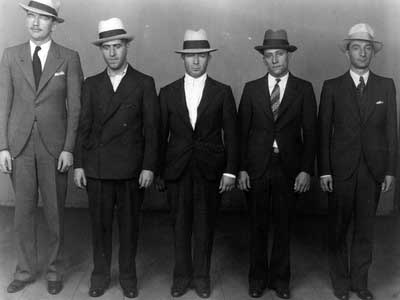
The Gangster 1920s: Prohibition, Power, and the Mob
Few cultural archetypes are as enduring as the American gangster; 1920s cities were dramatically transformed by ruthless operators who turned a nationwide ban on alcohol into a multi-million-dollar criminal empire. When the 18th Amendment and the subsequent Volstead Act took effect in January 1920, the goal of moral reformers was to curb domestic abuse, boost worker productivity, and eliminate vice. Instead, the legislation birthed a violent underground economy, forging modern organized crime syndicates that infiltrated American law enforcement, business, and politics.

The Catalyst: How Prohibition Built the Underworld
Before 1920, American street gangs were largely localized, territorial operations focused on petty extortion, pickpocketing, and low-level protection rackets. Prohibition altered this landscape overnight. By outlawing the manufacture, sale, and transportation of intoxicating liquors without reducing consumer demand, the federal government created an insatiable black market.
Supplying that market required logistics, capital, international trade routes, and sophisticated distribution networks. Smuggling liquor across the Canadian border or bringing Caribbean rum into coastal waters—a practice known as rum-running—required ocean-going vessels, warehouses, transport trucks, and armed protection. Local gangs realized that cooperation and organization were far more lucrative than disorganized street brawls. Almost overnight, informal street crews evolved into corporate-style crime syndicates.
Key Figures: The Architects of the Roaring Twenties Mob
The 1920s produced a roster of criminal celebrities whose names remain synonymous with the era. Operating in major hubs like Chicago and New York, these men treated illegal liquor as an enterprise rather than a crime.
Al Capone (Chicago)
No criminal dominated public consciousness more than Alphonse "Scarface" Capone. Taking control of the Chicago Outfit in 1925 after his mentor Johnny Torrio was shot and forced into retirement, Capone built an empire generating an estimated $100 million annually. Capone cultivated a public persona as a modern Robin Hood, frequently attending baseball games, donating to charities, and giving interviews to the press, all while ruthlessly eliminating rivals across the city.
Arnold Rothstein (New York)
Known as "The Brain," Arnold Rothstein was the financial mastermind of the New York underworld. Rothstein understood early on that bootlegging was essentially an import-export business that required vast working capital. He financed liquor shipments, mediated disputes between rival factions, and mentored the next generation of mob leaders, including Charles "Lucky" Luciano and Meyer Lansky, who would later modernize the American Mafia.
Dean O'Banion and George "Bugs" Moran (Chicago)
Controlling the wealthy North Side of Chicago, Dean O'Banion headed an Irish-American syndicate that stood directly in Capone's path. O'Banion's assassination inside his own flower shop in 1924 sparked a brutal five-year turf war. Leadership of the North Side Gang eventually fell to George "Bugs" Moran, Capone's fiercest and most stubborn adversary.

Life as a Gangster: 1920s Rackets, Speakeasies, and Violence
Behind the tailored three-piece suits and silk fedoras, the daily reality of the 1920s mobster was precarious and bloody. To maintain their monopolies, syndicates relied on a web of interconnected operations:
- Speakeasies: Tens of thousands of hidden bars sprang up in basements, behind storefronts, and inside private clubs. New York City alone housed an estimated 32,000 speakeasies at the height of Prohibition. Gangs supplied these venues with beer, gin, and imported whiskey at astronomical markups.
- Breweries and Stills: Syndicates operated hidden industrial breweries and relied on thousands of tenement-based "alky cookers" who distilled industrial alcohol into dangerous homemade liquor known as "bathtub gin."
- Systemic Bribery: Bootlegging could not function without official complicity. Gangsters placed entire police precincts, judges, and municipal politicians on regular payrolls to ensure police raids were avoided or staged for public relations.
- Technological Warfare: The 1920s saw the rapid adoption of modern technology by criminals. Fast automobiles allowed bootleggers to outrun police, while the .45-caliber Thompson submachine gun—dubbed the "Tommy Gun" or "Chicago Typewriter"—gave small groups devastating, close-quarters firepower.
The Turning Point: The St. Valentine's Day Massacre
As the decade progressed, violence escalated from targeted assassinations to reckless public shootouts. The apex of this warfare occurred on the morning of February 14, 1929, in a garage on North Clark Street in Chicago.
Four men, two dressed as Chicago police officers, entered the headquarters of Bugs Moran's North Side Gang. Caught off guard, seven gang members and associates lined up against a brick wall expecting a routine police pat-down. Instead, the intruders opened fire with submachine guns and shotguns, firing more than 70 rounds. Moran narrowly avoided the ambush because he arrived late, but his organization was effectively crippled.
The St. Valentine's Day Massacre horrified the nation. Front-page newspaper photographs of bullet-riddled bodies shattered any remaining romantic illusions about organized crime. The public demanded action, prompting President Herbert Hoover to instruct federal agencies to bring down Capone and his contemporaries by any legal means necessary.
The Federal Response and the Fall of the Bootleggers
Local law enforcement was too compromised to dismantle the major syndicates, so the federal government shifted its strategy. Rather than attempting to catch gangsters in the act of bootlegging, federal prosecutors turned to specialized squads and the tax code.
- The Untouchables: Eliot Ness, a 28-year-old agent in the Bureau of Prohibition, assembled a small, hand-picked squad of agents renowned for their refusal to accept bribes. Ness's unit raided Capone-owned breweries, seized transport trucks, and severely disrupted the Outfit's cash flow.
- Forensic Accounting: Frank J. Wilson and the Internal Revenue Service's Special Intelligence Unit pursued Capone for unpaid income taxes. In a landmark 1927 ruling (United States v. Sullivan), the Supreme Court had established that illicit income was still subject to federal taxation. In October 1931, Capone was convicted of tax fraud and sentenced to 11 years in federal prison, ultimately serving time at the newly opened Alcatraz penitentiary.
The Legacy of the 1920s Underworld
The era of the Prohibition-era free-for-all came to a formal close in December 1933 with the passage of the 21st Amendment, which repealed the national ban on alcohol. Without the massive profits of bootlegging, surviving crime bosses restructured their operations.
Led by figures like Lucky Luciano, organized crime shifted into gambling, labor racketeering, loansharking, and legitimate front businesses, replacing individual warlords with the centralized leadership of the "Commission." Yet the cultural footprint of the 1920s gangster remains indelible. The decade established the vocabulary, fashion, and mythology of the American underworld, demonstrating the profound unintended consequences when public policy collides with human demand.