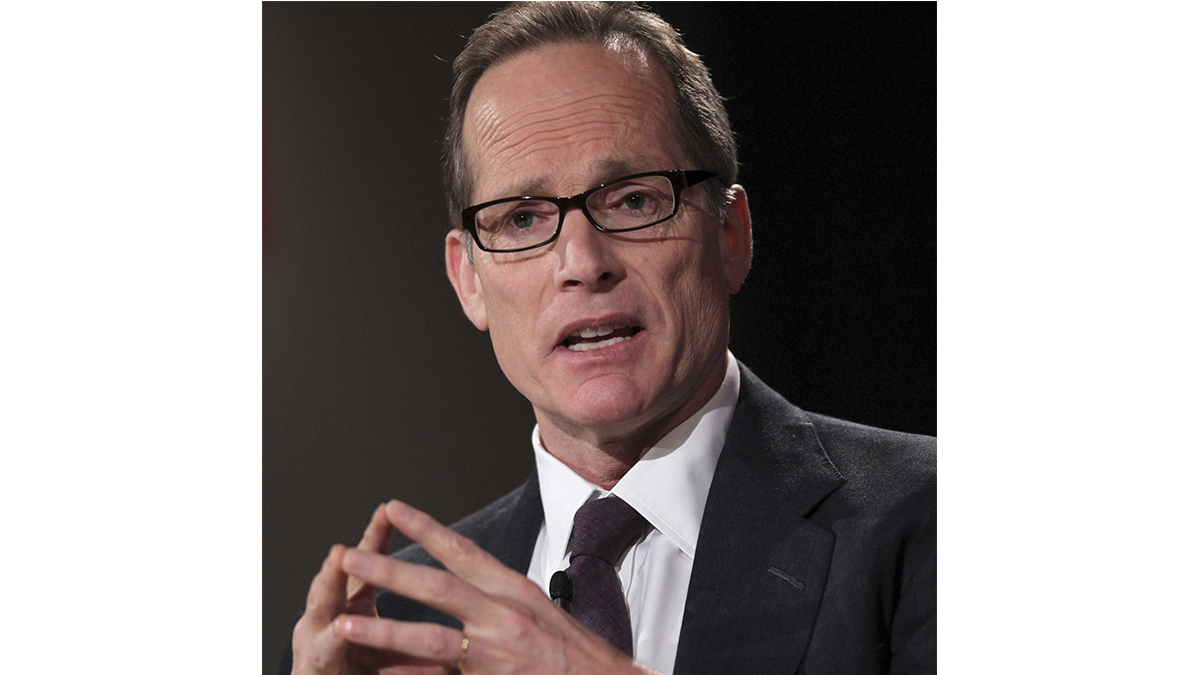
The Glimmer Behind Glenn Dubin’s $1 Billion Net Worth
When financial analysts study the golden era of alternative asset management, few case studies offer as much tactical insight as Glenn Dubin. Rising from working-class roots in Upper Manhattan to the pinnacle of global high finance, exploring the glimmer behind Glenn Dubin’s $1 billion net worth reveals far more than just market luck. It uncovers a masterclass in structural timing, institutional dealmaking, and an evolving approach to asymmetric risk.

Dubin is best known as the co-founder of Highbridge Capital Management, a firm that helped transform the hedge fund industry from an insular club into an institutional powerhouse. Over four decades, his career has tracked the broader evolution of Wall Street—from stock brokerage to multi-strategy arbitrage, private commodities buyouts, and modern quantitative trading.
Early Roots: From Washington Heights to Wall Street
Glenn Russell Dubin was born in 1957 and raised in the Washington Heights neighborhood of New York City. The son of an Austrian immigrant dressmaker and a chemical worker, Dubin was educated in public schools before attending the State University of New York at Stony Brook. At Stony Brook, he balanced collegiate football with economics coursework, graduating in 1978.
Dubin entered the financial sector in the early 1980s as a retail stockbroker at E.F. Hutton. It was there that he reunited with his childhood friend Henry Swieca. The two young brokers shared an obsession with market mechanics, specifically risk management. While many contemporary brokers chased commissions through speculative stock picking, Dubin and Swieca recognized early that capital preservation was the true secret to long-term wealth accumulation.
Highbridge Capital: The Engine of Wealth Creation
In 1992, Dubin and Swieca launched Highbridge Capital Management with $35 million in initial capital, named after the historic aqueduct bridge connecting Washington Heights and the Bronx. At the time, the modern multi-strategy hedge fund was in its infancy.
Highbridge stood out from its competitors by prioritizing low volatility and non-correlated returns over unhedged upside. The fund specialized in convertible bond arbitrage, statistical arbitrage, and relative value trading. Key pillars of the firm's explosive growth included:
- Multi-Strategy Architecture: Highbridge did not rely on a single macro thesis. Instead, capital was dynamically allocated across independent trading desks depending on prevailing market inefficiencies.
- Rigorous Risk Control: By relying on hedged strategies, Highbridge protected institutional capital during volatile drawdowns, making it a favorite among conservative pension funds and university endowments.
- Operational Institutionalization: Dubin recognized earlier than most that institutional investors cared as much about robust back-office operations, compliance, and reporting as they did about pure performance.
By the mid-2000s, Highbridge had transformed into an asset-gathering titan, managing tens of billions of dollars across multiple strategies and credit vehicles.
The Strategic JPMorgan Transaction
Building a successful hedge fund generates substantial annual fees, but true generational wealth often requires a liquidity event. In 2004, Glenn Dubin executed one of the most profitable strategic sales in hedge fund history.
JPMorgan Chase acquired a 55% majority interest in Highbridge Capital for a reported $600 million-plus valuation. Rather than cashing out and walking away, Dubin remained at the helm as CEO, guiding the firm through explosive post-acquisition expansion. In 2009, JPMorgan bought the remaining 45% of the firm, fully absorbing Highbridge into its Asset Management division in a deal that ultimately valued Highbridge in the billions.
This staged buyout secured Dubin’s personal liquidity, shielding his personal balance sheet while allowing him to participate directly in the subsequent upside of institutional asset management.
The Glimmer Behind Glenn Dubin’s $1 Billion Net Worth: Asset Breakdown
Video: Billionaire Glenn Dubin’s Wife Was Epstein’s Ex – The Secret They Kept for Decades

A ten-figure net worth is rarely static. Following the Highbridge exit, Dubin diversified his wealth across liquid alternative strategies, direct commodities infrastructure, and ultra-prime real estate. Today, the glimmer behind Glenn Dubin’s $1 billion net worth rests across several core pillars:
1. Castleton Commodities International (CCI)
In 2012, Dubin led an independent consortium of prominent family offices and private equity investors—including Paul Tudor Jones and Oppenheimer family entities—to acquire the physical commodities trading operation of Louis Dreyfus Highbridge Energy. Rebranded as Castleton Commodities International (CCI), the merchant firm quickly grew into one of the world's most formidable independent energy and commodities traders, generating significant capital returns for Dubin.
2. Quantitative Expansion: Engineers Gate
Stepping away from traditional discretionary management, Dubin founded Engineers Gate in 2014 with hundreds of millions in seed capital. Built around systematic mathematical algorithms and computer science, Engineers Gate operates on the technological frontier of financial markets, deploying quantitative strategies to capture micro-inefficiencies in global equities.
3. Dubin & Co. and Private Equity
Through his family office, Dubin & Co., Dubin manages direct private equity holdings, early-stage venture investments, and consumer brand ventures. This vehicle provides long-duration capital flexibility free from the standard constraints of external fund mandates.
4. Real Estate and Tangible Assets
Like many Wall Street billionaires, Dubin has directed significant capital into prime real estate. His holdings have historically included a luxury multi-story triplex along Manhattan’s Fifth Avenue, prime property in Palm Beach, Florida, and substantial ranch property in Gunnison County, Colorado, in addition to an extensive collection of post-war and contemporary art.
Philanthropy and Institutional Impact
Dubin’s wealth accumulation has been mirrored by deep institutional philanthropy in New York City. His giving is largely coordinated alongside his wife, Dr. Eva Andersson-Dubin, an internal medicine physician and cancer survivor.
- The Robin Hood Foundation: As a founding board member, Dubin has played a long-term role in guiding one of the nation's most efficient poverty-fighting organizations, which applies venture-capital metrics to non-profit funding.
- The Dubin Breast Center: At the Mount Sinai Tisch Cancer Institute, the Dubins funded the establishment of a state-of-the-art facility offering comprehensive, multidisciplinary clinical care for breast cancer patients under one roof.
- Harvard Kennedy School: Through the Dubin Fellowship for Emerging Leaders, the family funds full-tuition graduate scholarships for public-service-oriented candidates who have demonstrated resilience under hardship.
Key Takeaways from Glenn Dubin’s Financial Playbook
Glenn Dubin's ascent to a ten-figure fortune offers distinct takeaways for professional investors and entrepreneurs:
- Focus on Risk Asymmetry: Rather than aiming to top performance tables in boom markets, Dubin prioritized non-correlation and capital preservation, establishing enduring institutional trust.
- Monetize via Institutional Scale: Merging Highbridge with an established global bank allowed him to realize equity value at the peak of the multi-strategy boom.
- Pivot with Technological Shifts: Transitioning from classic arbitrage to systematic computing via Engineers Gate demonstrates an awareness that market edges decay unless actively upgraded.
Ultimately, Glenn Dubin’s financial trajectory exemplifies how disciplined structural positioning, opportunistic expansion into physical assets, and adaptability can turn modest market beginnings into a sustained billionaire-tier enterprise.