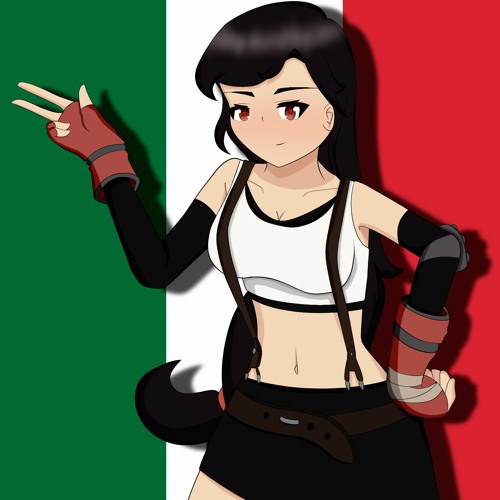
The Italy Tifa Incident: How a Viral Meme Happened
In January 2022, a routine political conference in Rome unexpectedly transformed into one of the most surreal viral spectacles in internet history. During a live-streamed government symposium hosted by Italian lawmakers, an unauthorized participant hijacked the video broadcast to play explicit CGI footage featuring Tifa Lockhart, a central heroine from the iconic video game Final Fantasy VII. Within hours, queries for italy tifa exploded across social media platforms, search engines, and news outlets worldwide.

What started as a digital security mishap quickly evolved into an enduring cultural meme that blurred the lines between high-level European politics and niche video game fandom. Here is the full story of how the incident unfolded, why Tifa Lockhart was involved, and how the episode left a lasting mark on internet lore.
The Setting: A Serious Senate Workshop on Data Transparency
The event took place on January 17, 2022. It was not a raucous debate in the parliamentary chamber, but rather an academic and legislative meeting organized by Senator Maria Laura Mantovani, a member of the Five Star Movement (Movimento 5 Stelle). The online workshop, titled "Towards a Transparent Public Administration," aimed to explore digital governance, open data, and modern administrative efficiency.
The guest list included several prominent figures, most notably Giorgio Parisi, the Italian theoretical physicist who had won the Nobel Prize in Physics just months earlier in October 2021. The symposium was broadcast live on Senato TV, the official public streaming channel of the Italian Senate, as well as mirrored to various legislative social media channels.
Because the conference aimed to champion transparency and accessibility, the organizers set up a Zoom meeting to connect remote speakers with the senate floor. However, that very openness created a vulnerability that would soon derail the broadcast.
How the Incident Unfolded
About thirty minutes into the proceedings, as attendees were listening to opening remarks and theoretical discussions on institutional data, the Zoom link was breached. Because the meeting link had been distributed without stringent access restrictions or a waiting room protocol, external users were able to enter the call unnoticed.
Suddenly, an account registered under the handle "Alex Spence" took over the screen-sharing function. Instead of charts or administrative presentations, the screen displayed a 3D computer-animated adult video featuring Tifa Lockhart.
The disruption unfolded over several chaotic seconds:
- The initial confusion: For the first ten to fifteen seconds, speakers and moderators appeared confused, seemingly unsure whether an invited panelist was experiencing technical difficulties or sharing the wrong window.
- The scramble to intervene: As the nature of the explicit video became obvious, Senator Mantovani and technical staff scrambled to locate the offending participant and revoke screen-sharing permissions.
- The broadcast cutoff: The intruder was eventually booted from the conference after approximately 30 to 45 seconds of broadcast time, and the stream resumed its normal agenda shortly thereafter.
While the video was quickly removed from the official Senate feed, the damage was already done. Internet users recording the public stream clipped the segment, uploaded it to Twitter, Reddit, and Twitch, and initiated a viral wildfire.
Why Tifa Lockhart?
For onlookers unfamiliar with video games, the character at the center of the controversy seemed entirely arbitrary. However, within gaming culture, Tifa Lockhart has been an iconic figure since her debut in Square Enix's 1997 classic Final Fantasy VII.

Known for her role as a martial artist and member of the eco-insurgent group AVALANCHE, Tifa has consistently ranked among the most popular and recognizable video game characters of all time. Her popularity experienced a massive resurgence following the 2020 release of Final Fantasy VII Remake, which rendered her character model in high-definition detail.
Because of this high-profile visual overhaul, an active subculture of 3D hobbyists, animators, and digital artists regularly creates fan-made content using software like Blender and Source Filmmaker. Unfortunately, a significant portion of this fan-generated content falls into the Not-Safe-For-Work (NSFW) category. The clip broadcast during the Italian Senate call was a pre-existing piece of fan-rendered adult animation that had been circulating in online forums months before the hack occurred.
The Global Aftermath and the "Italy Tifa" Phenomenon
In the days following the event, the incident became a bona fide international sensation. The collision between formal European governance and provocative video game animation struck internet users as uniquely absurd, giving rise to the "italy tifa" meme.
The reaction manifested in several ways across the web:
- Satirical Fan Art: Artists across social media began drawing Tifa dressed in formal Italian political attire, standing behind legislative podiums, or wearing the tricolor presidential sash of the Italian Republic.
- Humorous Petitions: Tongue-in-cheek online petitions circulated playfully nominating Tifa Lockhart for political offices, jokingly proposing her as Italy's next Minister of Culture or even President of the Republic, an election that coincidentally happened later that same month.
- Mainstream Coverage: Major global publications, including The Washington Post, Vice, and Kotaku, reported on the breach, analyzing both the absurdity of the moment and the underlying cybersecurity vulnerabilities of government institutions.
Security Repercussions and Legal Follow-Up
While the broader internet treated the event as comedy, the organizers and parliamentary authorities took the breach seriously. Hijacking video meetings—commonly known as "Zoombombing"—was a rampant issue during the early 2020s as public institutions transitioned to remote work during the pandemic.
Following the symposium, Senator Mantovani confirmed that she had filed an official complaint with the Polizia Postale (Italy's specialized cybercrime and telecommunications police unit). The authorities opened an investigation to identify the IP address and origin of the user who disrupted the government proceeding.
The incident also served as a stark case study in digital event management. Industry analysts pointed out several fundamental security failures that contributed to the mishap:
- Public meeting links: Distributing direct Zoom links publicly without requiring pre-registration allows bad actors easy entry.
- Default screen-sharing privileges: Permitting any attendee to share their screen without host approval remains one of the primary vulnerabilities exploited in digital disruptions.
- Absence of waiting rooms: Failing to filter attendees through a digital lobby prevents hosts from vetting participants before granting them full access to audio and video feeds.
The Enduring Legacy of an Accidental Meme
Years after the broadcast, the "Italy Tifa" incident remains one of the defining oddities of the early-2020s internet era. It captured a rare moment where a niche sector of gaming subculture broke through into mainstream international news entirely by accident.
For the Italian Senate, the episode served as an embarrassing reminder of the importance of digital literacy and cybersecurity hygiene in the modern political landscape. For the internet, it remains a surreal chapter in pop culture history—a reminder of how unpredictable the collision between public governance and web culture can be.