The Jodi Arias Autopsy Photos & Case Timeline
Few modern criminal trials captured the public's attention quite like the prosecution of Jodi Arias for the 2008 murder of Travis Alexander. The high-profile case involved complex psychological claims, conflicting testimonies, and a massive volume of digital evidence. Among the most discussed and sensitive pieces of evidence introduced during the legal proceedings were the Jodi Arias autopsy photos, which played a critical role in establishing the violent nature of the crime and refuting the defendant's claims of self-defense.

A Timeline of the Investigation and Trial
The path from the discovery of Travis Alexander's body to the final sentencing of Jodi Arias spanned several years. Understanding this timeline helps contextualize how physical and photographic evidence was gathered, analyzed, and presented to the jury.
June 2008: The Discovery of the Crime
On June 4, 2008, friends of Travis Alexander grew concerned after he failed to show up for a scheduled business trip and could not be reached. Friends went to his home in Mesa, Arizona, and discovered a horrific scene. Alexander’s body was found in his master bathroom shower. He had sustained nearly 30 stab wounds, a slashed throat, and a gunshot wound to the head.
July 2008: The Arrest of Jodi Arias
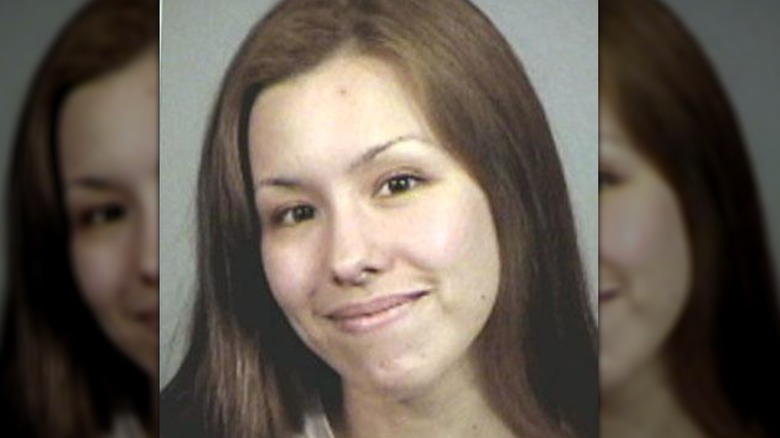
Investigators immediately focused on Alexander's ex-girlfriend, Jodi Arias. Initially, Arias denied any involvement, telling police she had not seen Alexander in months. However, when investigators recovered a digital camera from the washing machine in Alexander's home—complete with recovered deleted images—Arias changed her story. She was arrested in July 2008 and charged with first-degree murder.
January–May 2013: The High-Profile Trial
The murder trial began in early 2013 and was broadcast live to millions of viewers. Arias took the stand in her own defense, testifying that she killed Alexander in self-defense after he allegedly attacked her following a domestic dispute over a dropped camera. Her testimony lasted for weeks, during which the prosecution cross-examined her regarding inconsistencies in her various accounts of the day of the murder.
Video: Did Arias lie about the camera?
The Role of Forensic Evidence in Court
To disprove Arias's self-defense claims, the prosecution relied heavily on forensic pathologists, digital forensics, and crime scene reconstruction. The physical evidence presented in the courtroom painted a starkly different picture than the one Arias described on the stand.
- The Digital Camera: Photos recovered from the camera provided a timeline of the day, showing Alexander alive earlier in the day and later capturing moments of the attack before being dropped in the water.
- Pathology and Trauma: Medical examiners detailed the severity and angle of the wounds, noting that defensive wounds on Alexander’s hands suggested a struggle for survival.
- The Weapon: Prosecutors demonstrated that the extent of the trauma required multiple actions and significant pre-planning, including the purchase of a gas can and a knife prior to the trip to Mesa.
Understanding the Jodi Arias Autopsy Photos
During the trial, the medical examiner presented graphic forensic imagery to the jury. The Jodi Arias autopsy photos were utilized to explain the exact cause of death and to counter the defense's narrative that Alexander was the aggressor.
In legal proceedings of this magnitude, forensic photographs serve a specific evidentiary purpose. They allow medical experts to demonstrate the severity of injuries, corroborate or refute witness testimony, and provide an objective record of the trauma inflicted on the victim. In Alexander's case, the nature of the injuries documented by the medical examiner helped jurors understand the sheer brutality of the assault, making it difficult for the defense to sustain the argument of a momentary, defensive struggle.
The Verdict and Sentencing
The trial resulted in a hung jury regarding the sentencing phase in 2013, after jurors convicted Arias of first-degree murder. A subsequent penalty phase trial in 2014 also ended in a deadlocked jury. Consequently, under Arizona law at the time, the judge took over sentencing duties.
In April 2015, Jodi Arias was sentenced to life in prison without the possibility of parole. Subsequent appeals by her defense team have consistently been denied by higher state courts, solidifying the conviction and bringing a legal conclusion to one of the most thoroughly documented murder investigations in television history.