The Magnificent Rothschild Net Worth: Billions Built
When people discuss old-world wealth, one family name invariably commands the conversation above all others. For over two centuries, the Rothschild name has been synonymous with immense riches, global influence, and financial acumen. Yet, pinning down an exact number for the magnificent Rothschild net worth: billions built across generations remains one of modern finance's greatest puzzles. Unlike contemporary tech billionaires whose stock portfolios are tracked in real-time, the Rothschild fortune is decentralized, private, and shielded by centuries of careful structuring.

Origins of a Financial Dynasty
The foundation of the Rothschild empire was laid in the late 18th century by Mayer Amschel Rothschild in the Jewish ghetto of Frankfurt, Germany. Starting as a coin dealer and antique trader, Mayer Amschel cultivated relationships with European nobility, most notably the Prince of Hesse.
His masterstroke, however, was dispatching his five sons to establish banking houses in Europe's most vital financial capitals:
- Amschel Mayer: Remained in Frankfurt to manage the headquarters.
- Salomon Mayer: Established a branch in Vienna, Austria.
- Nathan Mayer: Moved to London, England, building the mighty N M Rothschild & Sons.
- Calmann Mayer: Opened operations in Naples, Italy.
- Jacob Mayer: Founded Rothschild Frères in Paris, France.
This network allowed the family to move capital, information, and gold across borders faster and more reliably than anyone else of their era. Their intelligence network famously allowed Nathan Mayer Rothschild to learn of Napoleon's defeat at Waterloo ahead of official government couriers, cementing the family's legendary status in British finance.
Why Calculating the Exact Net Worth is Impossible
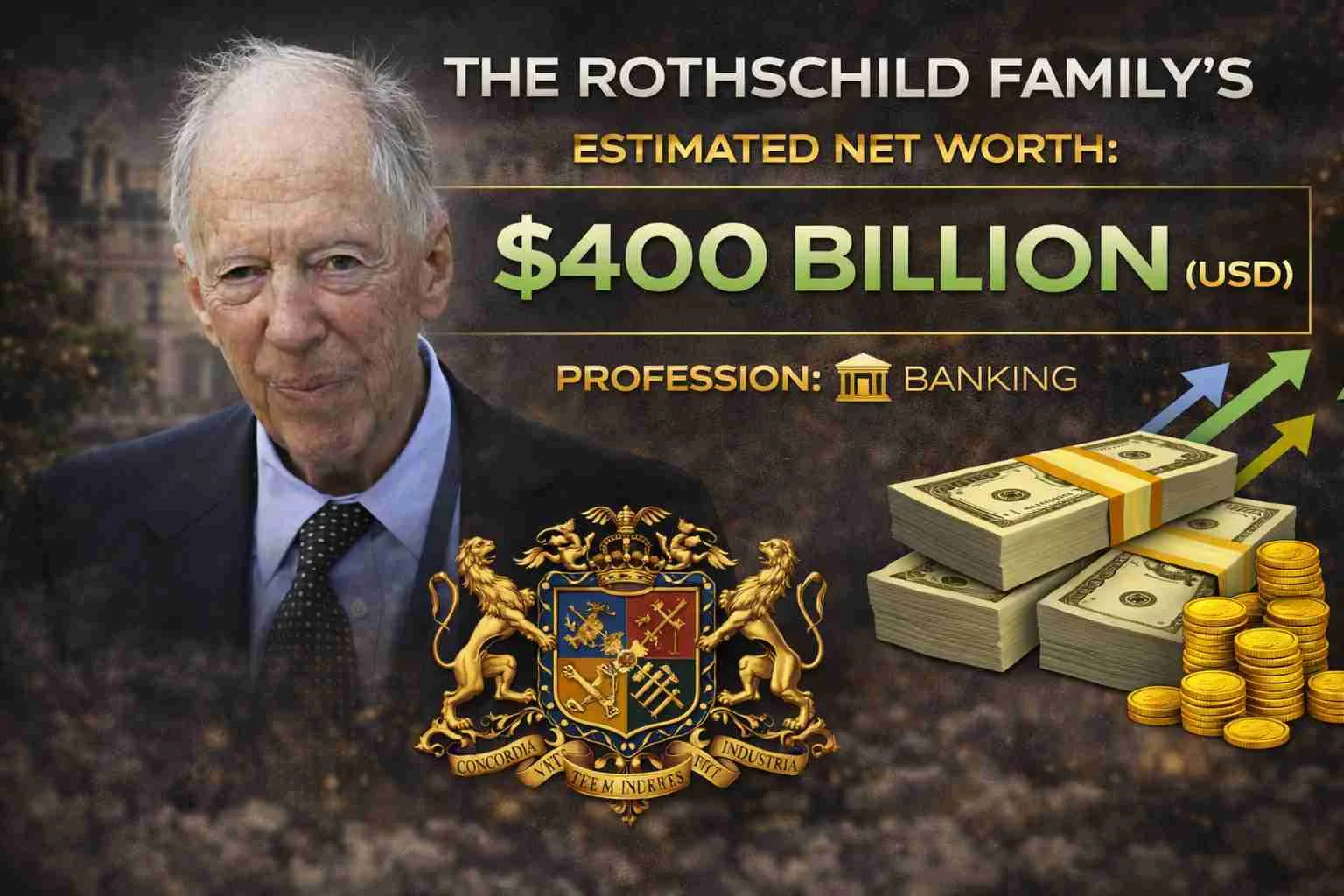
Modern media outlets frequently toss around sensationalized figures, claiming the family controls anywhere from $400 billion to over $1 trillion. However, financial historians and analysts generally view these trillion-dollar claims as myths.
Fragmentation Across Generations
The primary reason a single net worth figure does not exist is that the family is no longer a single economic entity. Over 250 years, the bloodline has expanded to include hundreds of descendants. The original fortune has been divided, subdivided, and reinvested across countless branches, trusts, and individual portfolios.
Prudent Secrecy and Wealth Preservation
The Rothschilds pioneered strategies for generational wealth preservation that modern ultra-high-net-worth individuals still use today. They favored:
- Conservative investments in hard assets like real estate, art, mining, and agriculture.
- Strict endogamy (marrying within the extended family in the 19th century) to keep capital within the bloodline.
- Sophisticated trust structures that shield assets from public registries and excessive taxation.
Modern Holdings and Business Ventures

While the family no longer dominates global finance to the extent they did in the 19th century, they remain active and profoundly wealthy through various institutional offshoots.
Rothschild & Co
At the center of their contemporary business empire is Rothschild & Co, a multinational investment bank and financial services firm. Listed on the Euronext Paris exchange, the firm specializes in mergers and acquisitions (M&A), private equity, and wealth management. Unlike massive retail banks, Rothschild & Co focuses on advisory roles, guiding governments and corporations through complex financial transactions.
Edmond de Rothschild Group
Headquartered in Geneva, Switzerland, this distinct financial group focuses primarily on private banking and asset management. Controlled by descendants of the French branch, it manages billions in institutional and private client assets, holding investments in vineyards, luxury hospitality, and specialized agriculture.
Diversified Estates and Philanthropy
Beyond banking, the family’s wealth is anchored in tangible, appreciating assets. They own several world-renowned vineyards, including Château Lafite Rothschild in Bordeaux. Furthermore, their historical contributions to art, science, and education are matched only by their ongoing philanthropic foundations.
Comparing Rothschild Wealth to Modern Billionaires
It is helpful to contextualize the Rothschild dynasty alongside today's tech titans. In the 1800s, the family's wealth relative to global GDP was arguably larger than that of any single individual today. At their peak, they financed sovereign nations, funded wars, and stabilized European currencies.
Today, individual family members rarely crack the top tiers of the Forbes billionaire lists. This is not because they are poor, but because their wealth is institutionalized rather than concentrated in a single publicly traded tech stock like Tesla or Amazon. The brilliance of the Rothschild model lies in its longevity: while individual tech fortunes can evaporate in a market correction, the diversified, multi-generational wealth of the Rothschilds endures.
Conclusion
The true magnitude of the Rothschild fortune is less about a specific dollar amount and more about the blueprint they created for enduring financial power. By prioritizing discretion, international diversification, and family unity, they transformed a modest Frankfurt coin shop into a legendary dynasty. For anyone studying economics or wealth management, the story of the Rothschilds remains the ultimate masterclass in building and preserving capital across centuries.