The Million-Dollar Goldmine: Tim Walz’s Financial Status Revealed
When national political campaigns heat up, candidate balance sheets invariably face intense scrutiny. Following his selection as the Democratic vice-presidential nominee in 2024, online searches and headlines surged with curiosity about the Minnesota governor's wealth. Amid speculation and viral claims of hidden fortunes, the narrative dubbed The Million-Dollar Goldmine: Tim Walz’s Financial Status Revealed captivated voters eager to know whether the folksy Midwesterner harbored immense private wealth or lived like the everyday Americans he often described.

Contrary to sensational expectations of private equities, offshore trusts, or real estate empires, the reality disclosed in mandatory government filings paints an entirely different picture. The financial disclosures submitted by Tim Walz reveal one of the most modest personal balance sheets of any contemporary national candidate in modern American history.
The Million-Dollar Goldmine: Tim Walz’s Financial Status Revealed
When the term "goldmine" is attached to a politician, the public naturally anticipates sprawling investment portfolios, commercial real estate ventures, or lucrative board appointments. However, when official financial disclosures were filed with federal ethics officials, observers discovered that Tim Walz’s financial holdings are virtually non-existent in the traditional private investment sector.
The disclosures confirmed the following core facts about Walz's financial profile:
- Zero Individual Stocks: Walz and his wife, Gwen Walz, own no shares in publicly traded companies, mutual funds, or index funds.
- No Commercial Real Estate: The couple owns no rental properties, commercial holdings, or vacation homes.
- No Cryptocurrency or Alternative Assets: There are no digital assets, venture capital stakes, or private business interests.
- No Corporate Board Seats: Walz has earned no speaking fees, paid corporate consultancies, or book royalties in recent years.
The absence of these standard financial instruments leaves a personal portfolio that is strikingly simple: traditional cash bank accounts, modest life insurance policies, and public service pensions.
Where the "Million-Dollar" Valuation Actually Comes From
If Tim Walz does not hold stocks or investment properties, why do financial analysts and wealth trackers frequently estimate his net worth between $300,000 and slightly over $1 million? The answer lies not in liquid cash or market assets, but in the calculated present value of his public pensions.
Over four decades of adult life, Walz worked exclusively in the public sector as an enlisted soldier, a public high school geography teacher, a football coach, a member of the United States House of Representatives, and the Governor of Minnesota. These careers earned him defined-benefit retirement packages that, when compounded and actuarially valued, represent substantial guaranteed lifetime income.
1. Minnesota Teachers Retirement Association (TRA)
Before entering politics, Walz spent well over a decade teaching high school in Nebraska and Mankato, Minnesota. Gwen Walz also built a long career as a public educator. Together, their vested teacher pensions provide guaranteed monthly payments upon reaching full retirement age, effectively serving as an annuity backed by state funds.
2. Military Retirement (Army National Guard)
Walz served 24 years in the Army National Guard, retiring in 2005. Military service members who complete at least 20 qualifying years earn defined military retirement benefits. This service affords access to monthly pension disbursements along with low-cost military healthcare coverage through Tricare, representing significant lifetime economic value.
3. Congressional Pension (Federal Employees Retirement System)

Walz represented Minnesota’s 1st Congressional District in the U.S. House of Representatives for 12 years (2007 to 2019). Under the Federal Employees Retirement System (FERS), members of Congress who serve at least five years are entitled to a defined-benefit pension. For a 12-year House tenure, this benefit pays a calculated percentage of his highest average congressional salary (which was $174,000 annually during his tenure), providing an estimated annual payout of roughly $20,000 to $25,000 starting in his early sixties.
Financial planners note that purchasing a private commercial annuity capable of paying out the equivalent of these combined public pensions would require a lump sum of roughly $800,000 to $1.2 million. Thus, while Walz does not sit on a pile of liquid cash, his earned pension benefits construct the backbone of his retirement security.
The Sale of the Mankato Family Home
One notable transaction on Walz’s public record occurred in 2019, shortly after he assumed the Minnesota governorship. Tim and Gwen Walz sold their long-time family residence in Mankato, Minnesota, for approximately $304,000. Public records indicate that the home sold for below its initial asking price of $315,000.
Following the sale, the couple relocated full-time to the official Minnesota Governor’s Residence in St. Paul. When the historic mansion underwent renovations in 2023, the state rented an alternate residence for the governor's family. Because Walz did not purchase another primary residence or reinvest the home proceeds into commercial real estate, he joined a tiny fraction of political executives who own no personal real estate.
How Tim Walz Compares to Other Political Figures
Walz's financial posture stands in stark contrast to the vast majority of modern American politicians. The halls of Congress and national executive tickets have long been populated by self-funded millionaires and seasoned investors.
- Congressional Wealth Median: According to data compiled by OpenSecrets, the median net worth of a member of Congress exceeds $1 million, with top lawmakers possessing net worths well north of $50 million.
- Direct Contrast: Many prominent federal officials regularly trade stocks, occasionally triggering public debate over the STOCK Act and insider trading ethics. Walz’s total lack of trading activity eliminates direct corporate conflicts of interest.
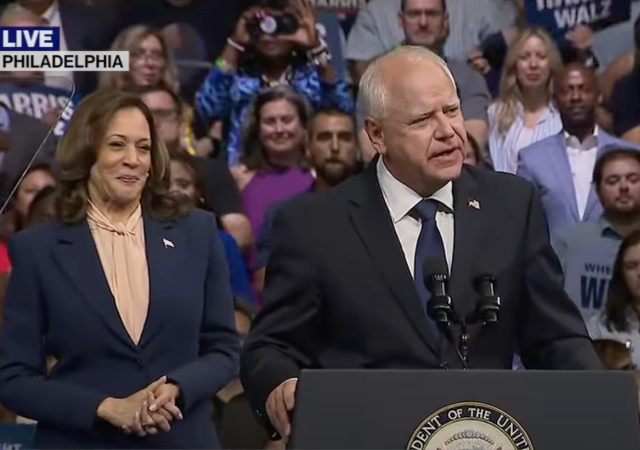
- Vice-Presidential Comparison: While his running mate Kamala Harris and opponents like Donald Trump and JD Vance hold extensive real estate, venture capital stakes, stock portfolios, or media royalties, Walz’s balance sheet reflects the financial trajectory of a career civil servant.
The Political Significance of a Non-Millionaire Balance Sheet
In modern electoral politics, financial disclosures serve both legal and symbolic purposes. For Tim Walz, the transparency surrounding his financial disclosures has yielded distinct political advantages and occasional scrutiny from critics.
Supporters point to his modest net worth as evidence of genuine middle-class authenticity. In an era where voters express frustration over out-of-touch political elites, an elected leader who relies on a teacher's pension, drives an older vehicle, and lacks a stock portfolio resonates with working-class demographics.
Critics, on the other hand, have occasionally questioned his financial management choices, arguing that someone seeking high executive office should demonstrate business acumen or conventional investment growth. Nevertheless, independent ethics watchdogs have lauded the absence of complicated corporate ties, blind trusts, or potential stock market conflicts as a refreshing model of disclosure simplicity.
Conclusion: Separating Myth from Reality
The viral intrigue behind the so-called million-dollar goldmine surrounding Tim Walz’s finances ultimately reveals an ironic truth. There is no hidden fortune, no offshore portfolio, and no speculative real estate syndicate. Instead, Tim Walz's financial status illustrates the economic trajectory of a career dedicated entirely to the public sector—funded by government salaries, modest savings, and hard-earned public service pensions.